avatarNisshanth K

Summary

The text reflects on the loss of cultural identity and the impact of modernity, postmodernity, and colonialism on the spiritual and intellectual heritage of societies, with a particular focus on the reverence for Mother India as a last bastion of ancient wisdom.

Abstract

The poem "The Pagan(Part 1 of 2- “The Quagmire”)" laments the historical destruction of knowledge and tradition, symbolized by events like the rape of Hypatia, the burning of Bruno, and the mutilation of Mother Nature. It portrays a world where secular and fanatical religions have failed to provide meaning, and where science, while explanatory, lacks the experiential depth of storytelling. The narrative criticizes the loss of native languages and the adoption of colonial languages, which has led to the creation of divisive ideologies. The author calls for the revival of the Goddess, a metaphor for the reclamation of ancestral knowledge and the power to transform society, urging a return to the wisdom of the past to heal the present and guide the future.

Opinions

  • The author views the modern world as lacking depth due to the commodification of religion and the vacuity of postmodernity.
  • Science is seen as insufficient for providing a meaningful narrative or experiential understanding of life.
  • The loss of native languages and the adoption of colonial languages is portrayed as a tragedy that has disconnected people from their cultural roots.
  • The text suggests that atheism and modernity are not adequate replacements for traditional belief systems.
  • There is a strong reverence for Mother India, seen as a living Goddess capable of restoring balance and harmony to humanity.
  • The author expresses a need to reconnect with the wisdom of ancestors and to invoke the will to power to bring about societal transformation.
  • The poem conveys a sense of urgency to revive ancient wisdom before it is lost, to prevent the destruction caused by misguided notions of growth and knowledge.

The Pagan(Part 1 of 2- “The Quagmire”)

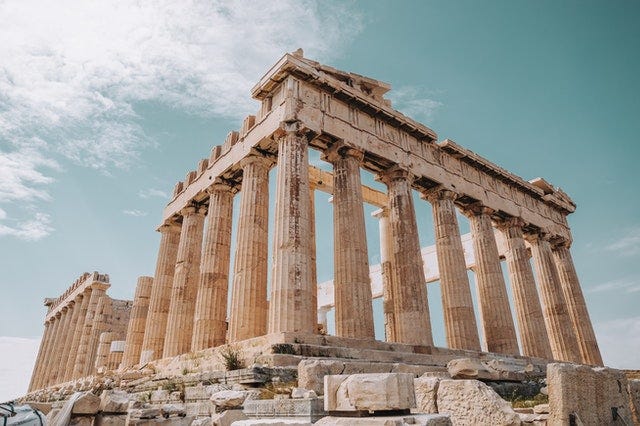
Left:Photo by Sami Aksu from Pexels; Right:Photo by Spencer Davis from Pexels

Drenched under his deluge of grief Is the rape of Hypatia and her Mathesis The burning of Bruno at the stake The mutilation of his beloved Mother Nature, from where he emerged By the splintering of his umbilical episteme Razed to the ground at multiple locations Of Alexandria, Nalanda and Persia..

Bearing the burden of his past Sisyphus is unable to locate himself In the world of secularised religion A mutating variant of fanatical religion As he sees the marketing of modernity And vacuity of post modernity Atheism is no alternative As it recreates more of the same ..

Now, what about science? Yes, it helps with explaining But cannot help with experience Since factoids are mere statistics Sans the vitality of story As the Red Native traumatically asks How he came to be called Indian? The Indian hardly wonders

Scoffing at his origins and Possessed by Macaulay’s ghost Alas! He has lost the language That he had once mastered The murmurs of the wind Which reveal the mysteries beneath Instead, learning the language of religion He recreates various “isms” to whiplash

Himself and the other; using history To either pulverise or parade around Sculpting our swaraj into a parody Of endless tragic-comedy Trivializing ,the sacrifice of our founders And spiting our collective ancestry We sink into our portentous shadows By disowning our powers of transformation

As I ponder about the state of affairs I receive the murmurs of the Native From the Westwind via the weakening monsoon To revive the now rampaged Goddess Before she unleashes on a civilisation That destroys in the name of growth And distorts in the name of knowledge Divining her relentless terrifying wrath

I bring my pagan palms together in Peace Pleading for the arising of some sense Seeing hope only in Mother India That last living but enervated Goddess Who needs to evoke her will to power Restoring and harmonizing humanity By speaking once again The lost Truth of Socrates to Power
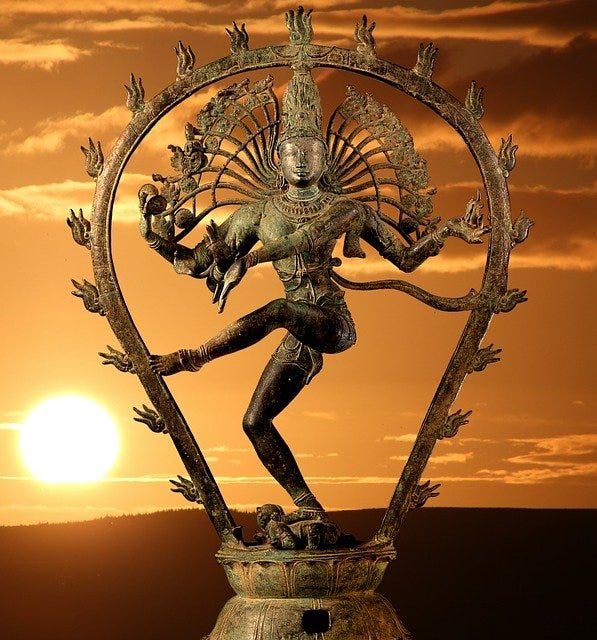
Photo by Alexas on Pixabay
Paganism
Native
Philosophy
Mythology
Poetry
Recommended from ReadMedium