
September Monthly Challenge
The Oysters of Mali Ston
I never liked oysters until I tasted the queen of them all
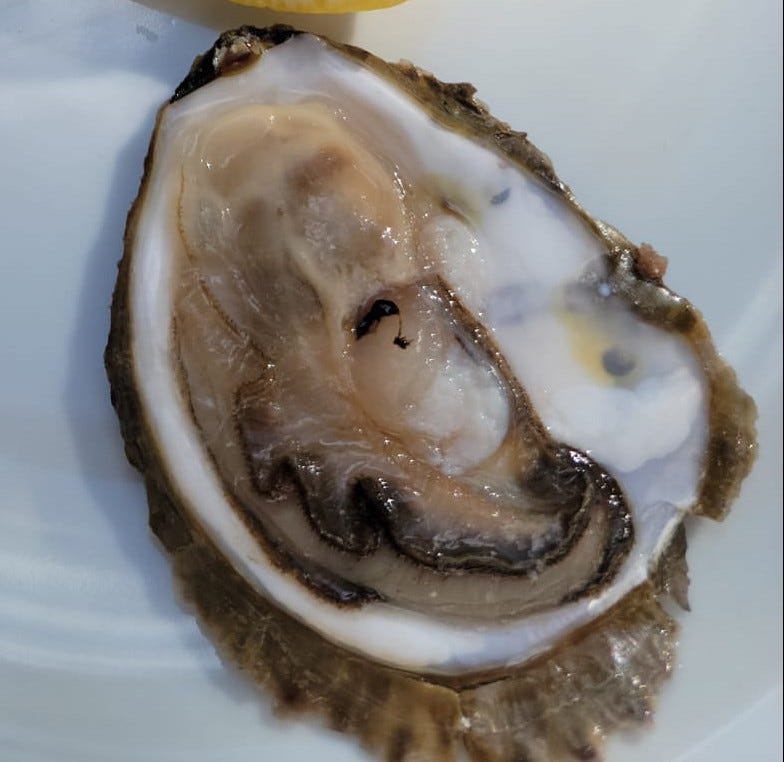
Until this summer, I had eaten oysters exactly two times in my life. The first time was at a restaurant in Naples, Florida, in the 1970s. As so often happens with bad memories, I remember the moment vividly.
There was nothing wrong with the raw oysters I ate—or more precisely tried to eat — in Florida, but I could not get beyond the gross, snotty texture to even come close to appreciating the taste.
For years after that — in reality, decades — the thought of consuming raw oysters brought on a gag reflex.
More than forty years later, when visiting my daughter in Denver, she convinced me to try grilled oysters. I found them not quite as gross as the raw ones, but it was definitely a one-and-done experience.
And I was fine with looking forward to never eating another oyster for the rest of my life.
Little did I know when I booked a trip to explore the islands of Croatia’s southern Dalmatian coast for this past July that the “special surprise” included in the itinerary would be an oyster tasting.
Oh, joy.
When traveling, I never turn down an opportunity to eat a local specialty. I have eaten some unusual foods in my travels. Jellyfish salad, pig snout, ear, and tail, thousand-year-old eggs, chicken feet, lotus root, and tripe (cow stomach) to name a few.
But oysters?
While I wasn’t looking forward to the oyster tasting, I didn’t want to miss the opportunity to experience what are supposed to be the tastiest oysters in the world. I knew that with a big swig of what hopefully would be a good local wine, I could manage to get one down.
The day of the tasting started in Ston, a small town at the base of Croatia’s Pelješac Peninsula, about 35 miles northwest of Dubrovnik. Records indicate that salt was collected by the Romans in this area since pre-Christian times, but it wasn’t until the area became controlled by the Republic of Dubrovnik in the fourteenth century that the economic potential of its saltworks was fully understood.
The Republic built a fortified wall to protect the salt pans and after a tour of the pans, we spent nearly an hour climbing the wall. Perhaps this was part of the tour guide’s plan to help reluctant oyster tasters like myself work up an appetite.

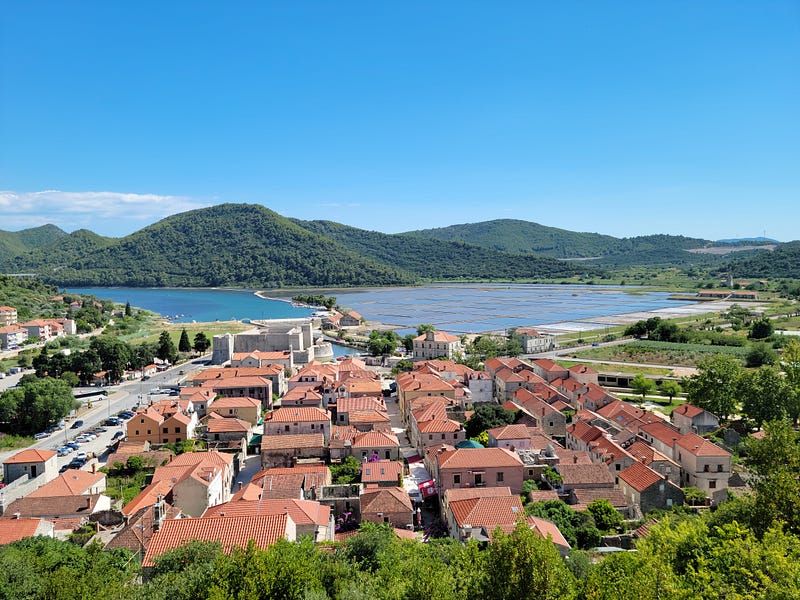
From Ston, a brief bus ride took us to Mali Ston (which means “Little Ston”) where we embarked on a small boat for a fifteen minute ride down the bay to Zaton Doli.
The driver of the boat was the oyster farmer himself and our tasting was to be held on picnic tables in his backyard.
As we were making our way across the bay’s crystal waters, the oysters we would feast on were being pulled from the bay and prepared by the farmers son and daughters. There could be no fresher oyster.
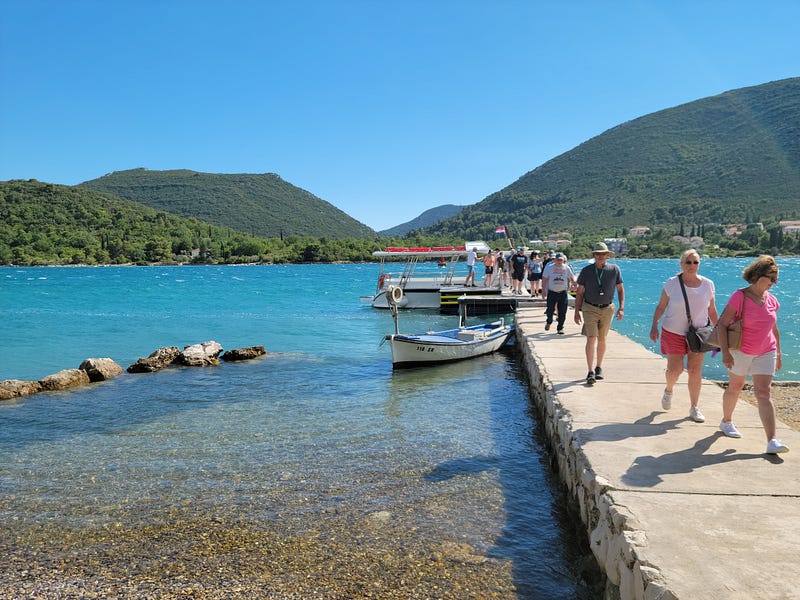
Fresh or not, I noticed thankfully that there was plentiful wine, water, and local berry liqueur on the tables with which I could wash down the oysters. As it was nearing noon and I was getting hungry, I was glad to see some delicious looking bread available also. I could wash down an oyster and then make a meal out of the bread and wine.
Shortly after settling in at one of the picnic tables, a plate of three oysters was placed before each of us. Oh, good. Only three.
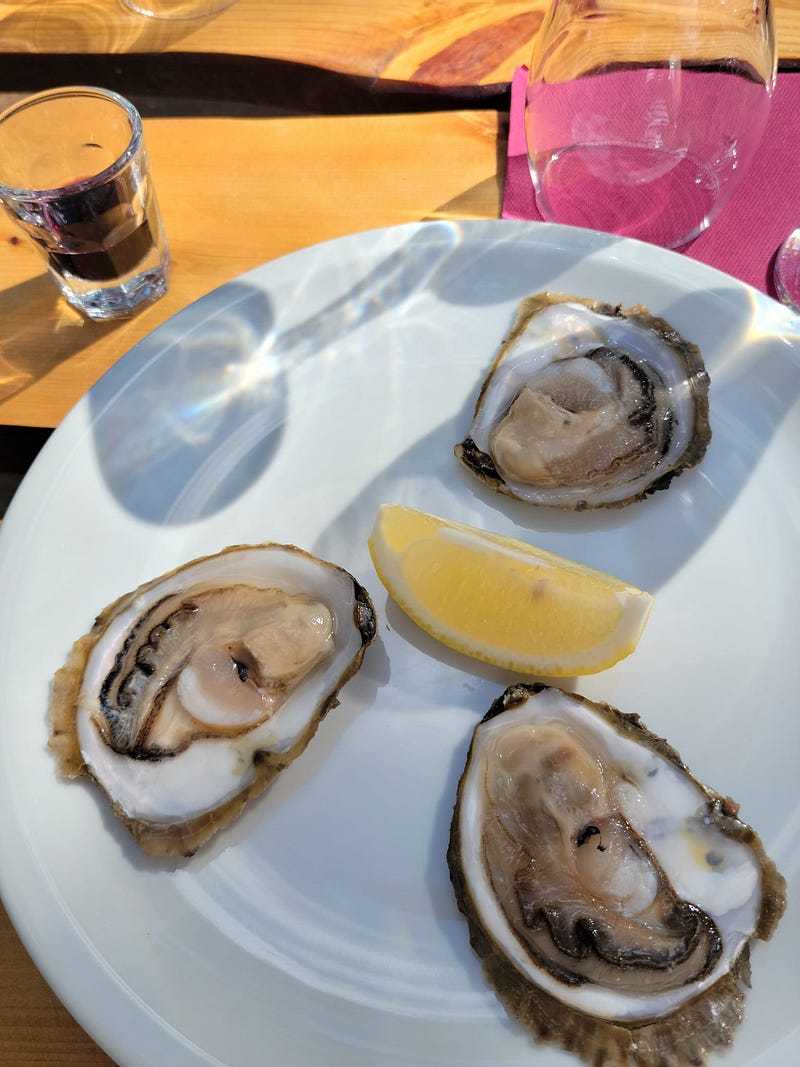
One of the first things I noticed about the Moli Ston oysters was that they were flatter than what I had eaten in the US. They also did not appear quite as gelatinous.
According to our host, the bivalves we were looking at are known as the Queen of Oysters. They have received a Protection Designation of Origin mark at the European level. Although the same oyster species grows in other European locations, those that grow in the Pelješac Bay have superior qualities. Their high quality is attributed to the perfect brackish water conditions of the bay, a combination of salty sea water from the Adriatic and mineral-laden fresh water that flows into the bay from the nearby Neretva River.
Well, the information was interesting and so far the wine and the bread were good. It was time to take the plunge.
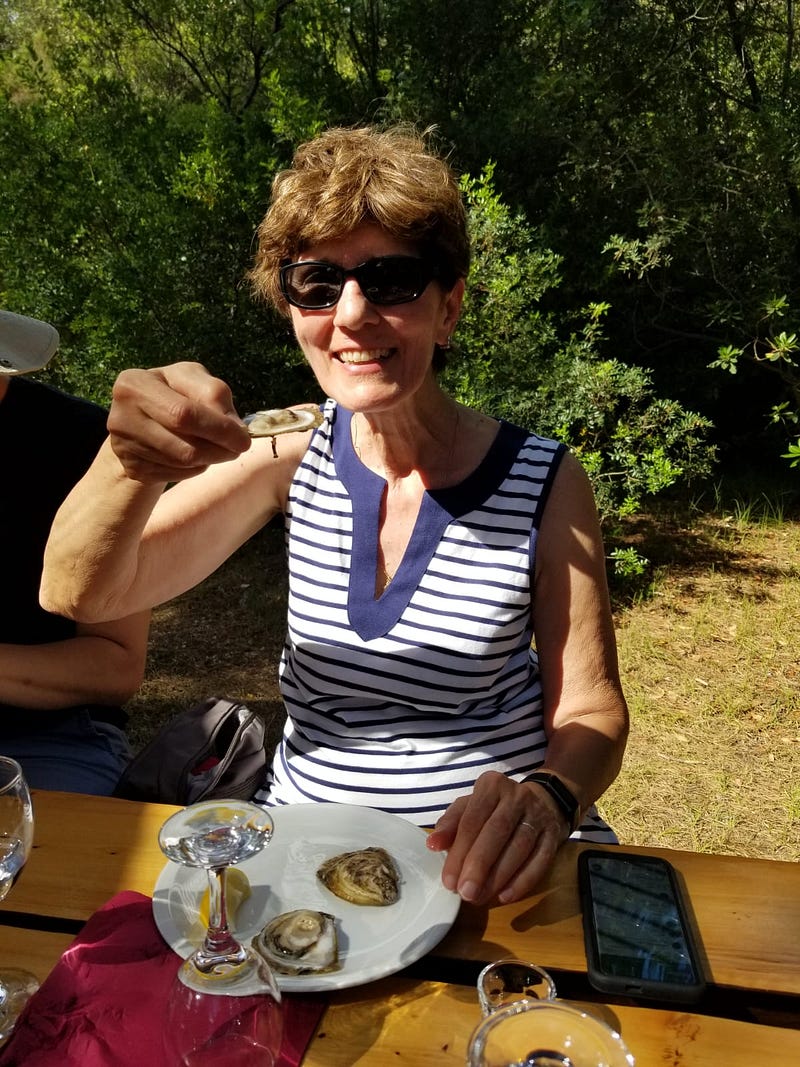
I decided to forego a squeeze of lemon on my oysters. I wanted this Queen of the Oysters to stand on its own.
With only slight hesitation, I tilted the first oyster off its shell and into my mouth and noticed instantly that the mouth feel was quite different from my previous experiences. The Moli Ston oyster was meatier. It was like biting into an extremely tender piece of meat and lacked the gummy chew I was expecting. The flavor was mild, lightly briny, and a bit minerally.
I didn’t need to wash the oyster down with anything. After only one, I began to understand why the Moli Ston oysters receive such lofty accolades from oyster connoisseurs.
I savored the succulence of the second and then the third oyster, slowly sipping the local white in between to enhance the experience. Before I knew it, I was sadly staring at an empty plate.
After my Croatian oyster tasting, I can honestly say I’m no longer an oyster hater. I fear, however, that the experience might have turned me into an oyster snob. I doubt I can ever eat an oyster anywhere else in the world without comparing it to the Queen itself, the Moli Ston oyster.
Long live the Queen!


