
The Owl
a verse translation
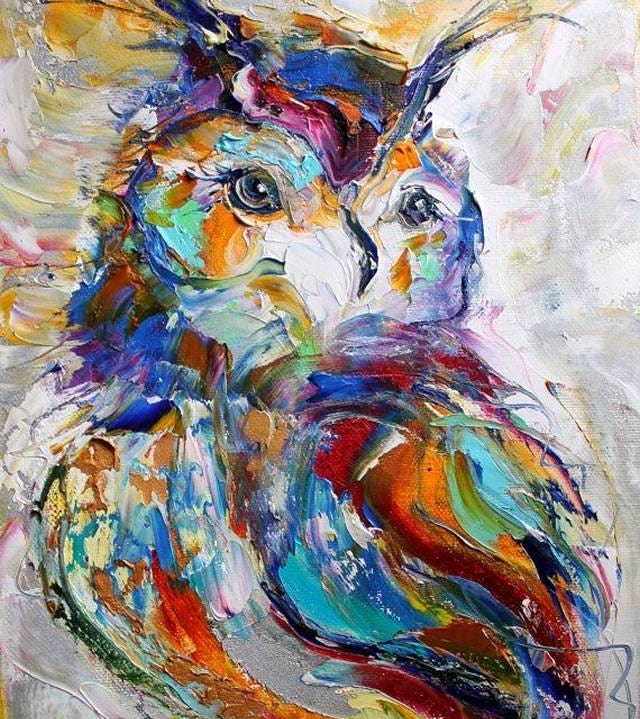
a poem by Lõrinc Szabó translated by Joe Váradi
This nickname Lóci is pronounced “low-tsee”
The Owl
My boy got the notion that there is an Almighty out there who would punish him when he’s bad and reward him with chocolate when he does good.
He even named the shadowy Lord, “the Owl!” he said, “That is his name!” But it seems he resembles me too, the owl has a pair of round-frame
glasses, giant ones, at least that’s how it was described by the childling; and whatever happened in the house it was now all the owl’s doing.
The owl took me away each morning and then brought home the breadwinner, and the owl was the one consulted if the child refused his dinner.
And Lóci got busy doing things to which he before paid no heed, just to prove that his own special god’s strengths were formidable indeed.
I wasn’t very fond of the owl but kept my silence nonetheless. But yesterday I sat the child down, and I compelled him to confess.
“Honestly, Lóci, is the owl real?” “Of course!” “Do you know him?” “I do!” “But unless I see him for myself, I just won’t believe that it’s true!”
“You will see him!” he said, fired up, stormed out and left me in the room; and now for a solid ten minutes, racked his little brain, I assume,
about how he might allay my doubts, and after much fanfare procured from the depths of some drawer a pair of bifocals, broken and old,
and announcing that the owl will be here, stepped out onto the terrace, and yelled, “Well, do you see him? Do you? Here by the window, watching us!”
“Looking straight at you! Through his glasses! Here’s the owl!” — he grew quiet, and now, for the first time, I really saw the bespectacled bogeyman:
I saw my boy Lóci, transfigured, peeking in, with a solemn air and haughtily, as one well aware of his imposing task to bear:
I saw my boy Lóci, radiant, as a statue, eyes open wide … And I ran to the next room, with the news that the owl has arrived,
and Lóci, by the time we returned, had come inside, jumping, all smiles, and the god residing in his soul had put a twinkle in his eyes.
The original, by Hungarian poet Lõrinc Szabó (1900–1957) (Wiki Bio), is below. He often invoked his children, Klári and young Lõrinc (nicknamed Lóci) in his poems.
I kept the 9-8-9-8 syllable structure of each stanza in the translation. This is my longest translation to date, I worked on it for a period of three weeks.
A bagoly
Kisfiam kieszelte, hogy van valahol egy mindenható, aki megbünteti, ha rossz és csokoládét hoz, hogyha jó.
A nagyurat el is nevezte: – Bagoly! – mondta – ez a neve! – De úgy látszik, rám is hasonlít, mert nagy kerek szemüvege
van a bagolynak: legalább is így mesélgeti a gyerek; s akármi történik a házban, az mind a bagoly műve lett.
A bagoly vitt el reggel engem és estére ő vitt haza, a baglyot hívtuk, ha nem ízlett a gyereknek a vacsora,
s Lóci megtette ezt is, azt is, amit azelőtt semmikép, csak azért, hogy bebizonyítsa külön istene erejét.
Nekem nem tetszett a bagoly, de tűrtem némán egy darabig. Tegnap azonban elővettem s faggatni kezdtem a kicsit:
– Mondd, Lóci, bagoly igazán van? – – Van hát! – Ismered? – Ismerem! – – De én nem tudok hinni benne, amíg nem látom, hogy milyen! –
– Látni fogod! – jött tűzbe erre Lóci, s mérgesen otthagyott; s most a fejét tíz hosszú percig, gondolom, azon törte, hogy
hogyan tudna meggyőzni engem, mert végül is előszedett valami fiók fenekéről egy régi rossz szemüveget,
s jelentve, hogy a bagoly itt lesz, kiment az erkélyünkre, és már kiáltott is: – Úgye, látod? Itt van az ablaknál! benéz!
Épp rád néz! szemüvege is van! Itt a bagoly!… – Elhallgatott, s én láttam, hogy csakugyan ott van, a szemüveges alakot:
láttam Lócit átszellemülten, ahogy benézett, komolyan és gőgösen, mint aki érzi, hogy rettentő szerepe van:
láttam Lócit tágult szemekkel, sugarasan, mint egy szobor… S szaladtam a másik szobába a hírrel, hogy itt a bagoly, –
és Lóci, mire visszatértünk, már bent volt, ugrált, kacagott, s szemében ragyogott az isten, aki a lelkében lakott.
Thanks for your attention!