
The Other Cost Of Illness
‘’The best way to reduce the cost of medical care is to reduce illness,’’ says Arlen Specter
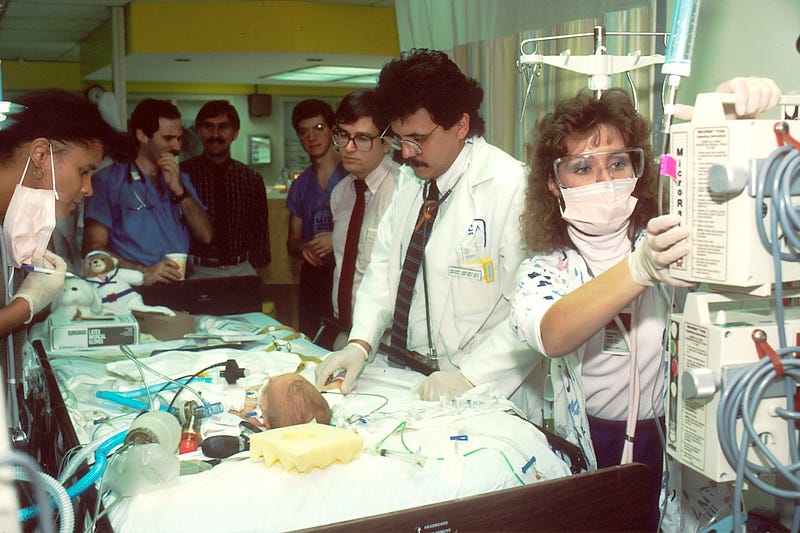
How much price do you want to put on illness? Rather too costly I will say, yet unfortunately thousands, if not millions all over the world go through some kind of illness or disability that makes them vulnerable and helpless, thus leaving them at the mercy of support and health workers.
How do I know this? A few years back, a friend of mine discussed with me about a partnership in a care home business. She is a social worker, with specialisation in Learning Disability.
My friend and I then set out to work towards running a medium-size service, supporting adults with a learning disability. Entry-level will be from age 18 years.
At that time, I have limited knowledge of what learning disability is, not to talk of managing and supporting them in a care home setting. My friend told me of a year-long program I can take that would broaden my knowledge. The problem with this is that it is a work-based programme. One can only ‘’pass’’ after the final work-based assessment is carried out by the institution qualified assessors.
An Experience Of How The Society Treats Vulnerable People
After much research, I know I need to ‘’work’’ in the setting, so I applied to volunteer two days a week in one I consider to be a reputable company. This is a balancing act between me and the company. This is an industry with consistently in need of staffs (the staff turnover is naturally high), and me offering 2 days a week high-level service for work-based experience for my certificate, (LEARNING DISABILITY AWARD FRAMEWORK).
I put all effort into learning all I can from this environment, and of course, working towards that final goal of co-ownership a care home that I will be managing. I ended up spending fourteen precious months, including getting the certification I need in that company. A very rich experience indeed, but what did the experience teach me?
I was disappointed with the treatment these vulnerable people received from the support staffs. Most often, these staffs are not interested in the service users, but in the hours, (and of course), so that they are often too stressed to offer any better service.
Social Care Industry in the UK, (as I see it)
The social care industry in the UK is huge. The workforce is large, with most working long hours for peanuts. So in essence, in other to receive a substantial pay at the end of the month, one has to put in very many long hours. These long hours and poor pay naturally put staffs under pressure, which unfortunately is transferred to the service users.
Most care homes have round the clock care and support, so it is staffed twenty-four hours a day, seven days a week. As one will expect, an industry with a low level of pay is full of half-baked staffs. School drops out, former teenage mothers, people living in social housing etc. Really clueless people, some hardly able to write correct English.
The educated members of staffs are usually foreign students and immigrants, who come to work, because of job availability and the hours they can get.
Was I impressed with this sort of atmosphere to want to create a business out of it? The answer is a big no. The experience indeed put me off completely. My conclusion is that these low-level members of staffs have nothing to offer, nor are they ready to learn to provide the high service that I anticipate in our proposed service.
The empathy, care and choices that should be part of the service and offer to service users are just not there. Choices are not offered, which should be the basis of support but rather support are imposed on the service users by the support staffs.
A 2018 UK survey indicates that abuse and neglect are present in ninety per cent of care homes. Read a Telegraph report here.
The Cost Of Social Care Industry.
When the figures are analysed, this is not a high-profit industry. The reason why pay is low, otherwise the owners will virtually have nothing left at the end of an accounting year.
I reckon the change needed in my proposed service will be enormous, the topmost is getting a higher educated member of staffs. This, of course, will necessitate a higher pay. With that, the returns will not be worth it, except of course one is running the service solely to improve the quality of life of service users, (as a charitable organisation that depends on donations) and not bother too much about returns. But how much can that continue for, or whether it will be sustainable at all? That will be a different line of thinking.
Conclusion
Live Healthily And Take Care of Yourself — so that you will not be at the mercy of selfish and un-compassionate members of staffs. These people are too busy taking care of themselves, and they are only working for the money, nothing else. As Arlen Specter, mentioned above, reduce the chances of your illness by a healthy lifestyle.
The level of abuse in care home relates to what is going on in the industry. Can you imagine yourself in a care home, supported by staffs who are too much under pressure with little or no value added to your life, but you are too vulnerable to notice?
Be a conscious business person, where all you do connects easily — especially in giving and receiving back. I am aware of the interconnectedness of all things. I am part of the whole, who are not seeking to break free.
This is one important law of success. A business should not lose a focus, an important part of building a compassionate and charitable world.
Money or profit, or gain should not be a deciding factor in choosing your business. In choosing a niche, passion ranks high. Your passion is something you enjoy doing — why? Because if you choose a business based on your passion, you will have credibility.


