
Stand Up for What You Believe In
Even if you are standing alone ~ The Story of Sophie Scholl
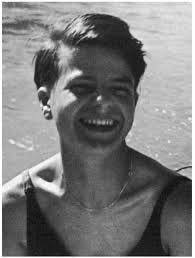
Somebody, after all, had to make a start. What we wrote and said is also believed by many others. They just don’t dare express themselves as we did. ~ Sophie Scholl’s last letter to her parents.
The White Rose Movement: I knew it was a campaign against Hitler, the Nazi Regime. I knew Sophie Scholl was an icon of the movement. That was about it. Then I read a short biography about her. What can I say? What can’t I say about this young woman, this girl? She truly had the heart of a lion and the courage of a warrior. Taught by her parents to think critically and independently. And the question arises: what would I have done? Would I have been as brave and steadfast in my beliefs? Would I have done what she did? Standing up against the majority of popular opinion and political beliefs? Going up against a regime that had spies everywhere? Who disappeared people in the middle of the night? Knocked on the doors of fellow citizens, in this case, as we all know, the Jewish population, and said: We’re taking everything away from you. Your house is no longer yours and all your valuables belong to us. “Enteignung” they called it. Dispossession. Stealing would be the term used today. Just because you were Jewish.
A Happy Family, A Happy Childhood
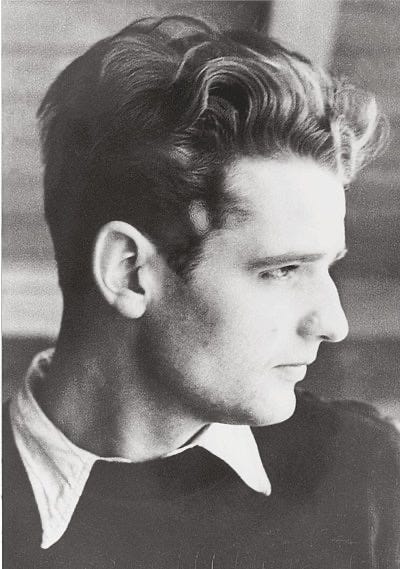
So, yes, I was aware in that vague ‘yeah, I’ve heard of this somewhere before’ — of the White Rose movement during WWII. Sophie Scholl became part of that movement when she joined her brother at University in Munich. She had a wonderful, carefree childhood in Ulm, a city about 156 km east of Munich, with parents who nurtured the large family (two brothers, three sisters) with a credo to strive for independent thought. Eventually, when WWII started, and friends were drafted into battle, stories of the horrors from the Front began trickling back, whispered about.
Sophie wanted to go to university (philosophy and art) so she joined her brother Hans. Hans Scholl was one of the founding members of the White Rose movement. She met medical student Christoph Probst. Also part of the movement. I mention Christoph Probst and Hans Scholl because they too paid the ultimate price. Their goal: to inform the population of the horrors of Nazism. They did. Until they were caught. By a university custodian. A collaborator.
Growing up Fast in Dangerous Times
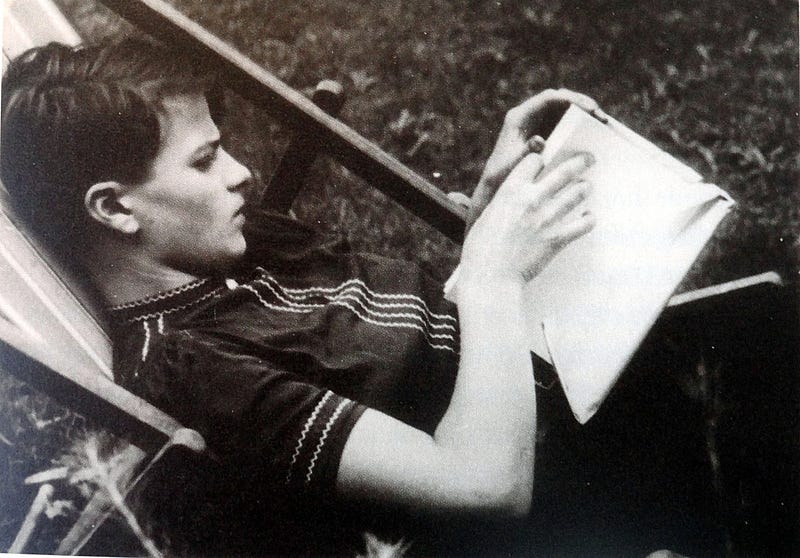
Would you have stood up to that? Sophie was 12 years old, her brother, Hans, 15, when the NS Regime took over Germany. At that time, the whole “We’ll make Germany great again” thing captivated them in their adolescent enthusiasm for something different, something new, despite their parents’ intransigent criticism of Hitler’s intentions as well as his propagandist rhetoric. Worth noting: From the get-go, Sophie was outraged by the harsh racism towards her fellow citizens i.e. the Jewish community. Her best friend was a Jewish girl named Anneliese Wallensteiner. Sophie continued to invite her home. At that time, it was already considered a crime to have Jewish friends. Sophie showed her solidarity. And her initial mild enthusiasm was buried forever in the blood of dead friends and bloody lies. As she grew up, gradually, in its place, the White Rose emerged.
An end in terror is preferable to terror without end.
Later, when Sophie Scholl and her brother Hans — with other friends — became part of the White Rose Movement, they weren’t necessarily fearless in a bombastic sort of way (although, let’s be honest, a generous amount of a FU attitude was useful going up against the SS, Gestapo and your friendly neighborhood rat, gleefully ready to sell you out) they did what they had to do; what they felt in their hearts was a repressive, criminal regime, what they experienced firsthand themselves, and what they felt, people needed to know. Eyes need to be opened to the horrors of Hitler and his henchmen.
Their bravery truly blows me away. Of course, I’d like to think I would have gone forth with similar bravery that Sophie and her friends displayed. I hope I would have. I hope, should the need arise, we do show courage against injustice, evil, in wrong.
A Just World?
My own father always taught me, or told me, justice will prevail. Eventually. Goodwill always perseveres over evil. I believed him. I know now, it’s not always the case. At least, it seems to me, evil often wins. Even though most people are good, or have goodness in them, fear of people who intimidate with power and money squashes independent thought. Dorothy Parker said it best: ‘If you want to know what God thinks of money, just look at the people he gave it to.’
Now, this isn’t supposed to be an elaboration about the evil of money, or rather, having too much of it. It is about a girl who stood up against one of the most powerful forces in history, against one of the evilest regimes in history. One could make a comparison to Greta Thunberg in some aspects. While Greta Thunberg doesn’t have to fear arrest and execution, she has to deal with different types of powerful confrontations today.
Sophie Scholl didn’t have to deal with haters on social media. The hurdles back then were dressed in long, black leather coats and boots, knocking on doors in the middle of the night, and disappeared anyone considered an enemy of the state. Sophie Scholl knew that and was willing to pay the ultimate price (members of her family had been arrested and interrogated long before she joined the White Rose; so she was aware of the consequences).
The Hope Knowledge Brings
How did they distribute the flyers with paroles against the regime? They bought blank paper at different shops so as not to arouse suspicion. They worked at night and couriered the leaflets and flyers themselves — by train — to different cities throughout the Third Reich. The Gestapo, of course, check controlled passengers on the trains; immediate arrest would have been the consequence for any of the couriers caught with anti-regime flyers, so they left their bags with the printed pamphlets in different compartments, retrieving them up as they disembarked. The logistics of making and distributing the flyers was an incredibly stressful undertaking. A nail-biting chapter in the book I read. Yet they did it. Sophie Scholl went about her mission with fierceness, courage, humility, amazing eloquence, and unshakeable pragmatism. She knew what could happen. It did.
A Legacy of the Extraordinary Kind
I wonder what her parents must have felt, reading the last letter she wrote them. Not only was she executed, but her brother as well. Her parents, who were liberal, and against the Nazi regime from its inception, taught their children well, I think. And lost two of the five children they had. I just can’t imagine the grief. I think — as a parent, especially during such extraordinary times, as those were — you have to think ‘bigger picture’ in the historical context. Because if you take it as a personal twist of fate, you wouldn’t be able to live with yourself.
Such a fine, sunny day and I have to go… What does my death matter, if through us, thousands of people are awakened and stirred to action?
Sophie Scholl, arrested on February 18th, 1943, was executed by guillotine on February 22, 1943. Her brother Hans and Georg Probst, were executed within that period as well. The judge: Roland Freisler, a hysteric, hyena-like sadist regarded to be Hitler’s favorite judge. He also sent Claus von Stauffenberg in front of the execution squad (Stauffenberg planned the failed attempt to assassinate Hitler — there’s also the Tom Cruise movie Valkyrie)
A book recommendation: The Short Life of Sophie Scholl by Hermann Vinke — put together from interviews conducted with her surviving sister, Inge Aicher-Scholl.
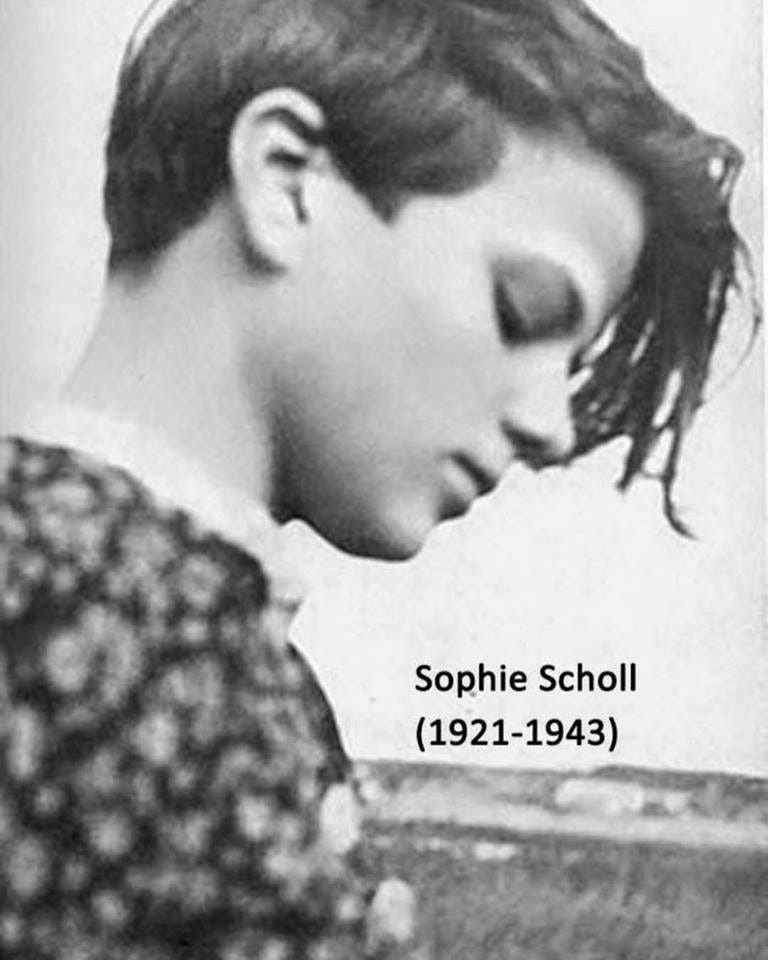
Sophie Scholl is first on my list of people I’d love to talk to if I could travel back in time. Such a short life. So much inspiration. So fierce. So unshakeable in her beliefs. Such an inspiration.
Stand up for what you believe in even if you are standing alone ~ Sophie Scholl