
The Only Useful Response For ‘I Find That Offensive’
Is exactly two words long and those two words are not ‘I’m sorry’
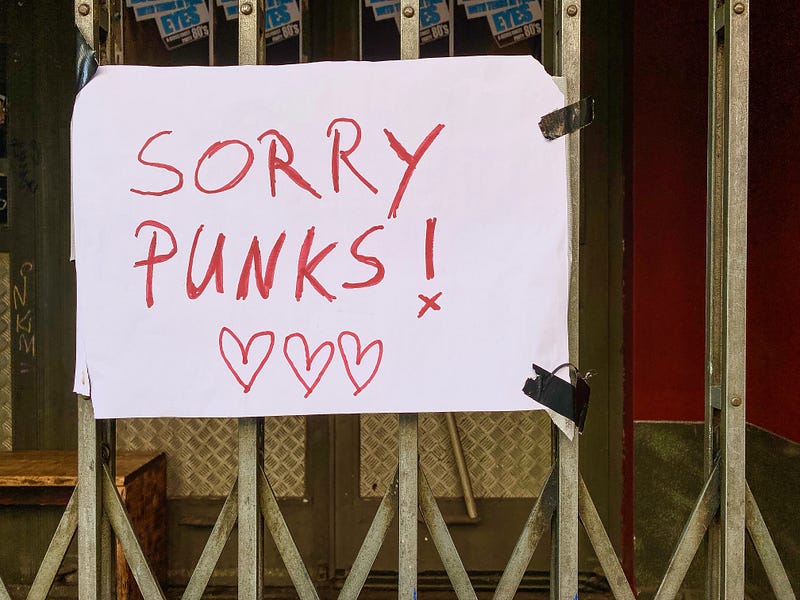
Heads up, you might be offended by this article. If you are, you’ll know not to drop such a pronouncement into my comments — or at least be well aware of the likely result of doing so.
I have many problems with the state of modern discussion and debate, it seems to be broken on some deep fundamental level. I suspect this is what happens if you invent and distribute a technology that gives everyone an equal opportunity to speak but don’t consider the unintended consequences.
Over the last two (and a bit) years of writing on Medium and elsewhere, I’ve noticed three devices being deployed time and time again. Each of these three rhetorical tricks adds nothing of note as the sole function is to prevent the continuation of the discussion.
It’s how you ‘win’ a discussion without considering the wider pattern of loss painted across the rest of society.
- Weaponised offence
- The Kafka-Trap
- Overuse and misuse of the phrase ‘Gaslighting’
I’m going to deal with each of these in turn and all three will be getting their own article that sheds light on how they work and what to do about them. Today though we’re going to be talking about offence, being offensive and being offended. Pull up your big boy/girl/gender neutral pants — it’s gonna get real
Here’s why I don’t care if you’re offended.
Offence and choice — The Penguin is Preggo story
Being emotionally hurt by something that someone says or does is something you cannot help. It happens. You have strong feelings and you’re only human. Plenty of people have said things in the past that I have found upsetting or angering — but this is not the same as being offended.
Being offended is a rational decision that you make after the fact.
You apply your thought and memory to the events and you make a decision about how to act next. It is your behaviour that indicates whether ‘offence’ has been taken. You may be emotionally hurt by someone, but choose not to take offence.
Once when I was shopping a small child pointed at me to inform its mother I was pregnant. I was not pregnant — I was chubby. Said crotch-fruit had a heavily pregnant mother and was generalising their experience of pregnancy from one adult to the other.
Kids do this all the time, often loudly in supermarkets to the chagrin of all the assembled adults.
Was I upset? Not really. Did I go to the gym that evening — for sure. Was I offended? No. Why not? There was no intention to hurt me. Whilst I generally consider children to be far too sticky and bug-eyed to be pleasant company, they usually act without malice.
I could’ve picked it up and Tom Brady-ed the little bastard through the nearest shelving unit, but I elected not to do so. See, I’m a rational person without a criminal conviction and I want it to stay that way. The blushing mother apologised profusely and we duly both laughed it off whilst simultaneously dying inside of shared embarrassment.
What was the point in being offended?
But… but… but what if people are trying to be offensive? Then your response is up to you. Given what they’re trying to do is goad an offended response out of you — it’s your choice. That happens to be true even if they’re grossly offensive as this wonderful article by Steve QJ illustrates. Words only have power if you entertain them.
Be hurt, but don’t be offended. Take the high road.
Leveraging offence — The Hanukkah Story
If the phrase ‘some people might find that offensive’ ever appears in your life. Here’s what you must do. You must look squarely at that person, take a deep breath and say…. “So what?”
The Christmas before Covid hit I was invited round to the house of my Jewish neighbours for drinks and nibbles. Whilst I was there, they invited me to light one of the nine candles for Hanukkah. A feat I performed with all the gusto of an atheist being invited to light a candle for magical reasons beyond their comprehension.
I’m not Jewish.
Guess what? “Some people might find that offensive”. The fact is the people who might find that particular social interaction offensive are good old fashioned Nazis. They’d be horrified to know that I, a gentile, went and partook of a Jewish tradition. I suspect very Ultra-Orthodox Jews would be too. Extremists are the worst.
But despite being the worst they also fit into the broad category ‘some people’. Are you saying I need to turn down all future invites for because ‘some people might find them offensive’? Because those some people are Nazis.
I don’t have a problem with Nazis being offended. That probably holds true for a vast percentage of my readers.
The problem with running a social contract on the basis that ‘some people’ might be offended is that you have to make a subjective judgment on whether those ‘some people’ matter or not.
If you conclude that it’s okay to offend ‘some people’ because you disagree with their political stance then why can’t they do the same to you? Why can’t all of us do the same to you? Who made you the arbiter of justice in the modern age anyway?
The policing of language cuts both ways — what can be done by the left can be done by the right. I find both sides equally pernicious and will always argue against whichever group tries to hijack language for their own political ends. At the moment it’s a toss-up between the left and right who go into the best histrionics at the first sign of dissent.
As centre-ground liberals if we agree to the policing of language by weaponised offence then we must agree to it across the board. That’s why I don’t agree.
‘I’m sorry you feel offended’ is what I used to say. So hedgy it could be placed outside a manor house and turned into a maze. ‘I’m sorry you feel offended’ is a not very subtle linguistic pas de bourree that is neither an apology nor a withdrawal.
You’re standing your ground but pissing on your own shoes in the process.
As many people often point out when it’s done by a celebrity or someone caught in the modern social-media inquisition… it’s not a real apology. There’s a very good reason for that. They don’t regret what they’ve said, they just don’t like the reaction it garnered and someone from PR has told them to come out and say sorry.
These days when someone pops up to say ‘I find what you’ve written offensive’ — my go-to reply is “I find your comment about taking offence to be offensive”. That’s how quickly you can render the offence argument reductive and meaningless.
Now we’re both ‘offended’, back to square one and you should apologise first as you were the one who chose to read the piece.
What’s really happening here?
When someone plays the ‘offence’ card, what they’re really doing is appealing to your very human desire not to hurt other people. Most of us don’t want to be the sort of person who hurts others. I certainly don’t.
When faced with mysterious ‘some people who might be offended’ we comply and retract what we’ve said or apologise and backtrack. Often the ‘some people’ mentioned aren’t present. They are imaginarily injured outside of the context in which the words are spoken.
When someone tells me that I’m being offensive, or they’ve been offended by something I’ve written, I’m faced with a judgment call. I have to weigh up any emotional damage they may have accrued against their desire to control and deflect attention away from whatever is being discussed.
What isn’t immediately obvious is whether a given person is genuinely hurt by my words or whether they’re just carrying me off into a subjunctive fiction where everything I’ve written has earth-shattering emotional consequences.
In many cases, it’s the latter and I’ll happily redefine it as their problem. As I often remind my less controversial significant other penguin, nobody ever died of being offended.
Maybe Miss Havisham, but she had to wait 60 years, corrupt a girl’s soul to unspeakable cruelty and die in a fire.
If people cannot hold their arguments up to close scrutiny and handle dissent without invoking the cloak of invisibility ‘offence’ offers, they should stay in the shallow end of the philosophical paddling pool.
When you tell me that ‘you’re offended’ what you’re doing is asking me to change my view based on your subjective experience. So what? I already wrote an article asking you to change yours based on mine.
I had the decency to haul my penguin ass out of a circular argument first.
The weaponisation of offence causes all sorts of problems
When being offended replaces ‘a genuine threat to life’ in the eyes of a pluralistic society, we no longer have a social contract — we have a complex ideological bun fight. Words are treated as weapons rather than transient moments and the policing of language begins in earnest.
Most of us know this intuitively — which is why I can assert with some confidence that the private language of individuals is different from the public language of the same individuals.
The twenty-first century has been great in many ways — but we’ve never had access to each other’s thoughts and lives in quite the same way. The leaking of private Twitter messages, Whatsapp chats and Facebook posts has taken private language and turned it into publicly accountable language.
That should worry everyone. I mean everyone. Can you honestly say that in your X number of years on the planet you haven’t said a single thing that could cause someone else on the planet any offence?
If you haven’t, I find that offensive. Gotcha.
If we’re going to police what people say and how people think based on offence, we need to give some serious thought to the implications. The technology to do so is now available and most of us put our thoughts online in some capacity.
This is becoming more problematic as the bar for offence is continually lowered whilst the cost of causing offence is being raised at an alarming rate. What is good for the left at the moment will become good for the right too and vice versa. That’s why everything ends with shouts of hypocrisy.
If we’re going to overzealously police laws around racial and gender speech on this platform…. half of the writers on here are going straight to jail — and not the half you think. The digital world is inexorably sliding towards a space where everyone poses extreme danger to everyone else at all times.
Not actual danger. Emotional danger. Offence. The threat of having our views questioned by anyone else at all, ever. There is nothing more dangerous than having your views politely prodded by a moderate.
If offence becomes the new de facto definition for harm then I’m utterly screwed. Ten minutes after the right-wing or left-wing seize control I’m going to be frogmarched to a concentration camp or a gulag respectively.
I’m far too outspoken. I’m outspokenly left when it comes to the right-wing, and I’m outspokenly anti-identity politics when it comes to the left. I am not a popular penguin outside of the centre-ground.
My popularity is neither here nor there, and I’m prepared to tattoo ‘nobody ever died of being offended’ to my face to get the message across. I don’t care if adherents to either side choose to be offended if and when they read my work.
Weaponised offence is usually about controlling what I say rather than any real emotional pain or hardship. Plus I can cheerfully remind them the liberal position cuts both ways and nobody in the world need ever worry about offending me.
And if they do, and I tell them so, they’re perfectly entitled to say ‘so what?’
Now with added sequel.