
The Only Time I Ever Told My Father I Loved Him
Unfortunately, I didn’t have time to say more.
In 2006, at age 36, I met my father for the first time.
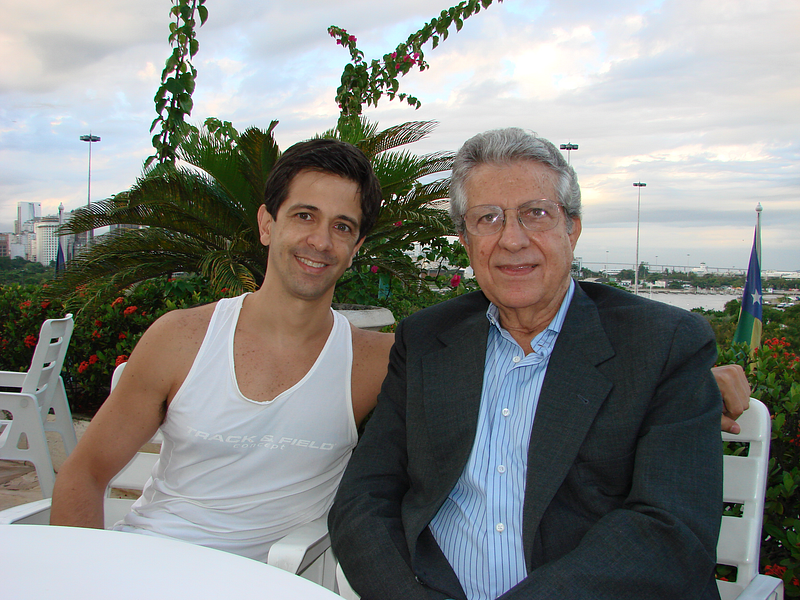
My relationship with my father was… Wispy. Small compared to what it should have been. He was married to a woman he met while with my mother. He married her two months after my birth — without knowing that he had gotten my mother pregnant and that he was a father, I must point out. So when we met, his situation was complicated. If he told his wife he had a child, he could start a crisis that would end the marriage. If he didn’t tell… Well, the son here would be in the background, as he had been until now.
But I’m one of those people with “strong backs,” you know? Of those that intend to withstand all the challenges in the world?
So I gave up formal acknowledgment — he never doubted his paternity — and let him set the pace for our approach.
Unfortunately, it was the wrong choice.
Six years later, my father passed away. I haven’t seen him in person for over a year.
So our relationship was wispy.
But I loved him deeply. I suffered too much from the loss. And I miss him to this day.
One of the first things my father told me when we met in person was about my uncle, who died just under a year at the time.
He told me how much he loved and admired his brother, a great adventurer, owner of a sailboat on which he traveled halfway around the world.
I saw how much he missed his brother.
So I decided to pay homage…
At the time, I was starting to write “The Second Dawn,” my first novel. I had already finished three years of research, and I was finally drawing the first chapter.
I hadn’t decided, however, what my protagonist’s name would be.
It was on that day that I made the decision.
Heitor, the hero of “The Second Dawn,” was named after Heitor, my father’s hero.
It was a gentle way of telling that gentleman I barely knew that I loved him.