
The Only Man in a Room Full of Women
How working at nonprofit organizations taught me about feminism
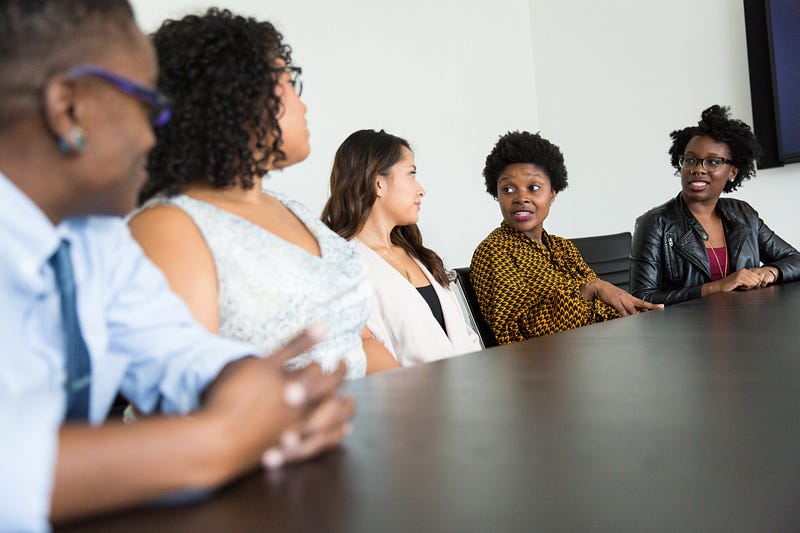
I work in the nonprofit industry. For those who are not aware, a significant percentage of nonprofit employees are female. This doesn’t bother me in the slightest — I tend to get along better with women than men, and having a female supervisor doesn’t make me feel inferior in any way.
That said, because my workspace is dominated by women, I exert a decent amount of conscious effort to be non-threatening. It’s not hard for me — I am a pacifist, I rarely get angry, and having a female boss doesn’t intimidate or emasculate me.
The reason I bring this up is that memory from a few years ago showed up in my Facebook feed. In the post, I described a conversation with a female coworker about the things I do on a daily basis to be consciously non-threatening. She hadn’t realized that I was doing anything at all, which I guess is a good thing.
I’ve been doing this for so long that I don’t even think twice about it anymore. However, it occurred to me at that point that many men in office situations might get upset about having to moderate themselves in this way. Being “politically correct” so as not to offend anyone takes too much effort, they might say. They want to say and do the things they’ve always been able to, and they resent that they can’t anymore, at least not without backlash.
I can empathize with this frustration, at least in some way. I put conscious effort into being nonthreatening, but I go quite a long way further than modern norms dictate. I’m fairly average in height and a bit overweight, but I try to make myself smaller and less physically threatening. I dress in a colorful, casual way that doesn’t impose any sense of unearned authority. I make inoffensive puns and tell dad jokes — never inappropriate ones — that elicit groans when people hear how bad they are.
People think of me as a kind of quiet, nerdy, awkward guy, and that is a cultivated image to help reduce my threat level among my coworkers. (I mean, I am a quiet, nerdy, awkward guy, but you know.) I know that for people who don’t know me, entering a space where I am the only male present can suck the air right out of the room. I go out of my way to try to prevent that.
I don’t expect all men to do that much (although I don’t understand why they can’t, but whatever). However, there is a basic level of decency that every cishet man needs to have when dealing with anyone who isn’t a cishet man.
Lots of men were raised with the notion that men need to project authority in a sort of macho, alpha, take-control kind of way. I can pretend that it’s mostly older men who are like this, but those older men raised sons too, so there are plenty of younger guys who feel the same way. This needs to stop.
It costs you zero dollars to not say or do shitty things to women, or BIPOC, or LGBTQIA+ folx, or anyone not a cishet white man, and not saying or doing shitty things should be the default state. It should not require a conscious effort to be a decent human being.
I do not accept the premise that it takes “too much effort” to be “politically correct” and not tell demeaning or racist or sexist or bigoted jokes. Nor do I accept the premise that sexual harassment is “normal” or “boys being boys,” and that stopping would ruin anyone’s fun. The fact is, women have had to make an effort to fit into the cishet white men’s world, and a whole bunch of them are sick of it.
Women have spent centuries constantly moderating themselves to avoid notice, not speaking out of turn, not wearing revealing clothes for fear of rape and murder (not that the clothes cause those things, but that they will be used as a convenient excuse by men), and not telling people when they were raped for fear of not being believed or worse, being attacked for it. In the handful of decades that women have been in the workplace, they have had to struggle to make the same salary as men — and heaven helps them if they make more than their husband.
And women still deal with all of these issues. The difference is that they’ve decided that they’ve had enough and that society needs to recognize them and their contributions, their validity, and their mere existence as something other than a thing to be coveted or a thing that we don’t talk about.
Throughout the entire course of my professional career, I have spent time with many strong women who have taught me a lot about what it means to be a feminist. I’ve had bosses, mentors, colleagues, and office buddies who have shown me how to be both a strong worker and a feminist ally. I’ve also had many female (and transfemme, and nonbinary) friends in that time help guide me to be a better ally.
It has been such a natural thing for me that, while I empathize with the men who gripe about the excess energy it will take to be “politically correct” — after all, who likes putting in extra effort? — I don’t have even a little sympathy for their complaints.
Yes, the world is changing, no, you can’t say and do the things that you did in the past, and no, it’s not going back to the way it was. It turns out that women are people, and treating them poorly won’t fly anymore. I’m sorry you have to make an effort to not demean women, but the fact that not demeaning women requires effort on your part is concerning
So, I put my head down and continue putting energy and effort into moderating the things I say and do to not be threatening and to show myself as an ally to the cause. Yes, it is difficult, but it gets easier every day I do it. The notion that people other than straight white men are valid human beings deserving of our love and respect is not controversial. It is something that is truly worth fighting for.


