
The Only 8 Bodyweight Exercises You Need to Build Muscle Fast
You can build muscle and burn fat at home without any equipment relatively quickly by following what I’m about to tell you in this post. When it comes to improving your appearance, bodyweight exercises can be effective for developing a muscular physique and increasing overall strength. Of course, if you have some dumbbells or even just a book bag, it will make it easier because it’ll offer you more progression paths to force muscular adaptations. But you don’t need any equipment at all, as I’ll go over other ways that you can progressively overload these eight extremely effective bodyweight exercises.
Push-ups
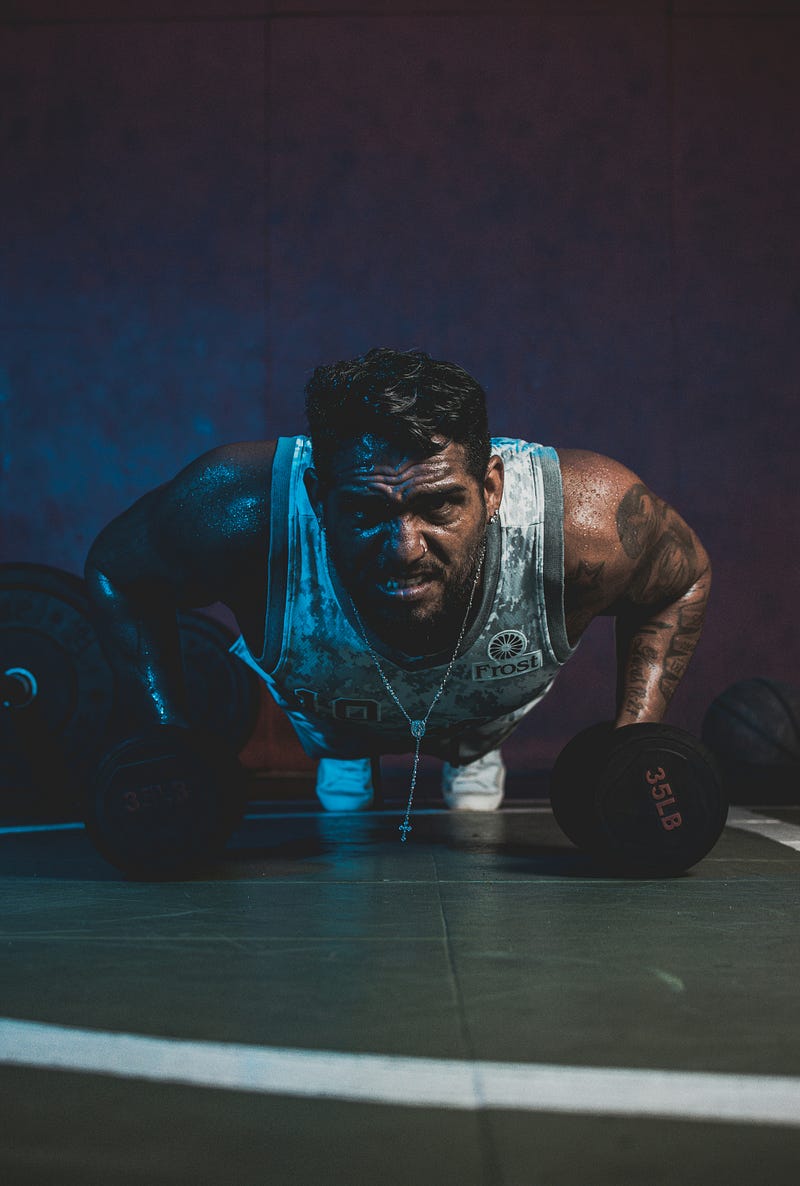
First, we’re going to start with one of the most basic: push-ups. Now, even though push-ups aren’t new, there are many different ways that you can do them to build upper body strength and muscle. The width of your shoulders, as well as the fullness of your chest and your arms, plays a big role in creating an attractive male physique. Luckily, push-ups will work your chest, shoulders, and triceps, and they can be modified to make them easier or more challenging. For example, you could do push-ups on your knees if you’re just starting out, or you can elevate your feet to make them more difficult.
For a basic push-up, you want to start in a plank position with your hands slightly wider than shoulder-width apart and your feet together. Then simply lower your body until your chest nearly touches the floor, keeping your elbows close to your sides at about 45-degree angles. Then push back up to the starting position while keeping your core engaged and your body in a straight line. The key to building muscle is to progressively overload by bringing your body close to failure. If you’re advanced, that could take anywhere from 30, 40, or maybe even 50 or more reps to really challenge your chest, shoulders, and triceps with regular push-ups.
Alternatively, you can pack a book bag with heavy objects and then perform significantly fewer reps before fatigue sets in. The point is, you can either work on increasing the weight load in a book bag while maintaining a steady rep range, or you can just use your own body weight and work overtime on increasing your rep count higher and higher.
Pull-ups
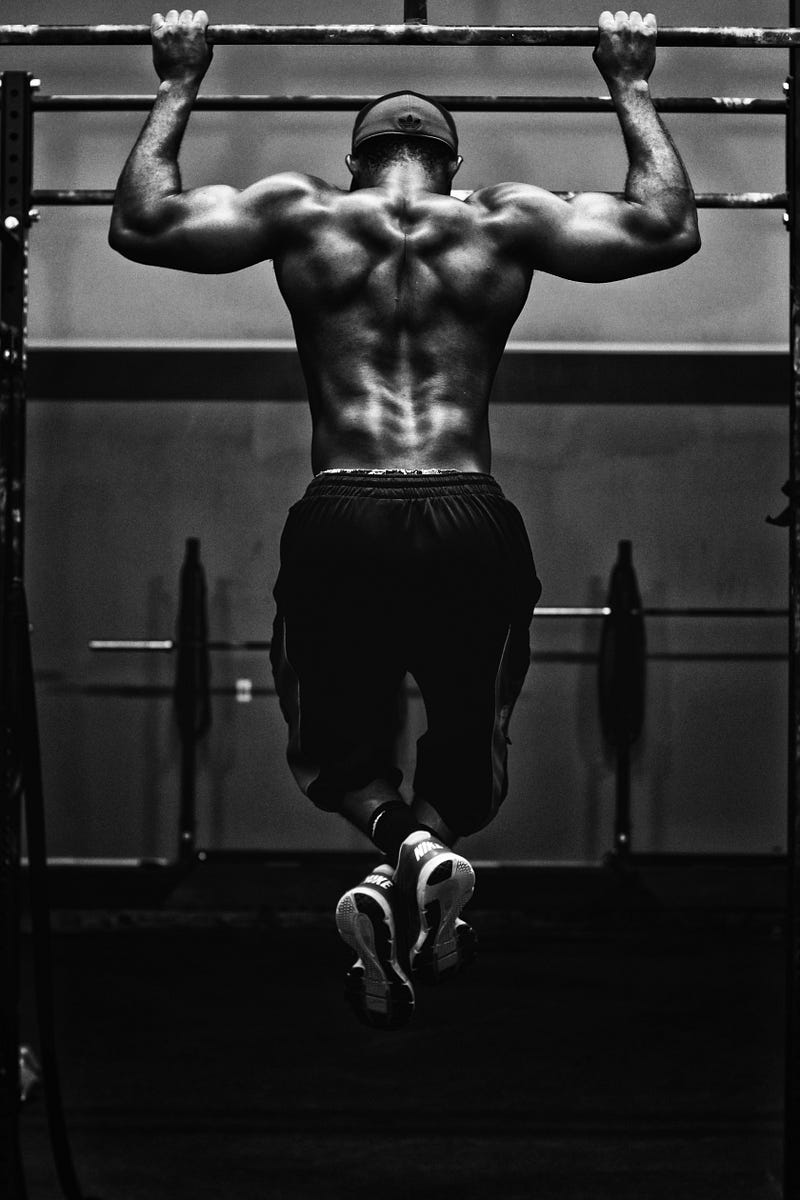
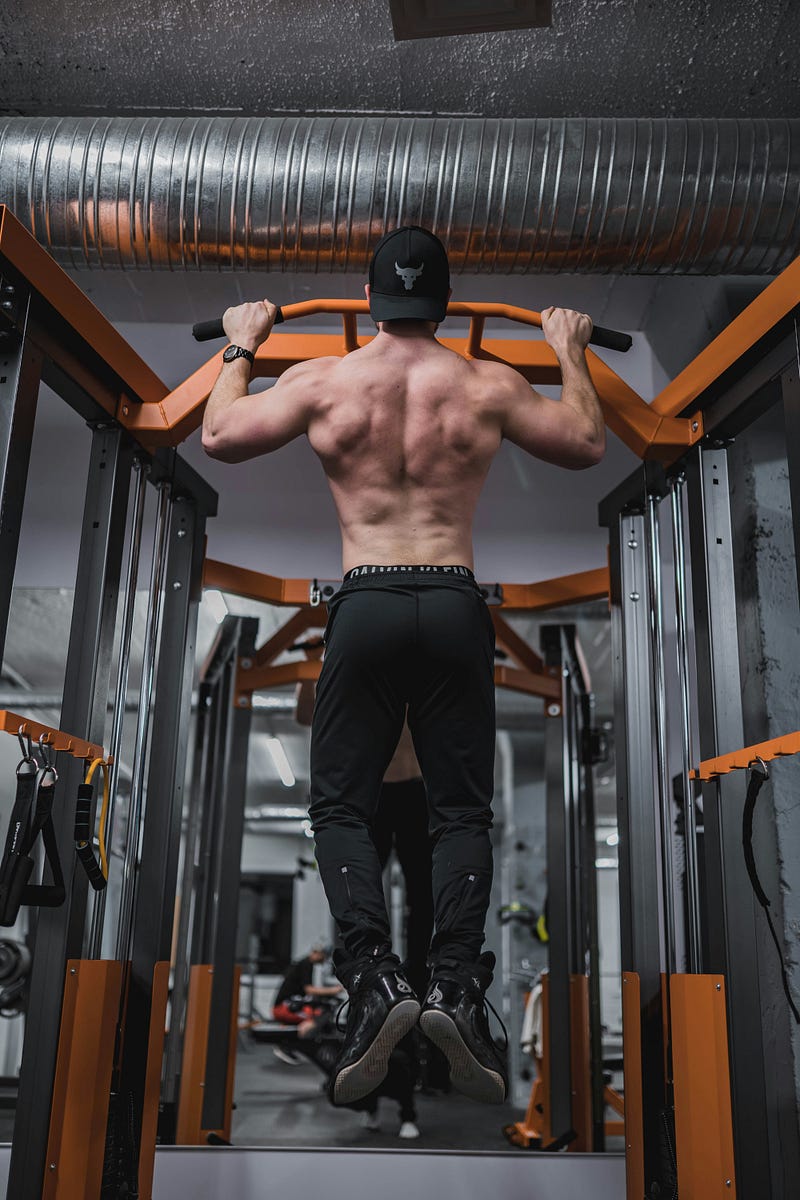
Next, we have pull-ups. Pull-ups happen to be another classic bodyweight exercise that’s excellent for building upper body strength and developing your back, biceps, forearms, and helping you create that V-taper look. Even if you’re a beginner, you can make pull-ups easier at home by getting a set of Pull-Up assist resistance bands along with your doorway pull-up bar. The nice thing is, as you get stronger at pull-ups, you’ll just switch to bands that offer less and less support on the way up until you can do pull-ups with just your own body weight. And from there, as you become advanced, you can always add a book bag for extra weight.
To perform a proper pull-up, start by hanging from a pull-up bar with your palms facing away from you and your hands slightly wider than shoulder-width apart. Before beginning, squeeze your core and pull your shoulder blades down and back. Then pull your body up towards the bar by bending your arms, tracking your elbows down and back, and bringing your chin over the bar. From there, you’ll just lower your body back down in a slow and controlled manner to the starting position. Even bodyweight pull-ups can start to feel plenty challenging even for someone that’s advanced with a relatively moderate rep count of 10 to 15 reps.
Inverted Row
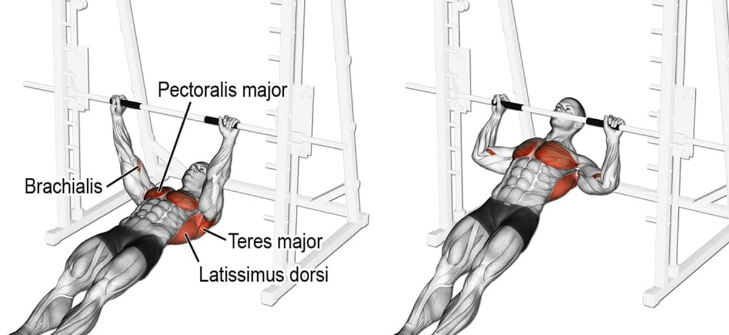
Now, in addition to pull-ups, you can get a great upper back workout by doing inverted rows at home. While pull-ups will target more of your lats, inverted rows will help target more of your rhomboids, as well as the biceps. Of course, for inverted rows, you can use a sturdy table that doesn’t tip over or a broomstick that you position on top of two even platforms or chairs. You would just grab the table and walk your feet forward until you’re under it, then lift your hips up off the ground and get your head, hips, and heels in a straight line. From there, you would just pull your elbows back and bring your chest up to the table, then lower back down and repeat for reps.
Dips
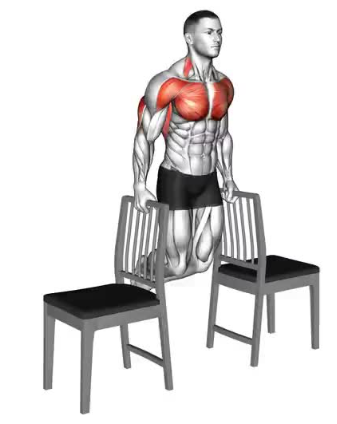
Another exercise you’ll want to do at home for your upper body is dips. Specifically, dips will help you develop your triceps and your chest. Your triceps make up over 60 percent of your arm size, and it’s not very difficult to overload dips with a low to moderate rep count while just using your body weight. Normally, you would do dips using parallel bars, but it’s unlikely you’ll have this at home. So a perfectly suitable replacement is to use two chairs that don’t tip over. Folding steel chairs work very well for this, and just to be safe, you can stack some weights onto the chairs to ensure that they don’t tip over.
To perform a dip, lower your body down until your arms are slightly lower than a 90-degree angle, then push back up to the starting position. If you’re trying to target your chest more with dips, you want to lean your upper body forward and your lower body back. Meanwhile, if you want to hit more of your triceps, do your best to stay more upright throughout the exercise. If you struggle with bodyweight dips, you can buy parallel bars for about 70 bucks on Amazon, or you can go to your local gym and use actual parallel bars. Then you can also use a resistance band to assist you on the way up, but definitely don’t use these resistance bands with chairs as it’ll make the chairs tip over.
Step-Up
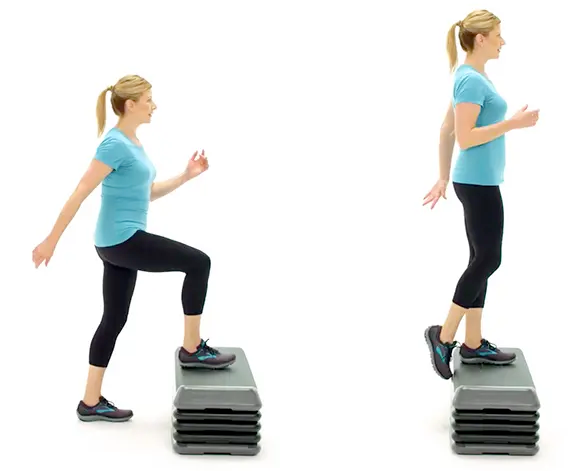
So now that we’ve touched on upper body, let’s move on to some exercises for the legs. An amazing lower body exercise that doesn’t require much more than just your body weight for it to be effective is the step-up. But if you’re just using your body weight, then you want to make sure that you make some adjustments to increase tension and make it more effective.
So first, find a platform that you can step up on. It can be some stairs, a sturdy chair, or even your couch. Then, take one foot and place it on top of the platform in front of you. Now, instead of just stepping up, you want to point the toes on the foot that’s on the ground up towards the ceiling, then step up without kicking off on your back foot. So drive your front foot into the platform and extend your knee until you’re all the way up, then lower yourself back down and repeat for reps. You want to concentrate on keeping your toes up before every rep, as it’ll help you avoid kicking off that back foot, taking your calf out of the movement. This will increase tension on your other leg’s glute, hamstring, and quad by a lot. You may even find performing 10 reps like this to be a serious challenge.
Bulgarian Split squat
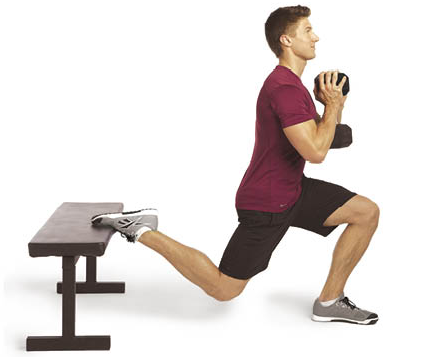
Another great unilateral exercise that you could do at home is the Bulgarian split squat. This exercise will target the quads, hamstrings, and glutes while also improving your balance and stability. Start by standing with your feet hip-width apart facing away from a step, chair, or some other raised platform. Then place one foot on the platform behind you, step your other foot forward about two feet so that your feet are staggered and your front knee is directly over your ankle. From there, you want to engage your core and keep your chest lifted as you slowly lower your body down by bending your front knee and dropping your back knee straight down. As you’re doing this, keep your weight evenly distributed on your front foot. Also, as you lower down, make sure you keep your knee tracking over your middle toe and avoid letting it collapse inward. Once you reach the bottom, pause for a second, and then push back up through your front foot and heel to return to the starting position. Remember to keep your back straight and to avoid leaning forward or rounding your back. Also, to maximize muscle activation, focus on controlling the movement and lowering down slowly.
The nice thing about Bulgarian split squats is that research has shown that it produces high levels of muscle activation in the lower body, making it effective for building strength and muscle mass even without weights. In fact, some research suggests that the Bulgarian split squat can produce greater quad muscle activation than the traditional back squat. Keep in mind, though, without weights, you will have to perform a higher rep count. But if you have a pair of dumbbells or if you can use a book bag that you can pack with heavy objects, you can cut down on those reps. Now, if you don’t have any weights, another option to make this harder is to explosively jump up at the end of each rep.
Squats
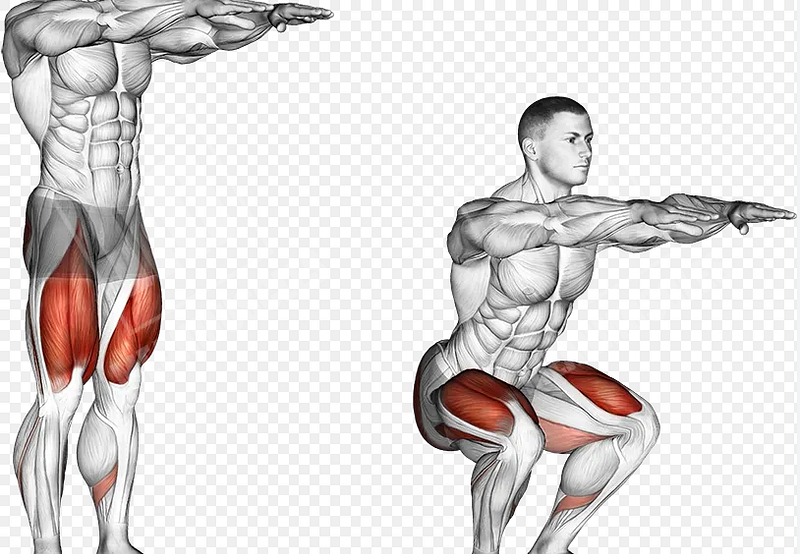
Let’s move on to regular squats, which once again target the quads, glutes, and hamstrings. To perform a squat, stand with your feet shoulder-width apart, toes pointing slightly rotated out, and your arms at your sides. Then, keep your core tight, your chest lifted, and look straight ahead. From there, you’ll begin the descent. So, slowly bend your knees and lower your hips down and back as if you’re sitting into a chair. Keep your weight over the middle of your foot and try to keep your knees tracking over your toes. This means they shouldn’t buckle inward or flare outward. As you lower down, you can extend your arms out in front of you to maintain your balance. Keep your back straight and avoid rounding or arching it. You want to lower down until your thighs are about parallel to the floor, then push through your feet to rise back up to the starting position. If you don’t normally do squats and it feels a little awkward, you can just squat down to a platform, as it’ll feel more natural since this will mimic a regular sitting motion.
To make squats harder, you can hold dumbbells, use the book bag, or just like with the Bulgarian split squats, you can add an explosive jump at the end of each rep.
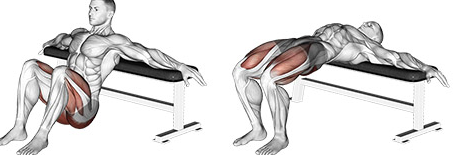
Hip Thrust
Another great exercise for your glutes that you can do at home is the hip thrust. Now, normally hip thrusts would be performed with two legs at the same time, and you would also place a weight on your hips to make it more challenging. You can still do this if you have some weights at home, but if you don’t, you can perform this exercise with just one leg at a time to make it significantly more challenging and require much fewer repetitions before fatigue starts to set in.
To do this exercise, start by laying on the ground with your back against the floor. Place one foot on the ground with your knee bent, and then take your other leg, bend your knee, and cross your ankle over your other knee. Spread your hands out to your sides for stability. From there, you’re going to drive your foot into the ground and extend your hips by thrusting upward. Then, slowly lower back down and repeat for reps before switching to the other side. Even with just one leg without weight, these may require 20 or more reps. Remember, the goal is to up your total rep count each workout if you don’t have those weights.
So those are eight of the best exercises that you can do at home without weights or gym equipment to build muscle. Remember to try to increase your rep count or the difficulty of these exercises over time so that you can progressively overload your muscles. If you want to do all eight exercises, you can do two to three sets of each or go for more sets like five sets if you decide to split your workout into an upper and a lower body day.