The One Experience You Absolutely Shouldn’t Miss in Japan
Be sure to include a visit to an onsen hot springs in any trip to Japan
I’m often asked where is the one place not to miss when visiting Japan — Tokyo, Kyoto, Osaka, Hiroshima?
All are great (I have a special affinity for Kyoto) and certainly worth visiting for a day, a week, or a year. But if there is one experience you absolutely cannot miss, it’s a visit to an onsen hot springs resort.
Japan is a volcanic country (Mt. Fuji owes its iconic conic shape to an eruption in 1707). The flipside of frequent earthquakes, tsunami, and smoking mountains is hot water underground that bubbles to the surface in many spots around the country.
With a fetish for cleanliness and some of the best food in the world, Japan’s onsen resorts combine relaxation and beautiful scenery with amazing dining.
The baths are usually at the ryokan hotel, though in some hot spring towns, the baths are in public bath houses spread around the town.
Most of the famous onsen towns are easy to reach by train with the town arrayed around the station, making them a convenient overnight stay.
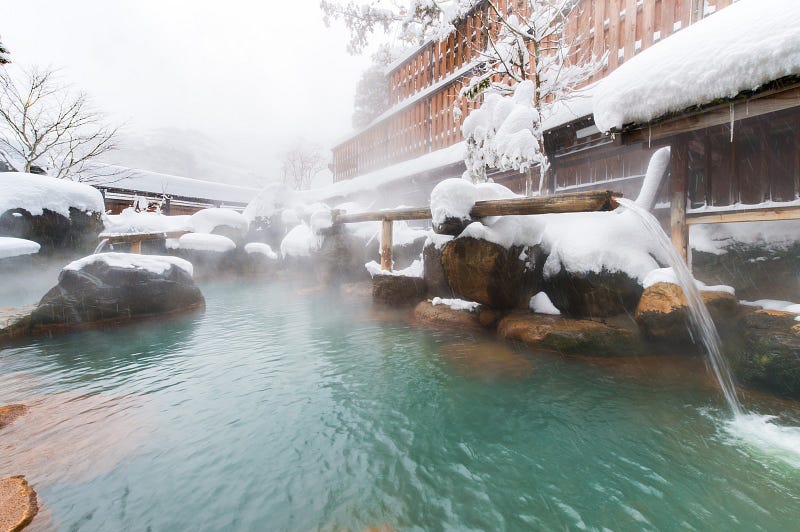
The experience starts with the bath. The highlight of most resorts is an outdoor bath called a rotenburo. Hot mineral water fills a large communal bath typically made out of stones.
The water is hot, really hot, and that can take getting used to. But the heat and steam help you relax, and you soak until you’re as red as a lobster.
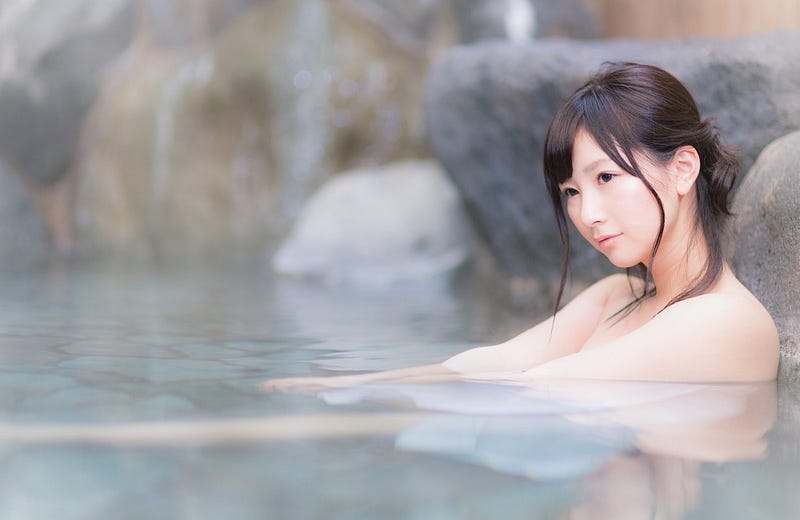
You enter the bath naked, no bathing suits or caps. This isn’t a pool. Traditionally, there was a single bath shared by everyone, men, women and children, but in these more modest times, there are separate baths for women and men.
More expensive hotels may include a small bath in each room. This is an option if you’re too embarrassed to bathe naked in front of strangers, but the best views and the best experience is enjoyed in the large communal baths.
Next comes the views. Hot springs resorts are built in some of the most picturesque spots in the mountains or by the sea. While soaking in the steaming hot water, you can enjoy the brilliant colors of autumn leaves or the sparkling snowcapped mountains, and listen to the sound of water trickling into the bath or the gush of the river rushing past in a steep gorge down below.
Bathing Ritual
There’s a bit of a ritual to bathing, but it comes down to a simple idea: you’re sharing unchlorinated mineral water with hundreds of other people over the course of the day, so scrub yourself clean before getting in. Really clean.
At the entrance to the bathing room, take off your shoes or slippers. You enter a dressing room where you leave your clothes in a locker and take your washcloth with you. The key to the locker will be a bracelet to place around your arm.
When you enter the steam-filled bathing room, along the wall you’ll find a row of faucets. Sit on the little stool and scrub your body with the washcloth until every speck of dirt, grime, and bacteria is gone. Then you’re ready to step into the heaven of the bath to soak.
The minerals in the water differ from location to location. Though much of Japanese history, people visited different hot springs to relieve different ailments like arthritis. Indeed, the high iron, sulfur, or calcium content held medicinal value before the advent of modern medicine.
The Food
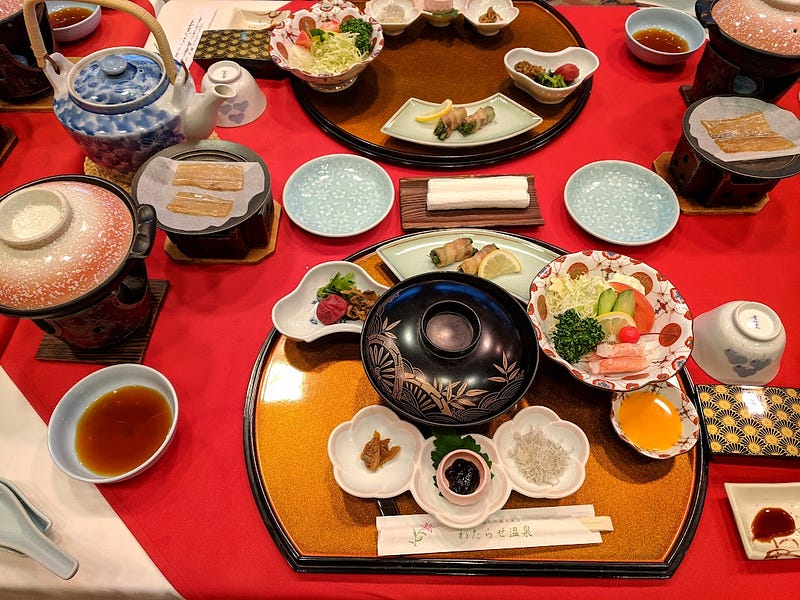
A visit to the hot springs isn’t just about the bath; it’s a gourmet dining experience.
After the bath, dressed in the provided robe and slippers, you come to the dining room to indulge in a multi-course dinner of local, seasonal foods.
When you reserve the room, you choose your preferred meal plan. Everyone in the party gets the same meal plan. For this reason, ryokan hotels are priced per person instead of per room.
Traditional rooms are tatami floors, and while you’re enjoying your dinner feast, futons will be laid out for sleeping. This makes the room adaptable for any group, large or small.
Famous Onsen Nearby
If you’re in Tokyo, these famous onsen are an easy train ride away:
- Hakone: 1.5 hours from Tokyo. Enjoy transcendent views of Mt. Fuji from your bath.
- Atami: 1 hour from Tokyo. Watch the sun rise over the sparkling sea while soaking in the tub.
- Kinugawa: 2 hours from Tokyo. In the mountains near Nikko, the Shogun’s resort famous for the see no evil, hear no evil, speak no evil monkeys. There’s no evil in the bath, but lots of monkeys around town.
From Kyoto/Osaka, consider a visit to the following onsen:
- Kinosaki: 2.5 hours from Kyoto on the Japan Sea coast, step back to the Edo-era as you visit all 7 public bath houses along the street.
- Arima: 1 hour from Osaka in the mountains. Famous for its red water that will cure any ailment.
- Shirahama: 3 hours from Osaka on a beautiful beach.
Other famous onsen not to be missed if you’re traveling around the country:
- Beppu in Kyushu. Dramatic volcanic views.
- Dōgo on Shikoku. The model for the bath house in the movie, Spirited Away.
- Kusatsu in Gunma. Public bath houses around a charming town.
- Nyūtō in Akita. Sit in the hot bath as snow falls on your head.
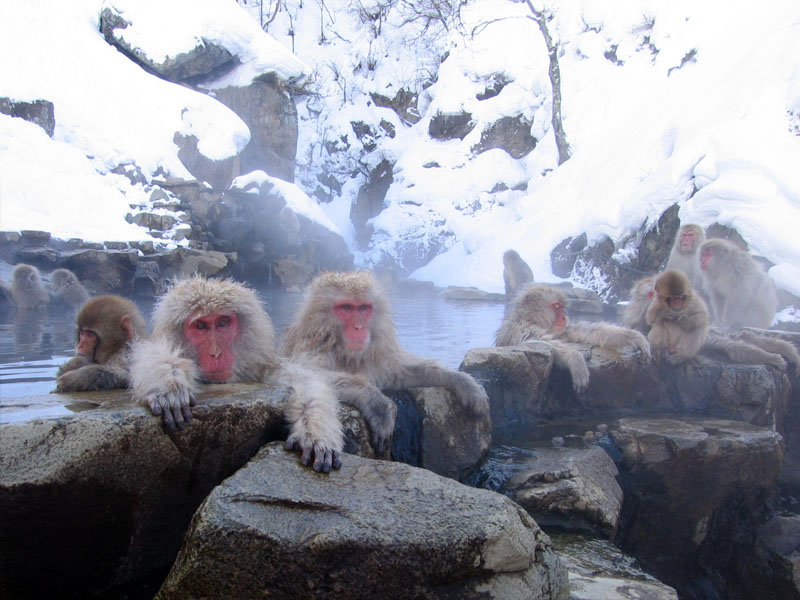
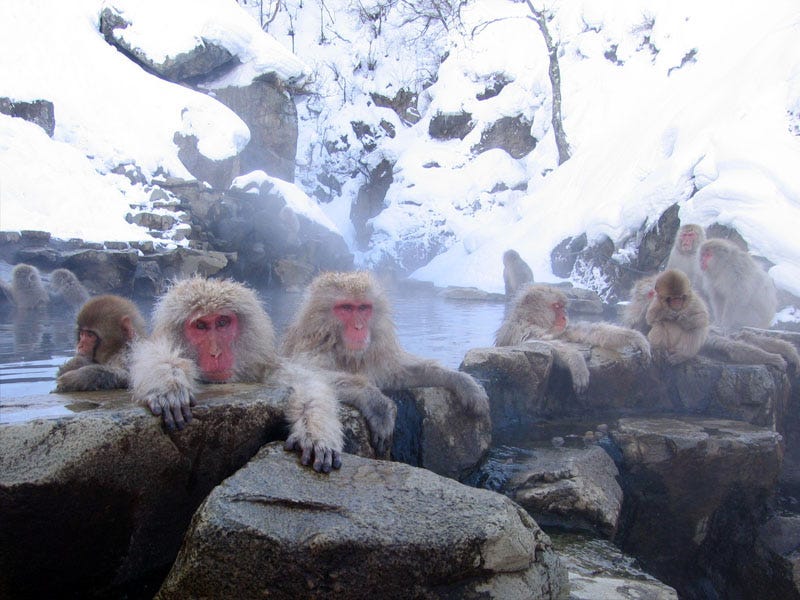
- Shibu in Nagano. Bathe with the snow monkeys in the Japanese Alps.
With a love of onsen, I’ve visited the famous baths of Budapest, Bath UK, and Iceland, and tried every hot spring I could find around the US, but the water is tepid and chlorinated, and there is no dining experience. I’ve never found anything even remotely as wonderful as the onsen of Japan.
If you’re visiting Japan for a week or longer, make sure to add an overnight stop at an onsen resort as part of your itinerary.
The good ryokan hot spring resorts aren’t cheap, but well worth the cost for an experience of a lifetime.
If you enjoy my articles about Japan and Japanese culture, you’ll love To Kill a Unicorn, my mystery novel set in Silicon Valley’s Japantown. Available now for pre-order.