
The One Definition of Art That Creatives with Imposter Syndrome Should Know
Have you ever wondered what makes “art” art? What constitutes an artwork? If there’s one simple catch-all definition for it — covering all forms, from visual, auditory, to performative art — what’s the best way to say it?
A simple Google definition of the word seems sensible enough. It is an “expression or application of human creative skill and imagination.”
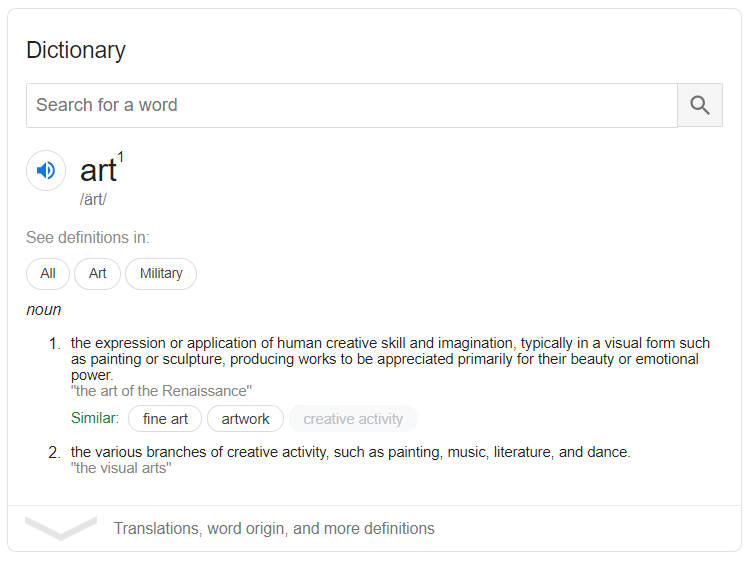
From the get-go, you read it and you think this one has got everything covered. But I am going to enumerate some of the “art” we hear nowadays.
The art of letting go.
The art of flirting.
The art of not giving a fuck.
You can’t say that these things don’t count as art. People added that word at the very beginning for a reason. But why does the Google definition seem limiting or out of context?
So again, what is art?
Surely, art is not just what’s colorful and structured. Others are amused by black and white imagery, by abstract, by chaos.
It can’t just also be what is displayed on a canvass or stage for the eyes to see. It’s understandable why most would define it that way — visual art is the first thing we think of. It’s the crowd favorite, proven by Google saying art is “typically” visual.
Auditory art comes in second place, perhaps. Music is a universal language. Hit charts. Opera. Lofi hip-hop.
Let’s think harder.
You felt art in therapeutic massage. You tasted art in culinary and cocktail mixing. You smelled art in perfume concoction.
Let’s go deeper.
Art can’t just also be what is done by an individual performer on a platform, on a specific location.
One seated person raising their hands up and down looks stupid. But bring in thousands more (Imagine: stadium level!) doing the same movement in a certain timing and you have a breath-taking human wave.
Synchronized swimming. Mobile phone lights swaying left and right at a concert. North Korea’s military parade march. These things are best appreciated from a macro perspective.
Art can’t just also be things executed in a short period or a scheduled time. It’s not just a two-hour movie nor a week-long music festival.
What about a tree? Cut a leaf here and there, and it’s still a tree tomorrow. But cultivate it with patience, grow it with precision for years and years, and you have bonsai art.
Lav Diaz arthouse films. Hyperlapsed video of city urbanization. Marvel Cinematic Universe! The appreciation of this kind of art relies on looking through the lens of time!
Let’s talk about the controversial.
Art is not just what’s good and beautiful. How do we even standardize “good” and “beautiful”? They say art is always subjective. Is it safe to say that art is value-neutral? That it doesn’t necessarily need to conform to what society deems tasteful?
Actors, directors, and a camera — the perfect recipe for a movie. Would it mean any less if you found out they’re filming porn? Would calligraphy be unattractive if it’s vandalizing private property? Would racism and sexism be less abhorrent if it’s a material of a stand-up comic (and you tried to hold your chuckle in)? Would fake news and hoax be on a better light if it’s a carefully crafted story — one which took into account the weaving together of small facts and then inserting creativity to showcase one big political lie?
The previous paragraph was meant to go darker. It was supposed to make the reader uncomfortable and confused. From the very beginning and down to the last part, it was written to shake things up, to expand the understanding of the conventional definition of art.
I asked what makes “art” art because I have repeatedly questioned myself if I’m an artist. That if only I can come up with a definition that will stand across all scenarios and degrees of artistic pursuits — professional or just a hobbyist, world-renowned or someone unknown, art school graduate or self-taught — then maybe I can comfortably qualify myself as one.
We all know what a cat person is, what a vegetarian does, and what we expect from a Potterhead.
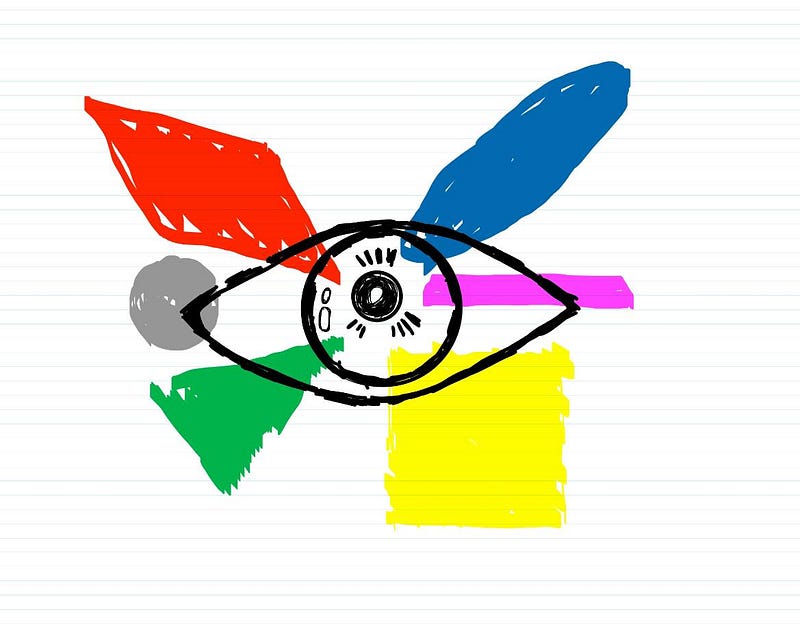
So what is an artist?
This imposter syndrome is typical for all creatives in different fields because the output is always on public display; it’s meant to be shown out there. Inevitably, the art appreciation one receives is not all compliments and cash. There are reactions of people that will feel invalidating. The tilting of heads, that softly spoken but still audible “Huh?”, and those in-your-face cringes. Sometimes, the worst part is not getting any. Just people passing by.
So is what I’m doing…art?
How can writers, dancers, musicians, illustrators, and any other artists ever qualify themselves in their chosen art if its definition solely relies on societal approval? Red carpet, jam-packed stadiums, thousands of Likes and Shares, everything sold out. If you don’t get any of these, does it mean you’re not being true to your art?
And so I chose to define art with this one simple word: intentional. Anything can be considered art as long as its conceptualization and execution are intentional. With purpose. Deliberate. All the details and elements that are used are included for a reason. No matter how good or bad the output is. No matter how fast or slow the execution is. No matter the context or situation. It IS art.
Revisit the examples above — they are all art. Because from the moment the idea sparked in the artist’s head and down to the finished product, everything else was consciously done.
The art of letting go is cutting your hair into a new style you have never tried before and the throwing away of specific items that reminds you of your ex.
The art of flirting is facing your prospect with your best angle, making sure your cheek with a dimple is visible, and leaving your polo’s top part unbuttoned.
The art of not giving a fuck is identifying the few people that matters to you and distinguishing what’s opinion over facts.
Every art is intentional.
This one word drastically changes how you see the world, of how this place is actually filled with different works of art.
Just like painting, when people put make-up on, their canvas is their face.
Just like theater, when a syndicate group is operating, the accomplices are the performers and the modus operandi is the act.
Just like a showdown, when lovers are having sexual intercourse, it’s choreography — the rhythm, the breathing, the gymnastics.
Just like singing, when people do sales talk, the right pitch and the emotional manipulation will leave the target audience wanting for more.
So if someone creates something unappealing but with full intentions, should it count as art? Yes. There’s a better term for that someone: an amateur or a beginner. But an artist nonetheless. And they will continuously improve if they keep being intentional.
So if someone purposefully makes something they consider a creative work but is actually of poor taste, does it still qualify as art? Yes. Because other’s objective viewpoint is irrelevant to the artist who put their heart and soul into their work. Before anyone else forgets, the purpose of art is for humanity to express their identity and ideas. And how others take it is only an add-on.
And even if that someone were to receive criticism from an elite artist, an amateur would know that the professional speaks a delicate language that conveys what aspect needs improvement. But should it be coming from a smug elitist gatekeeper, then any budding artist can always rely on the art of not giving a fuck.
And so if you’re someone who used to do art but gave up, or maybe doing less of it now, remember how intentional you used to be with it. You can perfectly see the difference of a mundane activity from a purposeful one. Or if you want to start a creative pursuit but don’t know how, the best piece of advice I could give is to do so with so much intentionality. And the act of choosing what art is worth trying is never random.
Here’s the brilliant part of finally holding on to this simple definition. You can flip the table; it’s not just about removing doubts on the things you consider art. This catch-all description could make you see the current activities, which you might not even consider an artistic endeavor, as an actual art. Examine what you’re doing right now in your life, what keeps you busy and preoccupied, happy, and fulfilled. If you do those things with so much intention…then that is art!
Baking is art! Working out is an art! Training your dog to do some tricks is beautiful art! You are expressing your humanity in these activities and you feel fulfilled in doing them. All these things will cease to become art if you remove your intentionality in them. Otherwise, they’ll just be mechanical and routinary activities.
So in conclusion, if life is a blank canvas, a book with empty pages, a bare stage…do you know what to do to make an art out of your life?

Andrew Beso is a Manila-based content creator who is exploring different ways of sharing art — whether it be written, spoken, and visualized. Aside from being in Medium, his work can also be seen on Youtube, Instagram, and Tiktok.
He is using his undergraduate and master’s degree in Economics and Political Economy, respectively, in discussing social issues through creative expressions.