
The One Book I Love But Would Never Recommend to Anyone
Simply mentioning it induces a cacophony of emotions
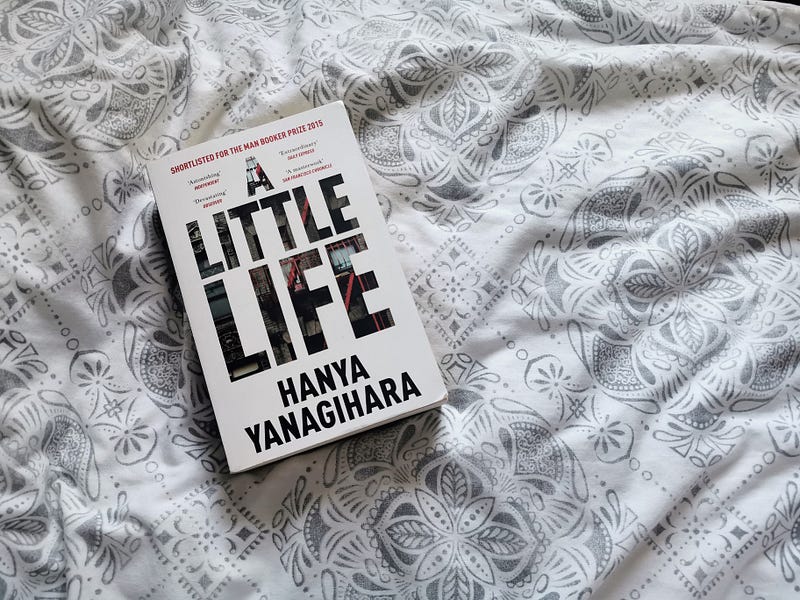
Sometimes you can love a book so much that you don't want to let it go. It can feel dangerous to draw it to attention. You can love a book so much that you worry about recommending it to others for fear they won't like it or other readers will tarnish its reputation and impact your own love for it.
Our love for particular books is very personal, which is why a recommendation is so tricky. We all have different reading tastes and preferences for different styles, so recommendations are hard to get bang on.
It's especially tricky when you love a book so much but know that recommending it to a stranger could potentially cause harm. Despite it being my job to find books for people, this one I would never casually recommend to anyone, regardless of my love for it.
A Little Life by Hanya Yanagihara can never be a 'casual' book recommendation
I fell in love with A Little Life two summers ago when my country was still in a state of lockdown restrictions. I was off work and paid to stay at home, so I could afford to have my heart torn to shreds and give my emotional capacity away to a book. But not everyone can — or should.
A Little Life, at its core, is an epic coming of age novel that follows the lives of a group of friends living in New York across the decades. But once the reader gets to grips with the book, you rapidly realise it's about far more than that. A Little Life is known across the Booktok world as that huge book with endless trigger warnings. Some even label it as 'trauma porn' and deem it to be irresponsible writing.
Despite giving space to multiple narrators, Hanya Yanagihara focuses on one character in the book, Jude. The reader notices that despite being brilliant and enigmatic, Jude is withdrawn from the rest of the group. Throughout the heavy novel, readers gradually discover the extent of his trauma which includes child and sexual abuse. Because of this, he fights a long battle with his mental health, which includes frequent vivid descriptions of self-harm and depression.
A Little Life blew me away. It toyed with my emotions and taught me about the extent of human suffering over a lifetime and how childhood can leave such a lingering impact on us into adult life. It's a phenomenal book, but one I could never openly recommend to strangers because of its triggering content.
It has become one of those books that float around in the TikTok world due to its aesthetic appeal and the romanticism that comes with a literary book set in New York, but it's dangerous to lump it into books aiming for mass appeal. It can never be a casual read and could potentially be harmful to people who go into reading it without knowing its content. Therefore, despite my love for it, it could never be something I recommend to strangers casually.
I realise this idea raises all sorts of questions about responsibility, policing what people read and content warnings, but I feel I'm justified to reserve my recommendations for this book.
You can never fully know a person or how content may impact them
Despite A Little Life being one of my favourite books of all time, it's one I wouldn't even recommend to my closest friends or family. You may think you know people really well, but people also hold secrets and have a past they may not have shared with you.
It would be irresponsible to recommend a book that could bring back so much trauma into peoples' lives. There's a reason it has every trigger warning under the sun, as it's a very graphic novel that aims to depict the hardships of real life without sugar-coating it. It's honest, brutal and doesn't shy away from suffering in all its forms.
Recommending this book to anyone, or even close family or friends could bring up emotions they weren't expecting or even trauma they had thought they'd made peace with from the past. Reading about these issues could affect people in so many different ways, so I would always hesitate to casually recommend this book before telling them about the content.
Besides, it's an emotionally traumatic experience regardless of whether you have associated trauma with the content or not. A lot of people read to escape the harshness of real life and wouldn't want to nosedive right into the worst of it.
Recommendations come with a degree of responsibility
Book recommendations may seem harmless, and they usually are. We all probably give them out daily without a second thought, and most of the time, that's okay. But for other potentially more harmful or triggering reads, we have a degree of responsibility when recommending them.
Just last week, when a grown adult man came up to me at work and plopped A Little Life down on the counter, I couldn't refrain from telling them that this would be an emotionally challenging read. For a moment, they looked a bit taken aback at my comments and even shocked that I had intervened in their choice. However, I still briefly told them about some of the content in the book, and they then appeared to understand why I had made the interjection.
I explained that despite it being a hard read, it was an incredibly well-written book that made you think about everything. But in the meantime, they did seem more hesitant about buying the book than they had first appeared.
Afterwards (they did end up buying it), I regretted my interjection and wondered if it was appropriate for me to give a grown adult warnings about the book's content. Did my interjection make them feel naive? Embarrassed? Wrongly parented?
I hope not.
Nobody ever recommended A Little Life to me. It was simply brought to my attention because, at one point, it was everywhere on social media. I'm glad nobody in my life recommended it to me lightly because I don't know if I would have been prepared for it. Before reading, I had read widely about the content warnings and had done my research. I'm glad I did because although the book was emotionally harrowing and challenging, I was a little prepared.
I don't believe in censorship or taking an active role in policing what people want to read. However, when it comes to certain types of books and content, we all have a responsibility to be cautious when recommending them.
“Relationships never provide you with everything. They provide you with some things. You take all you want from a person — sexual chemistry, let’s say, or good conversation, or financial support, or intellectual compatibility, or niceness, or loyalty — and you get to pick three of them.” — Hanya Yanagihara, A Little Life
💡Did you like this story? Why not take out a $5 Medium membership using my referral link. Doing so will enable you to support me and many other writers.