
Mature Flâneur
The Oldest Street Art in the World
Street art existed before there were streets!
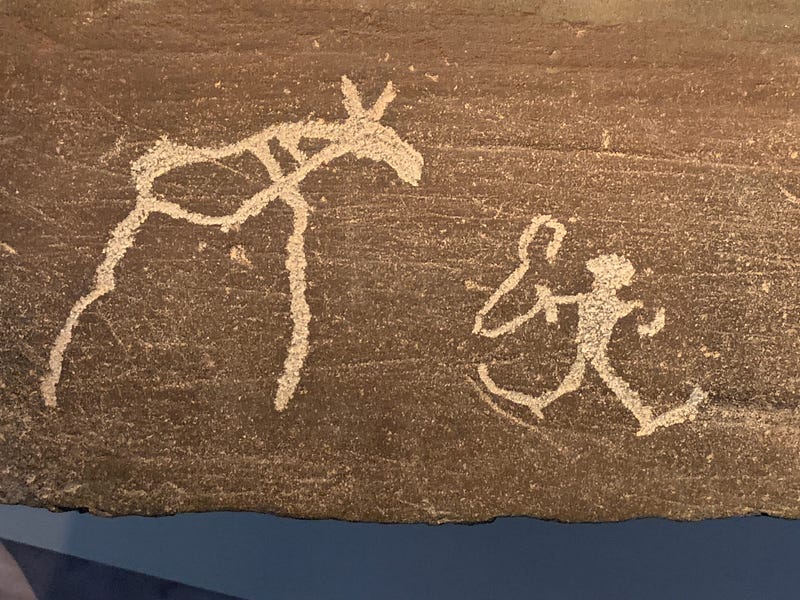
This month Globetrotters Medium publication celebrates and explores Street Art…but just how old is this art form? I’ve got two contributions to make from different ends of Europe on this subject, and I welcome any comments on where else prehistoric street art might be found. First, how do you define street art in a era before streets? Well, simply, it has to be outdoors, and created in an area that plausibly had some foot traffic — a reason for stone-age men and women to saunter round for a look.
Alta, Norway
Alta is also one of the oldest inhabited places in Northern Europe. People first found their way to this fjord more than 7,000 years ago as the glaciers of the last Ice Age began to recede and the climate became more temperate. In fact, it was even warmer back then than it is today. The intrepid prehistoric people who lived in the far north left evidence of settlements, arrowheads, stone tools, and, above all, carvings etched on the rocky coast of Altafjord: beautiful, mysterious, graceful works of art chiselled in stone between 7,000 and 2,000 years ago.
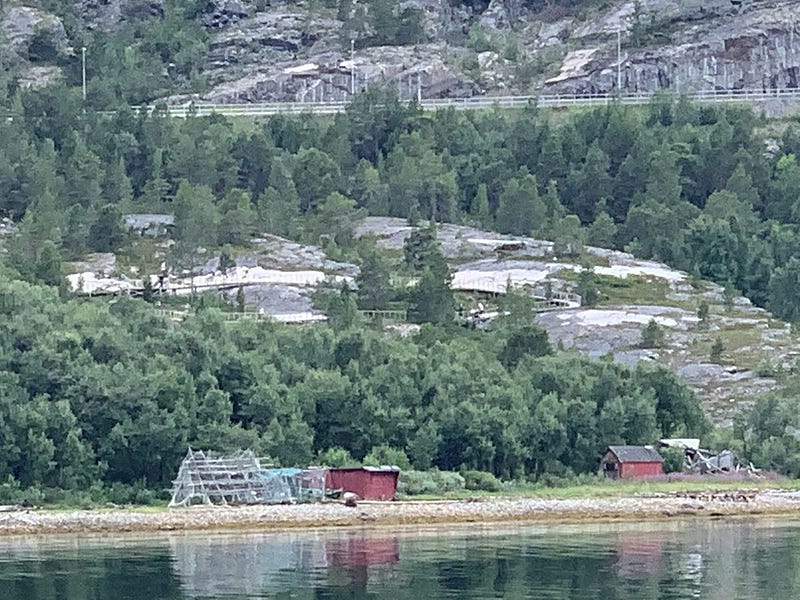
Six thousand figures have been discovered so far at the end of Altafjord, with more being uncovered every month beneath layers of moss and lichen. The greatest concentration of them, about 3,000 etchings, are in an open air museum on the outskirts of town. In 1985 they were recognized as a UNESCO World Heritage Site. Walking among them on the wooden pathway was simply mind-blowing.
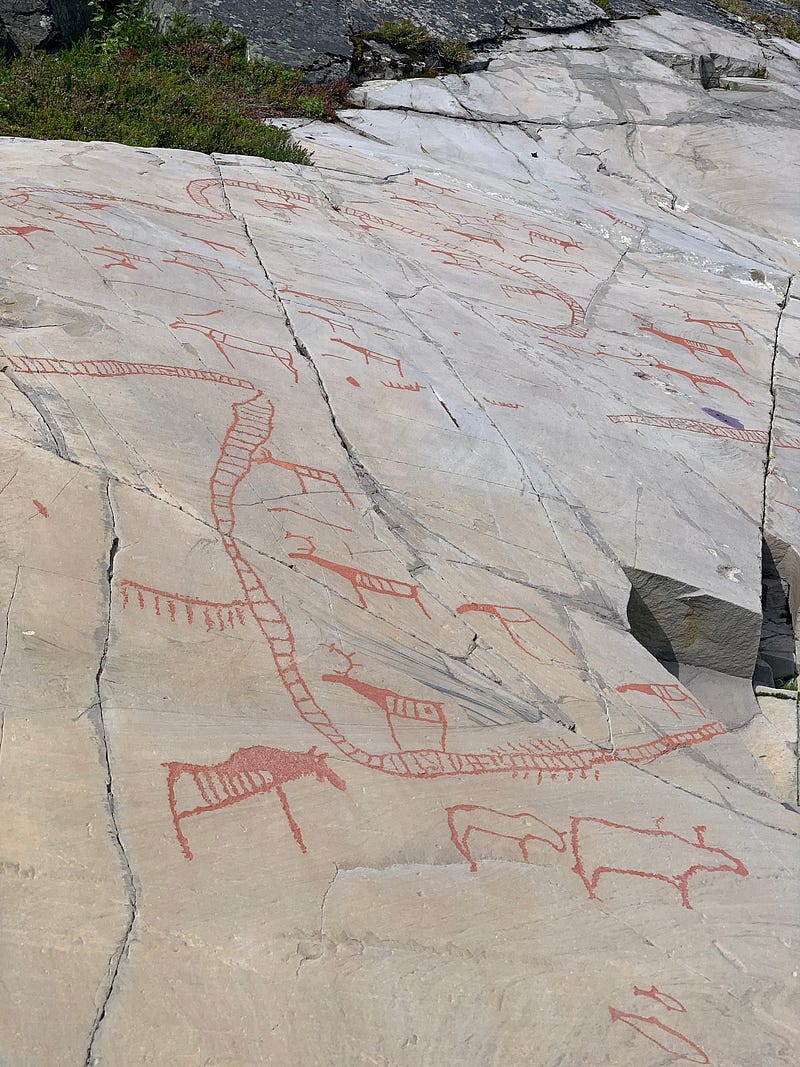
The most common motifs on the rocks are of animals, especially reindeer, the most numerous large mammal in the Arctic. Some carvings depict methods of hunting still used by the indigenous Sami people until modern times, such as driving reindeer into an enclosure (above), or chasing them in boats into the paths of waiting hunters (below):
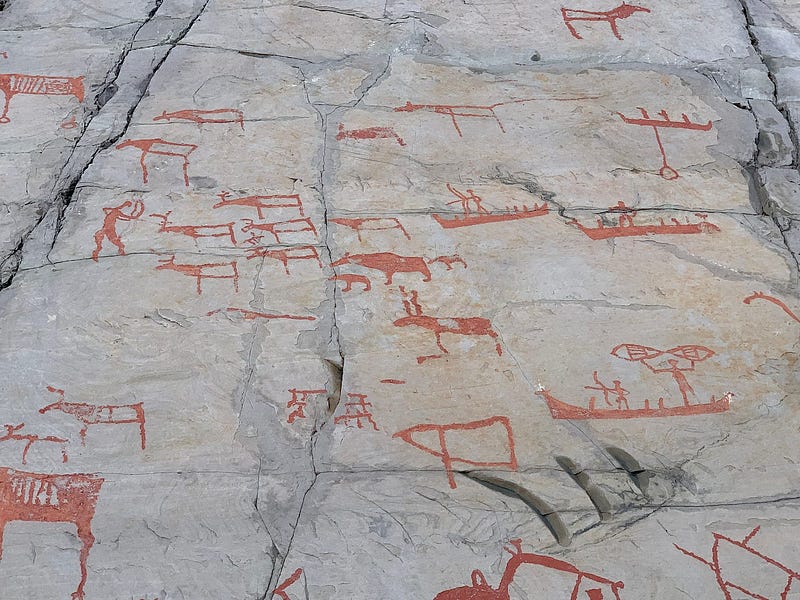
The bear is also a popular figure. One rock depicts a mother bear with cubs, her footprints leading back to a cave. Another shows a bear next to what appears to be a flounder at the end of a fishing line that drops from a boat. Is this some kind of spirit bear aiding the fisherman — or a simple visual aid, telling the story of landing a halibut as big as a bear! We will never know (note: halibut do grow this large in the Arctic waters).
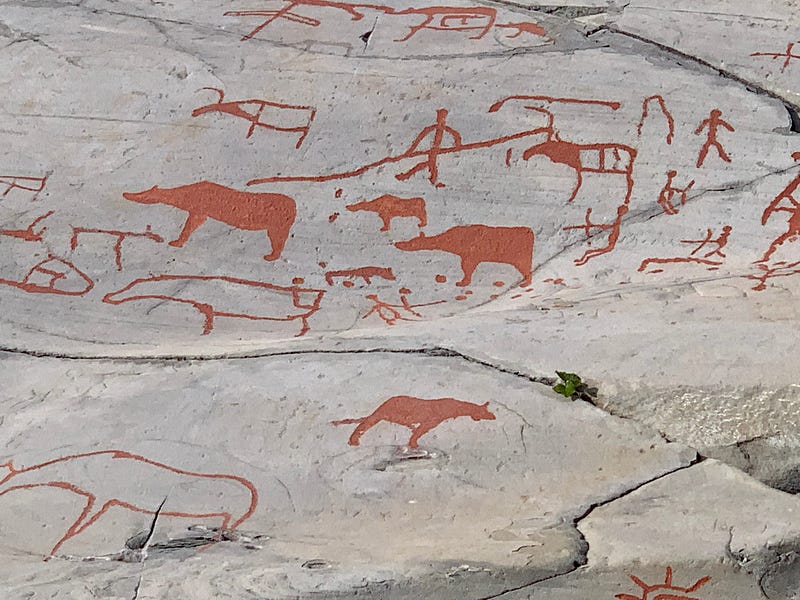
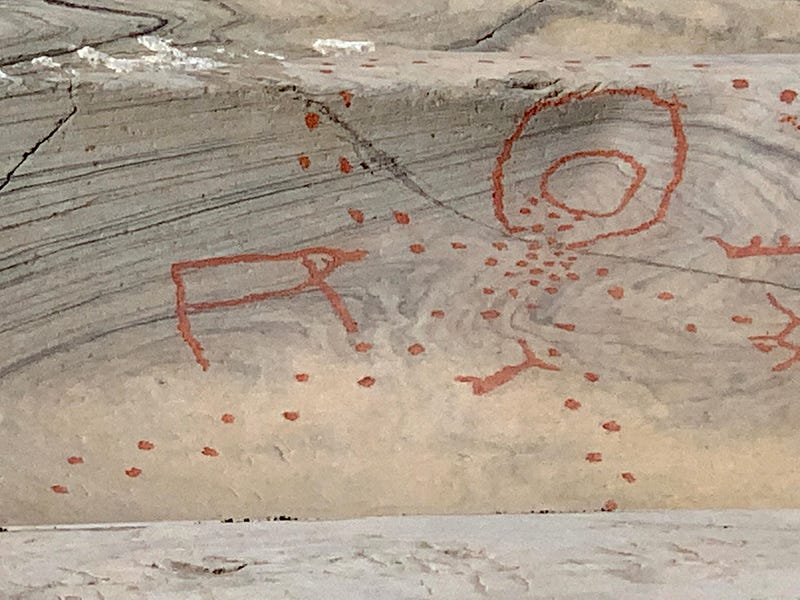
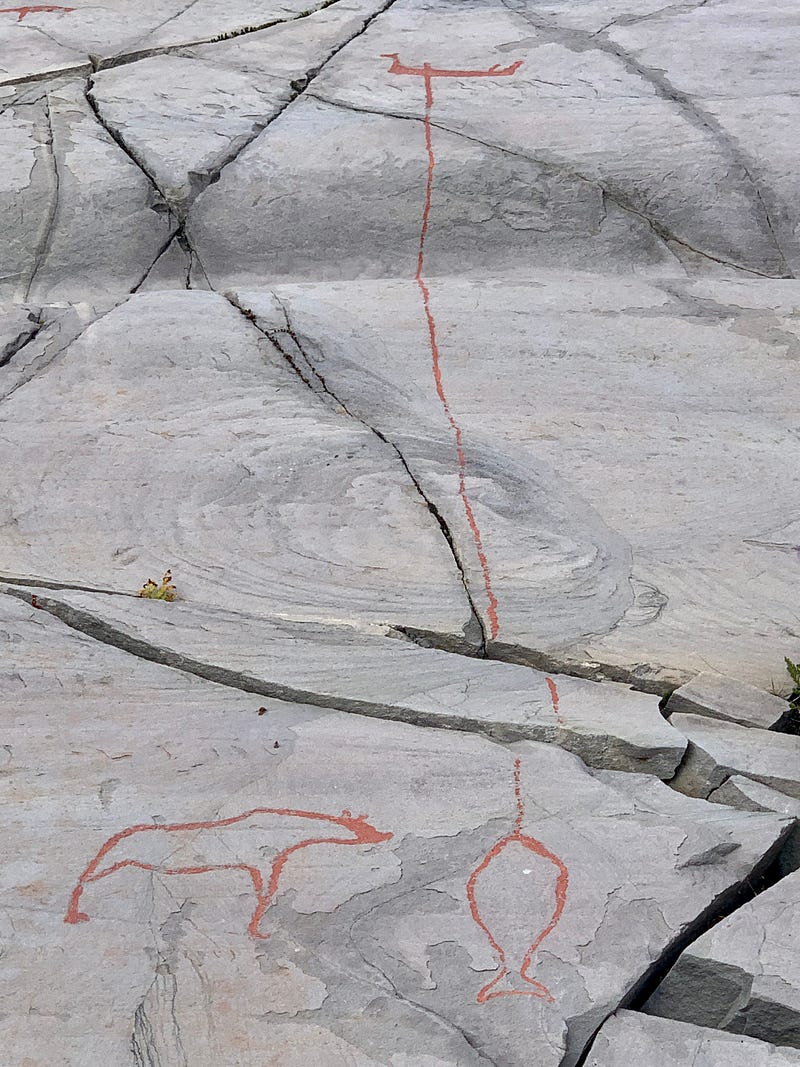
What became obvious to Teresa (my wife) and me as we walked among the rocks is that these etched figures are not simply static images. They tell stories. Perhaps on a sunny afternoon in 5,000 BCE, one would saunter on down to the carvings and listen to one of the elders point to the bear, and tell the tale of the hunt.
By encoding stories on stone, these ancient people found a way to share their practical wisdom and memorable events in a way that could be transmitted from generation to generation. Perhaps their wall art that was also their Internet.
Coa Valley, Portugal
Though I was astounded by how ancient the prehistoric wall art of Norway was, the prehistoric Portuguese beat them by some 15,000 years! The Coa Valley Archeological Park in the remote northeast fringe of Portugal has over 5,000 prehistoric rock etchings between 22,000–20,000 years old!
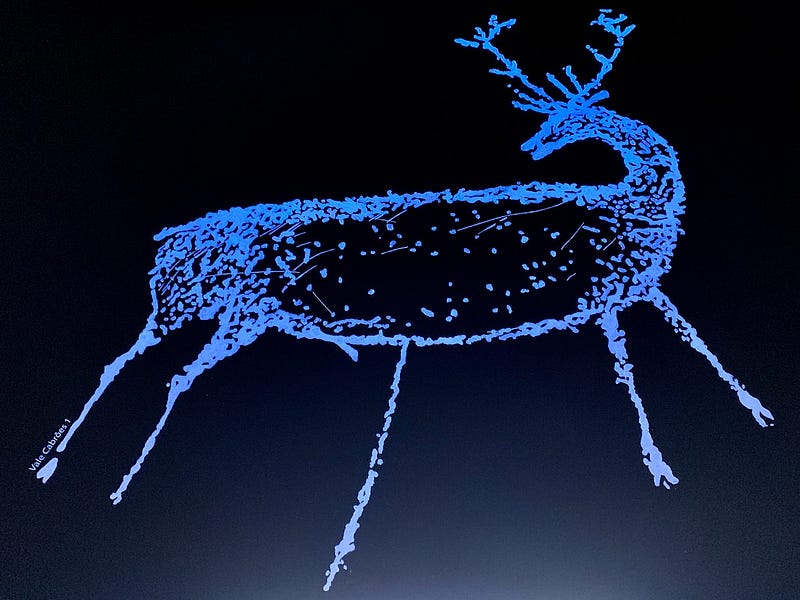
An early UNESCO report on the park described it as “the biggest open-air site of paleolithic art in Europe, if not in the world.” Usually, we think of paleolithic art as cave paintings (which would not qualify it as street art!). But the Coa drawings are out in the open, spread over 23 sites along the Coa and Douro River valleys. How did they survive the elements? The drawings are not painted, they are line drawings carved directly into the stone.
The art may be prehistoric, but it is not primitive. These artists had talent. Like their Norwegian counterparts, they brought to life the animals crucial to their survival — deer, horses, wild goats, aurochs (large prehistoric cattle), and also human figures. These etchings provide an amazing glimpse of how prehistoric people saw their world and themselves. As UNESCO says of these “World Heritage Site” drawings:
Dating from the Upper Palaeolithic to the final Magdalenian/ Epipalaeolithic (22.000–8.000 BCE), [the drawings] represent a unique example of the first manifestations of human symbolic creation and of the beginnings of cultural development….The rock art…throws an exceptionally illuminating light on the social, economic, and spiritual life of our early ancestors.
Well, isnt’ that exactly what street art does today?
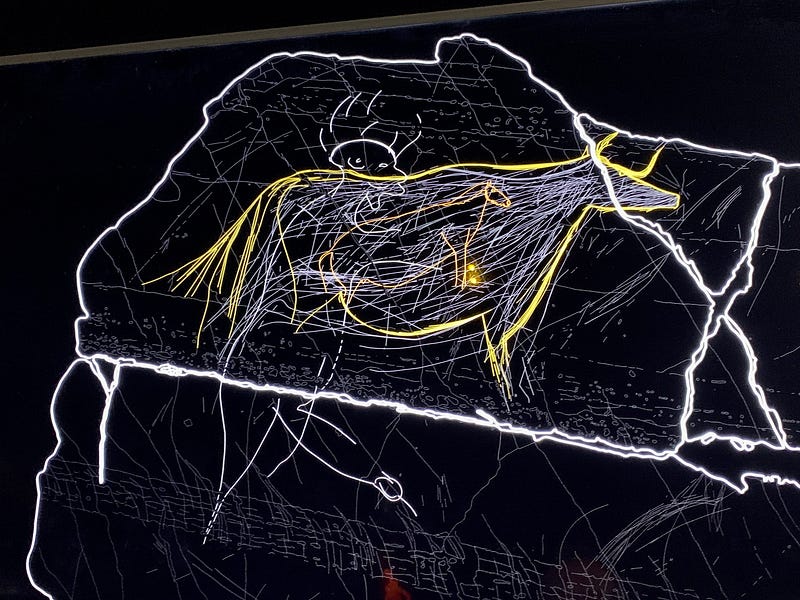
What is disappointing about the Coa carvings is that their makers etched new figures right on top of the old ones. Individually, the drawings may have been masterpieces, but when you see the raw rocks of Coa, they often look like jumbles of squiggles:
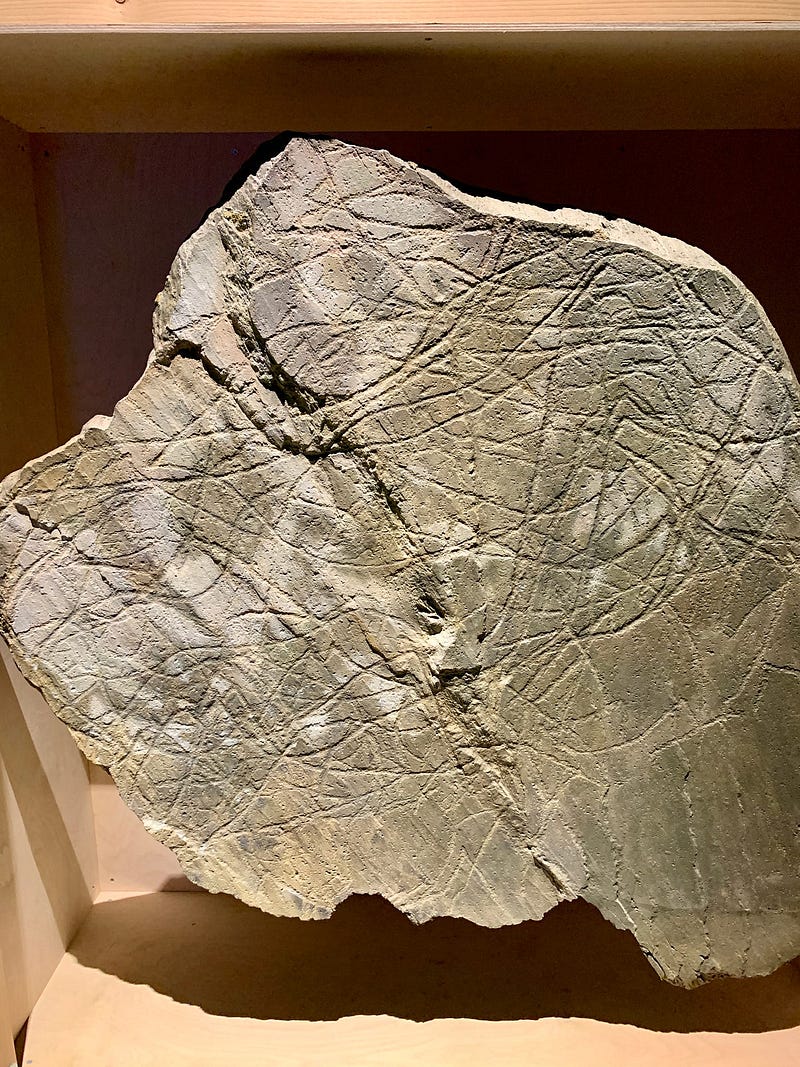
Fortunately, the museum next to the Coa site has state-of-the-art technical innovations that bring the prehistoric drawings to life. The exhibit isolates the individual drawings that overlap on the rocks so that you can see each of their outlines clearly. Sometimes the outlines are projected right onto replicas of the original rocks so that the art seems to pop right out. In one case, they even animate some of the figures: you see the etched outline of a wild goat and then it springs to life, jumping and prancing across the rock as if frolicking on a cliffside.
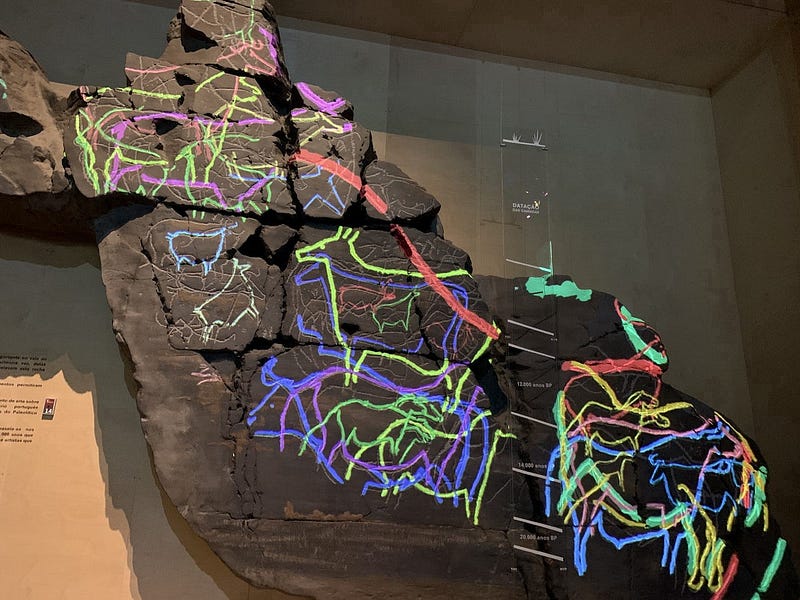
The museum also highlighted some of the artistry involved. In several cases, there were animals that appeared to have two heads — but were in fact one animal with its head turned first in one direction and then in another, as if to portray the animal in motion — an artistic technique once thought to have been invented by that Cubist late-comer, Picasso!
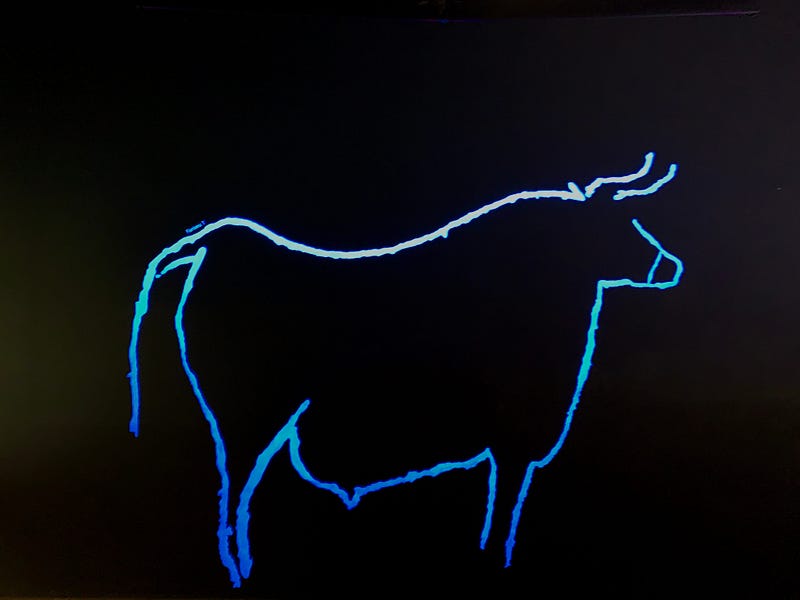
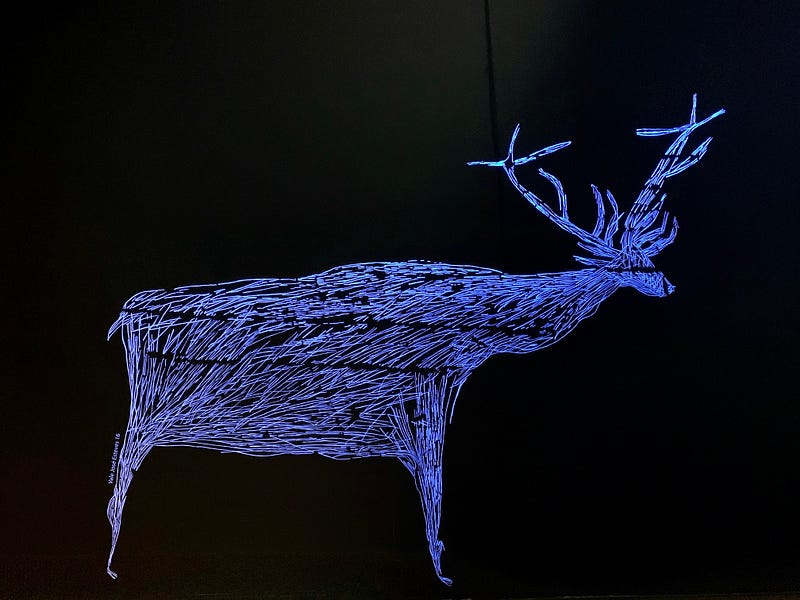
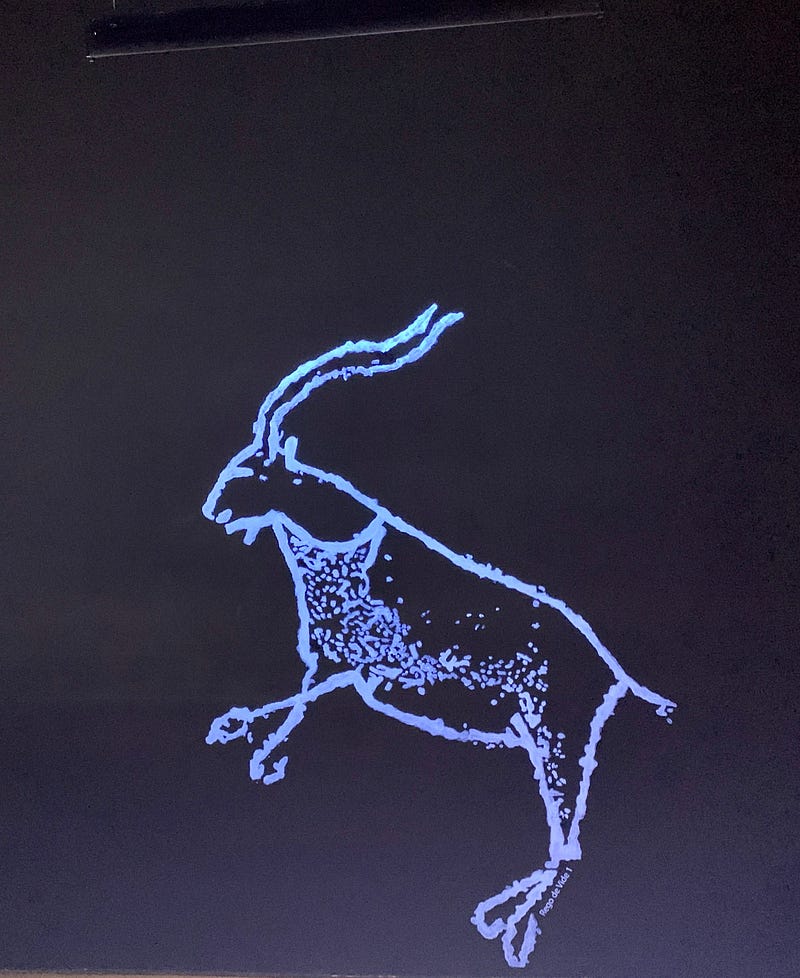
Animals definitely dominated these artistic landscapes, which makes experts and flanêurs alike wonder, why? Did animals have a significant spiritual meaning? Was it simply pragmatic information about prey species that was being recorded (There are virtually no predators on the walls, except a few birds of prey.) Or was this art for art’s sake? The museum lays out several theories but wisely takes no sides.
The rare human figures from the Paleolithic period are mysterious and strange. The face on one figure looks absolutely as if Picasso drew it (below right). Two other figures are so explicitly phallic one has to wonder if this is evidence that men have been exaggerating their manhood since prehistoric times. Or, perhaps, more poetically, one could assume the artists were making symbolic connections between big penises and fecundity? Or, it might simply be that the rock artists of Coa started a trend that continues in the street art of today. Next time you see a penis spray-painted on a wall in an alleyway of a dirty city street, don't be offended! You are viewing one of the oldest artistic traditions of hunankind.
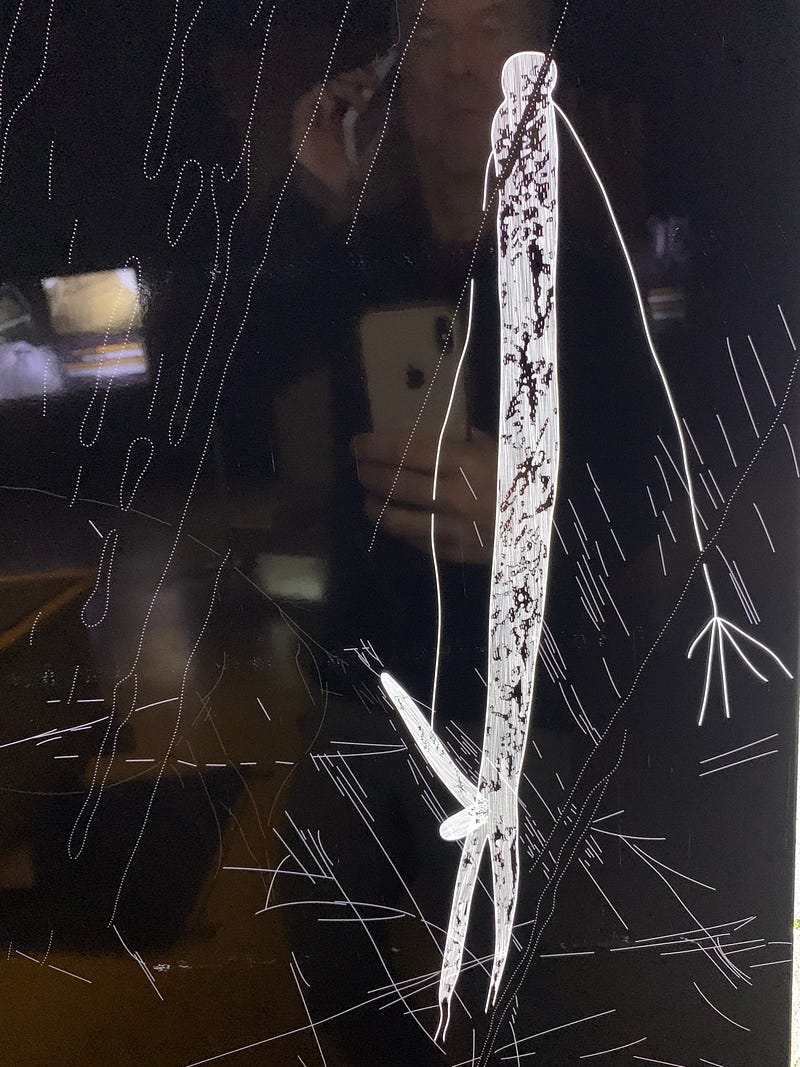
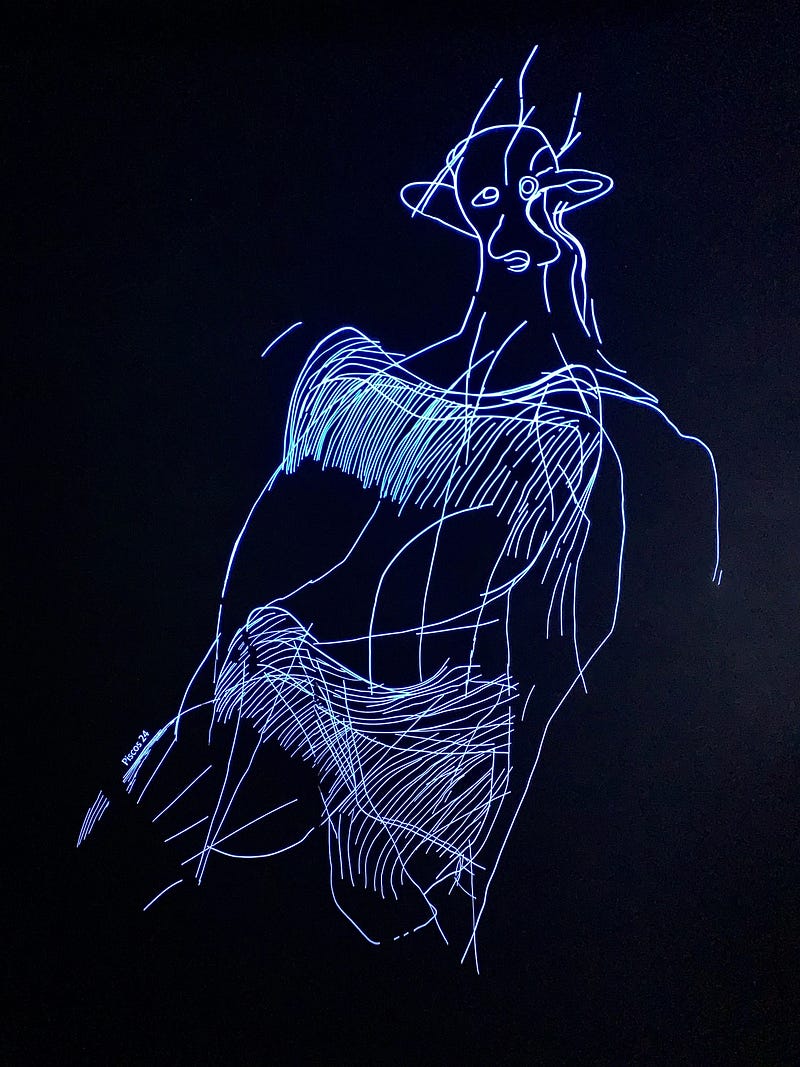
In sum, street art has been around for at least 20,000 years. As long as there are flat surfaces on which to scratch and paint, I suppose men and women will be inspired to create street art.
***
I’ve been inspired by so many of my fellow Globetrotters this month, especially this street art story from Jillian Amatt - Artistic Voyages on the town of Lacombe, Alberta’s mural capital:
Catherine Duchesne has contributed a thoughtful and provocative piece about the purpose of art itself, and how here encounters with street murals have helped her reflect more deeply on this question:
***
Good news! My new book, Mature Flâneur: Slow Travel through Portugal, France, Italy and Norway is now available! Check it out here:


