
The Old Woman Who Lay Dying
She craved warmth. But did she receive it?
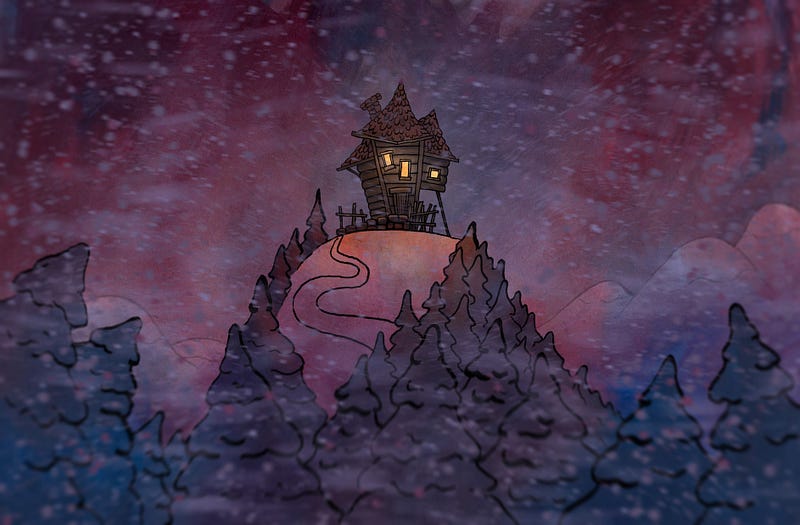
Once upon a time, in a quaint log cabin comprised of curious trinkets and odd smells, an old woman lay dying. Her three daughters knelt by her bedside. As the old woman’s dying moans split the musty air, a faithful servant-girl threw logs into the crackling fire. Beyond the cabin window, a snowstorm raged.
“Don’t leave me,” the old woman whispered. “Don’t leave me here to die alone. Stay with me, please. Please, please...” Delirious with fever, she spoke with the heat of sizzling coals. Her clutch, however, was cold as sleet.
“Please, please...”
The old woman’s eldest daughter, who was very kind, stood and took the old woman’s hand in her own.
“Mother,” said she. “I promise you, I will hold your hands until you pass quietly in your sleep.”
The old woman's second daughter, who was very beautiful, stood and revealed to the cabin a golden comb on her person.
“Mother,” said she. “I promise you, I will take to your hair my very own comb, and I will brush it until it shines brighter than my own, which glimmers gold.”
Finally, the old woman’s youngest daughter, who was wiser than the rest, took hold of the old woman’s feet.
“Mother,” said she. “I promise you, I will rub your sore feet until they are as soft and flexible as my own, which are soft as slippers.”
“I don’t want any of that,” said the old woman who felt very cold. “Keep me warm instead.” But the girls insisted, and the old woman fell silent.
Days passed, and the old woman grew sicker. The elder daughter squeezed, the second daughter brushed, and the youngest daughter rubbed. The faithful servant-girl threw logs into the crackling fire.
The old woman clung to life.
Days turned to weeks, and weeks turned to months. A full year cycled before the youngest daughter grew weary of her labor. She drew her sisters close and spoke in hushed tones.
“I’ve had enough,” said she.
“As have I,” said the second-eldest.
“I’ve been rubbing this old woman’s feet for months. A wiser woman than I would have quit long ago.”
“I’ve been brushing this old woman’s hair for so long, her locks possess more luster than my own. A more beautiful woman than I would have quit long ago.”
The siblings, finding themselves in agreement, left the eldest sister to attend the old woman’s bedside and locked themselves in their rooms.
The eldest spent another year at the old woman’s side before she, too, grew weary of the old woman’s frightful tenacity.
“You poor thing,” said the eldest daughter. “I’ve been squeezing your palm for so long, it has no warmth left in it. A kinder woman than I would have put you out of your misery long ago.”
Determined to do just that, she fled the cabin in search of an ax for which she might chop off her mother’s head.
The cabin was quiet. The fire crackled and popped wood. The old woman stirred. She spoke in a soft, clear voice, “Who keeps the fire lit? Eldest daughter, is that you?”
“Eldest daughter, is that you?”
The faithful servant-girl, who alone remained within the old woman’s chambers, said, “Not your eldest, old woman.”
“My second-eldest, then?”
“Neither your second eldest, old woman.”
“Ah,” said the old woman. “You must be my youngest, who is wiser than the rest.”
“Old woman, I am none of those. I am naught but your faithful servant, who has been in your employment for many years.” And so saying, the servant approached the old woman’s bedside, where her employer might better see her face.
“Ah,” said the old woman, who beheld the servant-girl for the first time. “You are not mine, yet you are by my side. That makes you far better than my daughters. Stay a little longer, won’t you?”
The servant girl assured the old woman that she would stay.
Satisfied, the old woman said, “Then you must fulfill my dying wish.” And so saying, she bade the servant-girl to crawl under her deathbed and retrieve a small wooden chest.
It was done.
“Now,” said the old woman. “That chest contains all the valuables that I possess. I’d like you to have it. However, my daughters may grow jealous and petty toward you. You must leave, quickly, and set the house aflame.”
The faithful servant-girl did as she was bid, and left not a moment too soon. The eldest daughter burst into the cabin, ax in hand. Woodsmoke curled and flames crackled throughout the log cabin.

“Mother, where are you?” she said, thinking what a terrible thing it would be to be burned alive.
“I am here, daughter,” said the old woman, whose cheeks were colored with heat, and who was pleasantly warm for the first time in years. “It’s too late for me. Quick, chop off my head, and gather your sisters. You must leave the mountain before nightfall; steep ledges grow treacherous, then.”
“Quick, chop off my head.”
The eldest daughter wept and did as she was bid. She and her sisters fled the mountain while the old woman’s ashes mixed with her beloved cabin.
Nightfall set. The mountains grew chill and sheer with frost. On a distant mountaintop, a snowstorm brewed.
Below the storm, in a quaint log cabin that collected curious trinkets and odd smells, an old woman penned her will. She sealed it with a kiss and a request: her three sons should attend her bedside, for she was very ill, and soon, she would lay dying.
The End.


