
The Old Man at the Closed Bus Stop and the Loneliness We All Share
Why security may not lie in property, but in connection
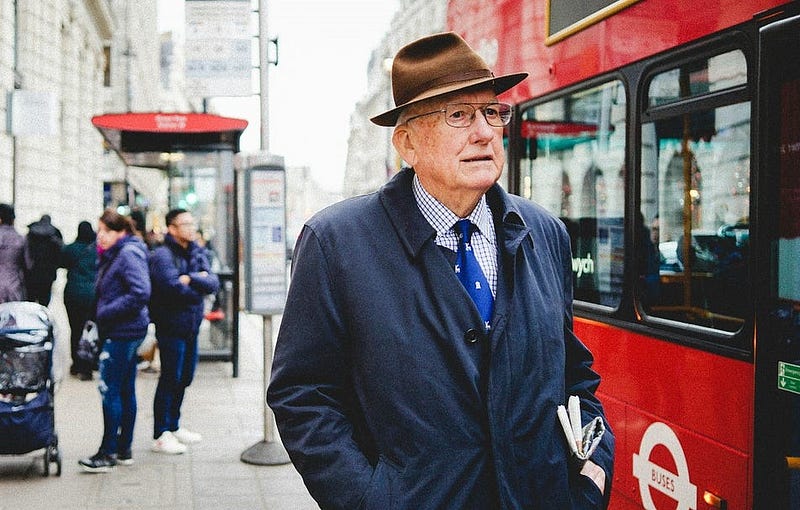
“Are you waiting for the bus?”, I asked the old man at the bus station.
“Yes, I am.”, he answers.
“It says the bus stop is closed”, I say, pointing above his head, thinking that he might have not noticed it.
“Oh, that’s old, don’t mind that, the bus will stop. I know for sure, because I live at this house here.”, and he shows me a beautiful Victorian house behind me.
“It’s lovely. How long have you been living there?”, I asked, smiling.
That’s all it took.
He starts telling me about his long life in Fulham, his favorite neighborhood in London, this house he had bought and how much he had loved raising his kids in it.
From the way his eyes sparkled and how fast he was talking, I got a feeling that he hadn’t spoken with someone in a long time. I don’t interrupt him, and listen with intention.
Just before the bus arrived, his smile disappears, and he says, “But they will have to move me somewhere else soon. It’s not safe to be alone in here anymore.”
“I’m sorry to hear…”, I manage to mumble before we get on the bus, and we sit on different rows because he sat on the priority seats.
I don’t know who they are. And I don’t know where they will move him. But the sadness that lingered in his face didn’t need details.
That day I was sad as well because the landlady of my flat had told me that she wanted to sell it. The anxiety of finding a new place had started putting roots in my heart.
Should I rent again, or should I buy? I have just entered my thirties, and I need to invest for my future and have something stable. And with the prices of property now, I need to buy early if I want to repay it before I die.
But what will be the difference?
The old man at the bus stop had a house. A big, beautiful one. A symbol of his past achievements, now standing cold and empty. And, still, it offered no solace, no safety net for his loneliness.
According to CDC, nearly 1 in 4 adults aged 65 and older are considered to be socially isolated. And an Age UK study revealed that nearly 1 in 5 men (19%) over 65 in the UK had less than monthly contact with friends compared to only 12% of women.
They would move him somewhere else. Couldn’t help but wonder.
Who are they? His kids? Social care? And where? At someone else's house? At a retirement home? I guess it doesn’t matter. The sadness it had caused him is what matters.
From what he shared, he had lived his life by the book. Had worked hard, had a family, bought a house and retired. But now that he was old, he was all alone. And the house he had worked his whole life to own wasn’t safe for him anymore.
The bus proceeded through London, each stop a reminder of the old man’s words and the fragility of life plans. The anxiety in my chest morphed into a quiet rebellion.
Was buying a house truly the only path to a secure future? What if security was an illusion, a lie of our consumerist society? The old man’s sad eyes had pierced that illusion.
Perhaps security wasn’t a destination, but a journey.
A journey of building connections, fostering relationships, nurturing a sense of belonging that transcended the walls of any property. The old man’s loneliness wasn’t a product of poverty, but of disconnection.
His wealth couldn’t buy him companionship, purpose, or the feeling of being loved and cared for.
The realization brought a newfound clarity. Buying a house might offer a roof over my head, but it wouldn’t guarantee the true security I longed for.
That, could only be found in cultivating meaningful connections, in building a life where loneliness held no power, a life richer than any material possession.
I walked away from the bus stop towards my destination, and the old man’s words echoed in my mind, swirling with a truth I had been ignoring. My own life, while objectively stable, had been slowly succumbing to a quiet loneliness.
As a tech expat living in a very fast-paced city like London, work had become my all-consuming focus, its demands bleeding into evenings and weekends, leaving little room for genuine connection. Social gatherings transitioned into hurried lunches spent checking emails, phone calls relegated to quick updates between meetings.
A 2023 survey by YouGov found that 31% of people in Britain felt lonely often or always, with professionals among the top reporting groups.
Slowly, the walls of my apartment had started to feel not just like a physical space, but a reflection of the isolation I had built around myself. The silence, once a haven of peace, now felt heavy, exposing the emptiness within.
My phone buzzes with notifications, each one a reminder of colleagues and acquaintances, not close friends. My calendar held meetings and appointments, but no spontaneous gatherings or laughter-filled evenings.
Even the vibrant life of London outside seemed muted, a bustling backdrop to my own quiet isolation. It wasn’t a dramatic loneliness, but a slow, insidious creep.
The old man’s story served as a wake-up call
His material security hadn’t shielded him from loneliness, and neither would mine if I continued down the same path.
The lightness I felt wasn’t just about property; it was about rediscovering the value of human connection, the warmth of shared experiences, and the simple joy of belonging.
It was time to bring down the walls I had built, brick by brick, and replace them with bridges to others. Buying a house could wait, but my need for connection couldn’t.
With a renewed sense of purpose, I reached for my phone and spontaneously called a friend. I was ready to rewrite the narrative of my future, one filled with laughter, shared meals, and the richness of human connection.
The journey ahead might not be paved with bricks and mortar, but it would be paved with the warmth of belonging, and that, I knew, was a far more valuable security than any house could ever offer.
Please consider subscribing.