
The Obsession with Early Achievement
A Review of Late Bloomers by Rich Karlgaard
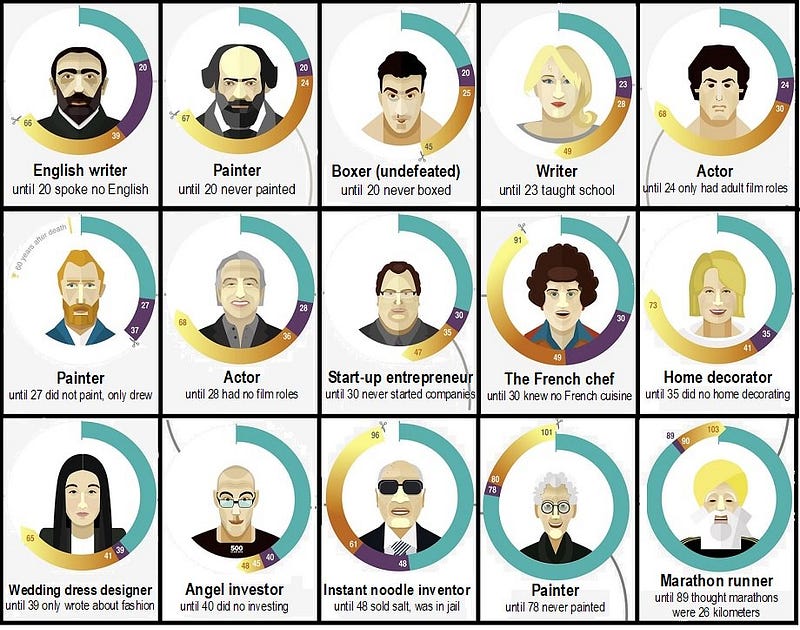
Rich Karlgaard, author, Forbes publisher, and self-proclaimed late bloomer takes issue with an American culture that is laser-focused on “achieving success” as quickly as possible. The book made me realize how these ideas about the importance of early achievement have been imprinted on my own thinking, to the point where I did not even question them. Among privileged Americans, there’s an arms race of sorts; parents spend more and more money on tutoring and prep courses, sign their kids up for more and more extracurriculars, and attempt to mold their child into a better and better person on a resume. All this effort and money and attention is devoted to getting their child the best possible exam scores and grades so that they can enter the most prestigious universities; these universities will then unlock paths towards great companies, careers, wealth, status, and achievement. Karlgaard argues that not only is this arms-race having negative consequences on teen mental health, but it’s also simply leaving entire swaths of the country behind.
As Karlgaard notes in his introduction, he is not saying early achievement is to be shamed:
“We’re not wrong to recognize and congratulate early bloomers. Their achievements deserve acknowledgement. But our culture’s obsession with early achievement has become detrimental to the majority of the population — to the multitudes of us who develop in different ways and at different paces. It pushes the message that if you haven’t become famous, reinvented an industry, or banked seven figures while you’re still young enough to get carded, you’ve somehow made a wrong turn in life.”
Expectations for our own success have been set so high by society, our parents, and our naturally high-performing peers that an average life can often feel like failure. The health consequences of this relentless push towards early achievement should not be taken lightly; we’ve seen higher incidences of ADD, bipolar disorder, usage of behavior medication, and teen depression/suicide/anxiety. I don’t think Karlgaard argues that these expectations and culture are the only contributors towards these trends, but it would make sense for them to play a part.
The main premise of the author’s argument is that people develop at different paces, and the current education-to-career channel is structured thus disadvantages large portions of the population who don’t develop quite as quickly. Karlgaard notes that the prefrontal cortex — the part of your brain responsible for executive decision-making, planning, and moderating behavior — can take a long time to develop, in some people not fully developing until into their 30's. When the cortex is still maturing, emotions may outweigh rationality and strategic thinking. So many 18–25 year olds are less than capable of making responsible judgments or managing their emotions, and yet they are being “measured and fitted for the trajectory of the rest of their lives.” Does that type of system make sense?
Karlgaard suggests using gap years as a solution that allows young adults to develop skills while they are still maturing, and then goes on to explain how a longer development clock isn’t necessarily a bad thing. In particular, he argues that late bloomers possess six strengths that can be highly valuable in the workplace:
- Curiosity — which is needed for reinventing yourself or pivoting your trajectory later in life
- Compassion — higher emotional IQ, pro-social behavior, and a wider perspective from having developed more slowly
- Resilience — from having experienced adversity early in life
- Equanimity — which is better for leadership and problem-solving
- Insight — from a richer arsenal of patterns and experiences to draw on in the workplace
- Wisdom — from a larger sum of knowledge, experience, and intuition which can only be developed over time
I’m not sure I entirely agree that these traits are more prevalent in late bloomers, but I understand what the author is getting at. It generally is an advantage to have more experience under your belt, to experience greater adversity, and to be able to better empathize with others; so instead of telling ourselves that we are weak for not having achieved something by a certain date, we should re-frame our experience (even a failure) as a strength we can use in the future. The author takes an entire chapter to explain how managing our self-doubt and re-framing our experiences is essential to any late-bloomer’s success:
“All healthy people have self-doubt, but we late bloomers often have too much of it. We make our situation worse by adopting unhelpful coping mechanisms, such as self-handicapping, to protect our self-image. But these coping mechanisms only take us further away from blooming. Self-efficacy is what thriving late bloomers seek in order to convert self-doubt into a friend. Self-efficacy is our belief that we can accomplish a specific task with a reasonably positive attitude, make a plan based on facts, and bloom by cultivating self-talk, framing/reframing, and self-compassion”
I think this was the most important point I got from this book — the idea that it is okay to fail. It’s okay to not be the idealized person you imagined you’d be before the age of 30. It’s okay to not be as successful as the one-in-a-million success stories you see on Instagram or Youtube. The main problem is when we look at our experiences thus far and think that they are meaningless, or when we doubt that we have the ability to eventually accomplish what we want. Self-efficacy — this idea that you believe in your ability to plan, execute, and eventually get to where you are going — is key. And I think the step just prior to self-efficacy is really self-compassion: telling yourself it is all right if you fall down. It’s okay if there are bumps in the road.
Karlgaard spends some time on more practical advice as well. How do you escape a toxic environment that seems to be holding you back? Sometimes uprooting yourself is the only way. How do you change the way you think about quitting? The author argues tenacity only makes sense up to a point; each one of us only has so much physical and mental resolve. When we quit pursuing unattainable goals, we actually become happier, less stressed, and healthier — so don’t fall prey to the stigma against quitting. On the flip side, we do need persistence to succeed; we just have to recognize when are failings are a totally normal part of the process (say, when you produce a poor piece of work as you strive to be a better artist) OR they are an indication of extremely small chances of success.
Ultimately, I thought Late Bloomers brought up so many important issues and actually changed the way I think about my own definition of success. One thing the author notes in the beginning of the book is a major trend that Yuval Harari touches on in his book 21 Lessons for the 21st Century: technology is demanding ongoing personal and career reinvention. We have to prepare ourselves for an uncertain future (when many jobs will ultimately be automated) by cultivating our curiosity and ability to reinvent ourselves. This idea really goes against the idea that you need to achieve success early in life; you really can build your strengths over time and adapt as needed. This journey is a marathon, not a sprint.
Score: 7/10
Notes:
Intro
- We’re not wrong to recognize and congratulate early bloomers. Their achievements deserve acknowledgement. But our culture’s obsession with early achievement has become detrimental to the majority of the population — to the multitudes of us who develop in different ways and at different paces. It pushes the message that if you haven’t become famous, reinvented an industry, or banked seven figures while you’re still young enough to get carded, you’ve somehow made a wrong turn in life.
- Health consequences of pressure on younger children — higher incidences of ADD, bipolar disorder, behavior medication, teen depression/suicide/anxiety
- Risk-aversion consequence reflected in less moving, extended stays at home
Measurement
- Campbell’s Law — the more any quantitative social indicator is used for social decision-making, the more subject it will be to corruption pressures and the more apt it will be to distort and corrupt the social process it is intended to monitor
- Goodhart’s Law — any measure used for control is unreliable
- Combined: anything that is measured and rewarded will be gamed
- “Today you can do all the right things — study hard, take the SAT, go to a local or state university — and still be left behind. You can follow the path that for generations was the “escalator to success,” yet still be pushed to the margins or be economically excluded. And why? Well, you didn’t do it brilliantly enough or fast enough; your standardized-test-taking skills were not stellar at seventeen. Ergo, you are probably one of life’s unfortunate also-rans.”
A better development clock
- 3 Trends
- Adolescents generally are maturing into cognitive/emotional adulthood later today than in previous generations
- Technology is demanding ongoing personal and career reinvention (skills need updating and replacement over time)
- Cognitive abilities we lose as we age are offset by abilities we acquire up until the end of our lives
- Prefrontal cortex can take much longer to develop, up to ten years after turning 25
- When the cortex is still maturing, emotions may outweigh rationality, strategic thinking, and the consideration of consequences [full executive functioning takes root at the median age of 250]
- Many 18–25 yos are less than capable of making responsible judgments, paying sufficient attention, or managing their emotions — yet they’re being measured and fitted for the trajectory of the rest of their lives
- A “kinder” development clock would allow for a period (gap year) in which young adults have the chance to do something challenging/different — train at a skilled trade job, public service, travel/volunteer work
- It would also allow for career paths that are less “up and out” but rather an arc — we decline in some ways (processing) as we gain in others (patter recognition, emotional IQ, crystallized intelligence)
- Our creative/innovative capacities remain strong in different ways as we age
- Cognitive skill peaks
- Late teens — processing speed
- Early 20s — learning/remembering names
- 25–35 — ST memory
- Early 30s — facial recognition memory
- 45–55 — social understanding
- 65 — verbal knowledge
- LB strengths
- Curiosity — needed for reinventing yourself or pivoting roles later
- Compassion — higher emotional IQ, prosocial behavior, wider perspective
- Resilience — ongoing process of responding to adversity with action, ability to reframe adversity as growth opportunities
- Equanimity — better for leadership and problem-solving
- Insight — richer arsenal of patterns and experiences to draw on and mix with novel perceptions
- Wisdom — sum of our knowledge, experience, intuition which can only be developed over time
- The effects of culture
- Family — the first teachers of cultural norms and societal expectations and individual priorities
- Community — impact our health, income, behavior, well-being
- Society — provides the most persistent set of standards, expectations, behaviors, biases
The stigma against quitting
- Praising the benefits of tenacity only makes sense to a point, because each of us only has a certain amount of resolve, both mental and physical
- When we quit pursuing unattainable goals, we’re happier, less stressed, and get sick less often
- As part of a societal obsession with early achievement, quitting has been turned into a pejorative, when in many instances it may be tactically the best choice
- For every moment we double down on something that’s not working, we’re forgoing other potentially valuable opportunities (sunk + opportunity cost)
Managing self-doubt
- Self-talk (third person)
- Positive re-framing
- Self-compassion
- “All healthy people have self-doubt, but we late bloomers often have too much of it. We make our situation worse by adopting unhelpful coping mechanisms, such as self-handicapping, to protect our self-image. But these coping mechanisms only take us further away from blooming. Self-efficacy is what thriving late bloomers seek in order to convert self-doubt into a friend. Self-efficacy is our belief that we can accomplish a specific task with a reasonably positive attitude, make a plan based on facts, and bloom by cultivating self-talk, framing/reframing, and self-compassion”
Uprooting
- Sometimes the best tactic is to move to a different environment altogether; some personalities can thrive in any given one, others need a specific type
- Culture/environment of an organization are more important to satisfaction than the actual job tasks
- Think in terms of adjacent spaces career-wise, rather than radical moves
- Link new career path to an identity goal; goal commitment being a crucial part of any attainment
Persistence
- The stories we tell ourselves help shape our attitudes and improve our well-being; a changing self-story can be the basis of a major life change
- “If we made all our decisions based on the actual odds of success, we’d rarely attempt anything risky or achieve anything significant. The reality is, stories can keep us going because of their inaccuracy.”
- Persistence/grit isn’t a fixed trait, and tends to increase as we age