
The Non-Monetary Perks of Nonprofit Work
It’s not all about money.
I work in the nonprofit world as a grant writer, and my job is almost non-existent in the for-profit world. That’s not to say I couldn’t get employment there — I have a degree in technical writing and a lot of transferable skills. I just choose not to.
I tend to tell people I didn’t get into grant writing for the money. If I wanted more money, I could’ve gone to work for some technology firm or whatever as a technical writer. I probably would be making more than I am now, but it would basically be just a job.
Not that there’s anything wrong with that — sometimes, a job is just what you do to support your hobbies, and there is no shame in doing that. Generally speaking, the idea that one should love their work is overrated at best and capitalist propaganda at worst. However, doing something you enjoy, or at least tolerate, is generally good.
That said, I really do enjoy my job. It’s not my everything — I no longer attempt to define myself as a do-gooder who saves the world one grant at a time. However, I do like what I do and take a lot of pride in my work, even if it’s not as lucrative a career as I could’ve pursued.
And, as far as I’m concerned, I get a lot of nice perks from my job that I probably wouldn’t get elsewhere. First off, I get to know that my job makes a difference in people’s lives. This is not some dubious claim that technology companies make about their products improving people’s lives while stealing and selling their data. My agency actually makes a significant difference in the lives of people in our city and throughout the nation.
For one, we provide mental health services to thousands of people in our area, including therapy and psychiatric services. This includes kids, older adults, and seniors, and these services are more important than ever in these times of plague.
We also have a suicide crisis hotline that answers calls from around the country 24/7/365. That hotline answers tens of thousands of calls every year, and about a third of those callers are suicidal. Doing the math, we have the potential to save thousands of lives every year.
We have other programs as well that serve school-age children and seniors directly, and while those programs serve smaller populations, they still make a difference in those people’s lives.
My agency not only provides these services, but we track our outcomes through evidence-based tools. It is not enough to simply provide therapeutic services — we track our clients’ actual life improvements over their time with us. So, when I say my job makes a difference, I get to point to data and outcomes that demonstrate it. That’s a pretty cool feeling.
Another perk of working at a nonprofit is that, generally speaking, the people are much more open and understanding about the things that make us different. Mental health has become a major issue in the past two years as COVID has raged, and we are having more conversations about it in public places. Yet, many jobs discourage talking about our mental health openly, forcing neurodivergent folks to hide their diagnoses.
On the other hand, I’ve been open about my diagnosis with my bosses for nearly five years now. I would hope that people at a mental health agency would be understanding, but in retrospect, I suspect that quite a few people at quite a few nonprofits would be both understanding and accommodating of my diagnosis.
Then there’s the other job perks, like flexible hours and the ability to work from home, that make things much easier for me. Those aren’t unique to nonprofits, but they really are a great perk.
Finally, there is the general sense of connection that I feel with my coworkers. People don’t get into nonprofit work to make a bunch of money; they get into it to make a difference, and that attitude is reflected in the kind of people that wind up working at nonprofits. They are a generally upbeat, easygoing kind of people, and while they are usually serious about their jobs, they are a bit more loosey-goosey about other things.
This often leads to fun office environments where employee wellbeing is considered important to the mission of the agency. We are all in it together and none of us makes a ton of money, so we might as well make the best of what we have. Self-care and work-life balance are things that take priority, since having happy workers is important to accomplishing our mission.
Honestly, the word “mission” is kind of the key to all of this. Every nonprofit has a mission statement, and we live and die by that mission. People who work for us tend to believe in that mission, which defines how they approach their work. Whether that’s helping the kids, saving the rainforest, providing shelter to sick kittens, or improving the mental health of the world, a lot of the people who work at nonprofits believe in making a difference.
Not everyone, of course — for some, a job is a job — but quite a few of us really do believe in the missions of our agencies. But a lot of the people drawn to nonprofit work do it because we feel like we have the power to make a change in the world, to do something big and important — or even small and important, since not every world-altering event has to be huge.
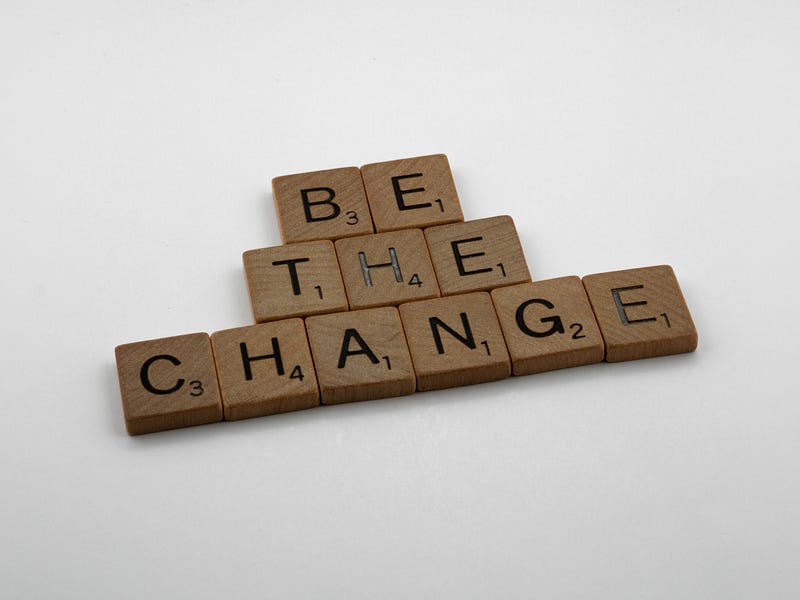
For many of us, nonprofit work is our chance to make a difference in the world. I very often see the “be the change you want to see in the world” decorations in nonprofit offices, and the people who work tend to reflect that mentality. Quite a few of us really do want to improve the world and truly believe we can.
I mean, we certainly didn’t get into it for the money.
If you liked this, please subscribe to my publication, Thing a Day. I publish something every day on a variety of topics, so you never know what you’re going to see!
If you’re not already a Medium member, I encourage you to subscribe. It’s just $5 per month (or $50 for a yearlong subscription), and you can read an unlimited number of my articles as well as unlimited articles from tens of thousands of Medium writers. Your subscription fees support the writers on this platform, and if you click this referral link or sign up through my email subscription below, part of your subscription fee will go toward supporting my writing and enabling me to continue publishing a Thing a Day.
Here are some other things I’ve written: