
The Node
A story of survival
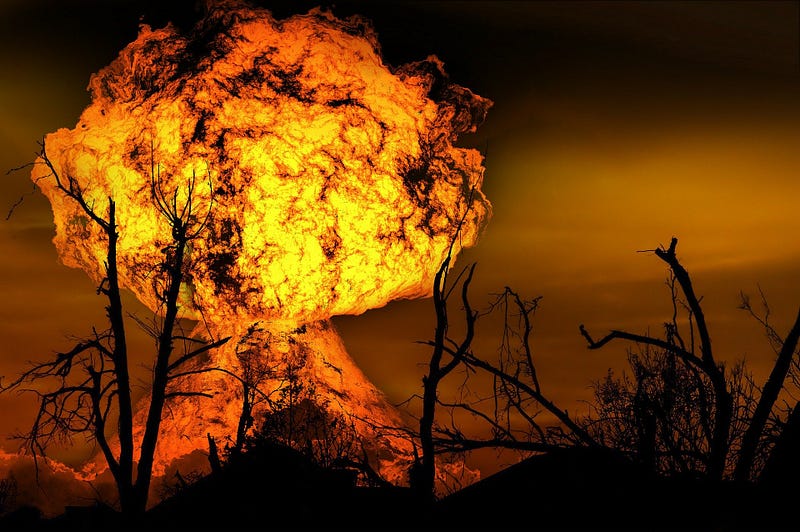
We used to come here often, to The Node. But then, the world fell away.
Before, we were happy here. There weren’t many of us, but enough to call friends and family. We lived like most — eating, playing, having sex, and reproducing. A mediocre life maybe, but as I said, we were happy.
Our population grew, and some of us left. That’s not so uncommon, right? It became crowded. There wasn’t enough food to go around, and it just seemed like a natural tendency for others to move on. They left to find other Nodes, and to our great surprise, there were many. So many, in fact, we no longer worried about having enough resources to live. The world, as it turned out, was immense.
Word of the other nodes and their many wonders and sights spread throughout the community, and more of us left. As food and other supplies grew scarce, even more ventured out. Traveling was pleasant, and we enjoyed it. The abundance of other nodes meant we could thrive.
And thrive we did.
At first, the change was subtle. In fact, it was one of those things that slipped into your life like an undetected malignant cancer; once discovered, it’s already far too late. A few of us got sick. We thought it was something in the nodes, but we found them healthy. Inspecting our environment proved fruitless as well.
The sick began to die, and we panicked. But the fear was beneficial; it helped us open our eyes. We were at war, only our enemy neglected to inform us. We rallied, talked, planned, and eventually acted.
We fought back hard, and for a long time, the war was uncertain. Our enemy was ruthless and unseen, attacking from behind like cowards at first, but then striking us head-on like crazed monsters. We tried to hide, but they always found us. We changed tactics many times, but they were either circumvented or overcome. When we adapted, so did they.
The war took its toll on both sides. Whenever circumstances were in our favor, we’d grow confident only to find the tide turning — a harsh reminder that victory was never assured. But there was another who suffered. At times, our environment was worse off than any of us. The land sustained deep wounds and bled as bad as any soldier. Structures crumbled, and anything essential to survival died its own kind of death. Even our precious air was poisonous, and we were forced to move often just to avoid the toxins.
Despite our being the obvious target of our attackers, many nodes were lost as well. We questioned our enemy’s motives. They destroyed us by the tens of thousands, sure, but was it worth it? What did they want? What good was our extinction at the cost of the world? Had we so offended them that nothing else mattered but our annihilation?
They never once communicated with us, so how could we know? There were no casual threats — the kind that followed with something more overt if ignored — no negotiations, no treaties. There was nothing but this blatant destruction, with the single-minded goal to decimate us.
We were losing. A great many of our number perished, and we began to lose hope. Some of us even wanted to give up, surrendering to an enemy who took no prisoners. Or, just return to the now war-torn node of our origin and die with the only good memories left to us. At first, I was one of the latter, but rage instilled me with vigor and the taste for revenge.
A new strategy had to be implemented if we expected to survive — something different and unexpected. Something cunning. Whether it was low morale, wanting to give up, or simple hopelessness — none could say — but we were fresh out of new ideas. Those who still wanted to fight thought that maybe devising something new and different wasn’t needed as much as something unexpected.
We revisited all our old tactics and strategies, looking for a variant. Perhaps we could find one that would fool the enemy into thinking we were stupid enough to try a failing move again. But, none were viable, save one.
A plan formed.
At the start of the war, we hid, but without thoughtful purpose. It was an act born out of desperation and fear. Unorganized and ignorant, it was a simple affair to root out and execute us.
We would hide again, but this time with intention. There would be sacrifices and significant risk. Many would perish convincing our adversary that we’d succumbed and reverted to hiding like beaten and frightened thralls. When the enemy thought us no more, the rest of us, the elite, would continue to hide long enough for them to grow confident and comfortable, and that is when we’d strike.
For the elite, some would starve before the attack, but most would not.
I was in the latter group.
Our ploy worked, and the foul invaders, though not destroyed, fled with their tails between their legs. But the cost was monumental, higher than we wanted to pay. We lost more than expected to fool our adversary, even more waiting for the right time to strike. Worst of all, our world suffered, the land stripped of life. She was likely close to death before even implementing our plan (who could tolerate such abuses?), but now, not a single node remained.
Before this, our world wasn’t just a mere home but a sanctuary. She provided for us in every way, even nursed us. Our world enabled us to flourish as a community. We grew together and adapted to each other’s ways. And when she disregarded or defied what we knew was best for her, like some petulant child, we taught her to accept the good things we did. The things that would bring us closer and make us one.
Thanks to our enemy, all was lost. And though our world’s end was no fault of our own, it was little comfort in light of the only choice left to us.
We had to leave.
We had to abandon all that we nurtured and cherished. Turn our backs on the place of our beginning, of memories, of love. Worst of all was forsaking the nodes. They were our livelihood, and where we were most like a family. For a lot of us, our earliest memory was of that lone node. Our only wish in life was to die there, knowing we left a legacy for those who would remember us.
We had the means to leave — always had, I suppose — but we never needed or wanted to before. Seeing our world dead would surely break us, so the few that survived said our final goodbyes and left before the end.
We found a new world. Similar enough to our beloved to provide solace, different enough to offer adventure. Time passed, and we were happy once again. This new world had nodes of its own. They weren’t like the originals but still bountiful and pleasing. We lived and prospered, adapting to make this new place our own.
But then the change arose again. Sickness assaulted us, just like before, only this time we weren’t so oblivious. This time, we knew and felt despair. But that didn’t mean we’d fold. Too much had happened for us to give up so easily. Now, we’d be the aggressor.
Our familiar enemy came again, but we were ready. We fought them hard from the very start — no submission, no passive-aggressive tactics, no hiding. But still, they came.
How’d they find us? Who the hell were they, and why did they hate us so much? Fruitless questions with invisible answers. Just like before, the battles were brutal, and to all appearances, endless. War was waged on every quarter imaginable, no terrain or field left untouched. And like some twisted and horrific deja-vu experience, the very air reeked of blight and death.
Soon, it was apparent the new world would follow in the footsteps of our former home. To make matters worse, the unhindered ravages of war destroyed this domain much quicker than the other. It was just too much.
Once again, it was time for a solution.
While searching for this new home, we discovered that there were many worlds — thousands upon thousands, in fact. We’d hoped to resettle and be at peace. There was no need for other places.
But now, our only hope for survival was to colonize as many of these worlds as possible. Even if just a single one survived the onslaught of our incessant enemy, we could endure. For you see, we had no hope of destroying these monsters once and for all. How could we? We didn’t even know who they were.
When this new world began to die, there weren’t many of us left, but we put our plan into motion nevertheless. Fighting all the way, we set forth to inhabit as many worlds as we could.
Our generals bestowed an illustrious honor upon me. I would be one of those sent forth to establish new colonies upon these uncountable worlds, and I was good. No, I was great. Taking as many of us as we could to each world, I, and other patriots like me, settled a few, then moved on to the next. In this, we were successful. The enemy — ever-present, as usual — couldn’t keep up.
But it wasn’t without cost. We were spread too thin. And besides our leaders — and positions like myself — no one knew what befell another except through random hearsay.
This went on for an interminable amount of time, and I was tired, but never tiring of the fight or our goal of survival. On the contrary, it was exhilarating to thrive in many places while our nemesis struggled to locate us. No, I never grew weary of these things. What drained me was the sheer number of worlds at our disposal. There had to be billions. But I pushed my fatigue aside and held to our mission. I had to. Our very existence was at stake.
We were winning.
Though still relentless, our enemy, clinging to us like a shadow, was less effective at war. Was it a ruse like the one we used to secure our survival on our homeworld? No. Their inadequacies were too widespread, failures too commonplace.
At some point, our foe grew desperate and launched a massive offensive designed to shatter us. With endless resources, for indeed they never stopped coming, they attacked with everything they had.
It wasn’t enough.
For one thing, as time passed, our numbers grew, and we were too many and widespread for them to overcome. For another, desperation and determination provided strength and glory to our cause.
Still, dare we hope?
We did.
Moving from world to world, we settled and grew. Our enemy, however, continued to be less effective. It was invigorating. No, it was magical! Soon, their efforts diminished to almost nothing. Sure, there were pockets of fighting here and there, but none with meaning.
One day, they simply ceased to exist. The consensus across all worlds confirmed the tyrants were no more, and yet…
And yet, fate was cruel to us, for the multitude of worlds, all of them, were dying too.
Nothing we did stemmed the tide of death, and so we lived as well as possible, trying to be happy. But our offspring, though strong at first, perished within moments. Who can flourish in a dying world?
I was dying too, and that was okay. I’d seen too much to live in peace anyway. An abundance of memories flooded my soul as I faded away. I never forgot my homeworld with all its numerous wonders. And I never forgot my node; the First Node.
I also remembered our adversary’s relentlessness, the ceaseless combat, the total lack of compassion, and the slander.
Oh, yes, the slander.
In fact, sometimes, the propaganda against us is what infuriated me the most. Our high and mighty enemy disparaged us often. They thought us primitive and illiterate, but we knew. Didn’t always understand, but the message was clear — we are vermin.
Our foe spat phrases in distaste, demeaning us with utterances like “vile contagion” and “deadly pathogens.” Referring to us, they said it was necessary to “stem the rate of infection”, and that WE had to be eradicated if THEY were to survive. Might I remind you, they started the war.
They called us destroyers of something known as mankind. Worst of all, their common name for us was simply EVIL. For the longest time, we thought they were just crass. But we eventually learned that it meant Eradicating Viral Infection of the Lymph — EVIL. But what did it matter?
Now they were gone, and most of us as well.
I don’t have much time, but that’s okay, because we have reason to rejoice! You see, while awaiting a death that was as sure as our pathetic life, fate had mercy and bestowed a miracle upon us. Our kind will live after all, for somehow, new worlds have found us.
Post Title: Diary of a Deadly Virus
Thanks for reading, I hope you enjoyed it!
D. Omran


