
The Nobel Prize Perpetuates The Winner-Take-All Paradigm
The Nobel Committees should not ignore scientists who collaborated with the winners
The rules governing the award of the Nobel Prize do not seem to have changed with the march of time. The rule that only a maximum of three recipients can share the prize does a grave injustice to all those who contributed to the success of the scientific project.
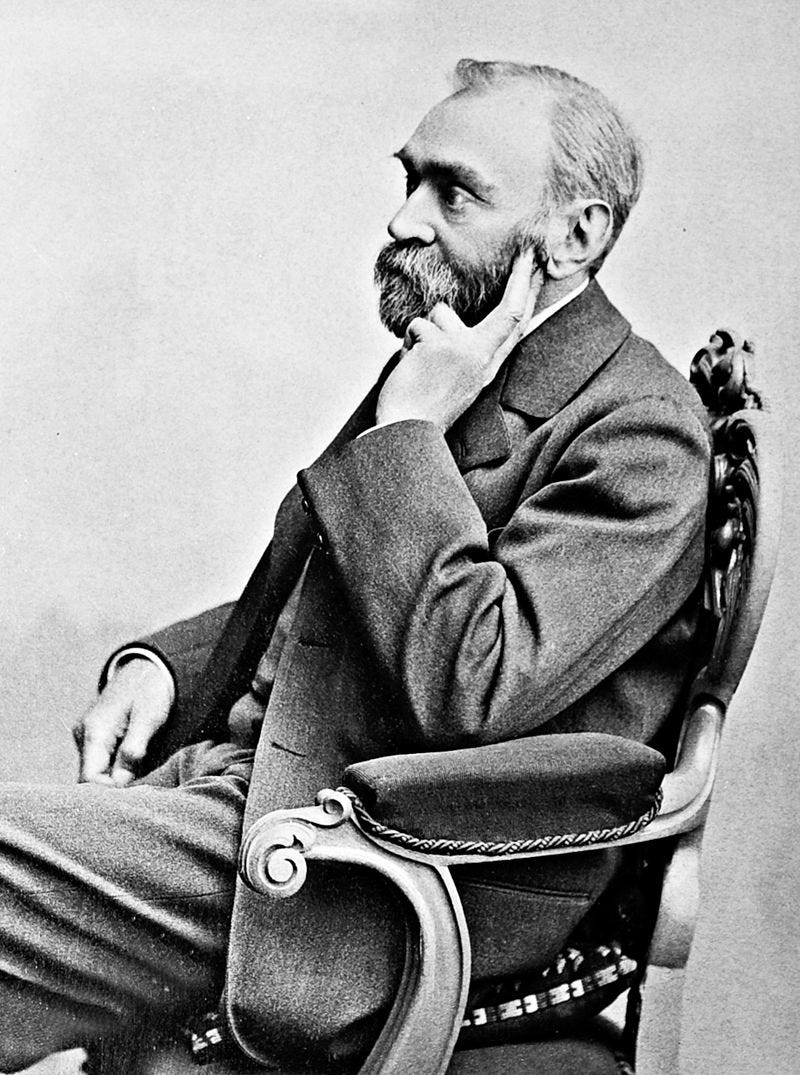
When Alfred Nobel signed his last will and testament in November 1895, science was largely an individual pursuit. The lone scientific genius laboured for days and years together before they came up with a breakthrough that benefited humanity.
Scientific discoveries no longer ride on individual epiphanies, ‘aha’ moments or sudden flashes of insight. Even if Isaac Newton or Edison were alive today, they would have to depend on a team of researchers to achieve their goals. The specialization of science has narrowed knowledge that an individual can gain.
Scientific research depends on teamwork. Scientists collaborate to pursue specific projects. Each collaborator is a vital link in the chain of research. Teams gained their cohesion from the synergistic cooperation of the individual scientists.
The baton of scientific data and findings pass from one hand to another before the breakthrough happens at the hands of the last mile researcher(s).
The scientists who form the last link in the chain of research crystallize the findings into a major discovery. They hog the limelight of fame while the collaborators remain unsung heroes and fade away in obscurity. This is nothing but the winner-take-all paradigm in operation.
Winners take all while the contributors languish in obscurity
Nothing exemplifies this unjust phenomenon more than the 2020 Nobel Prize in Physiology or Medicine. The Nobel Committee awarded the prize to Harvey J. Alter, Michael Houghton, and Charles M. Rice for their discovery of the Hepatitis C virus.
In the words of the Nobel Committee,
“Thanks to their discovery, highly sensitive blood tests for the virus are now available and these have essentially eliminated post-transfusion hepatitis in many parts of the world, greatly improving global health.”
The three winners were the last mile researchers who came up with the breakthrough. They depended on the hard work of many other scientists who spent many years trying to find the virus.
An article in nature.com discusses how two virologists who toiled for years in the Hepatitis C virus project did not get any recognition from the Nobel Committee.
Virologists Qui-Lim Choo and George Kuo deserved a share of the Nobel Prize pie but lost out because of the outdated rule that only three recipients can share the prize. Michael Houghton, one of Choo’s supervisors in the project shared the prize with two others.
The two virologists, though disappointed, expressed happiness that their team’s members received the prize.
Houghton also shared their disappointment and said,
“Without their input, I doubt I would have succeeded.”
Losers’ magnanimity and nobility of the scientific spirit
Qui-Lim Choo and George Kuo are outstanding scientists who embraced the noble tradition of selfless scientific pursuit to serve humanity.
Their response to the Nobel Prize announcement shows not only their humility but also their commitment to helping humanity.
George Kuo’s response:
“Limiting the number of awardees may be outdated in today’s world of collaborative and team-based science. I was motivated by a dream that I could make a difference in helping people worldwide — and, in many cases, saving their lives. I also wanted to teach our children how important it is to work hard on something that you feel passionately about.”
What Qui-Lim Choo said:
“I am happy, very happy. It’s my baby. I’m so very proud. How can I not be proud?”
What humility! What magnanimity! What true scientific spirit!
Wrapping up
Alfred Nobel wanted the prize to go to “those who, during the preceding year, shall have conferred the greatest benefit to mankind.”
He had no role in framing the rules just as how many should share a prize. The Nobel Foundation prepared the “who”, “how”, “when”, and the “how many” parts of the prize. Nobel, had he been alive today, would not like to exclude scientists who worked hard to serve humanity merely because an archaic rule restricted the winners to a maximum of three.
The Nobel Prize, notwithstanding its occasional controversies, remains as the world’s greatest intellectual honour. Scientists work with a mission to achieve a specific goal, but their vision is to help humanity solve its problems.
The Nobel Foundation should review the rules that have outlived their time. The “maximum of three” rule is a dampener of the scientific spirit. This unfair rule deserves to be thrown out lock, stock and barrel.
Let every scientist who worked to fulfill Alfred Nobel’s dream of serving humanity get their due. The exclusion of deserving candidates from sharing the Nobel Prize insults Alfred Nobel’s legacy and diminishes the value of scientific endeavour.
The obsession with individual scientific achievement should give way to a sober acceptance of teamwork as the foundation of scientific enquiry.
Market-based values like the winner-take-all paradigm should not crowd out the grandeur of scientific accomplishments and ignore the work of dedicated scientists.
The Nobel Foundation and the Nobel Committees have their task cut out to inject a dose of meritocracy and inclusion into the world’s most coveted prize.
Thanks for reading!