
The NFL’s Worst Tragedy Not Forgotten.
As updates are released on the health of Buffalo Bills star Safety Damar Hamlin, the National Football League, friends, family, and millions of Americans breath a collective sigh of relief as his condition continues to improve. Hamlin was a collegiate star at the University of Pittsburgh and Pittsburgh Central Catholic High School, where he helped lead his team to the PIAA championship and was a Class AAAA Defensive Player of the Year.
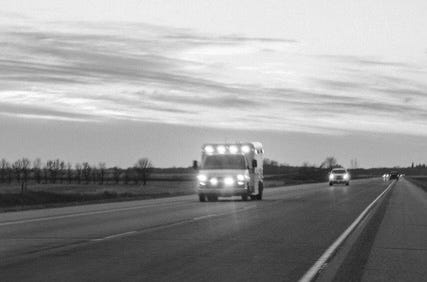
After a tackle on Bengals wide receiver Tee Higgins during a game on Monday Night, Hamlin got up and almost immediately collapsed on the field. Buffalo Bills’ players and coaching staff surrounded Hamlin as he was administered CPR and loaded into an ambulance. Hamlin was then rushed to the University of Cincinnati Medical Center.
Nothing like this had ever happened in the NFL previously? Or did it?
Enter Charles Frederick Hughes. Born in Philadelphia during the second World War, Hughes played college football at Texas Western College (now the University of El Paso.) He was drafted as a wide receiver by the Philadelphia Eagles in 1967 and was traded to the Detroit Lions in 1970.
Hughes suffered an injury in a 1971 pre-season game against the Buffalo Bills (Hamlin’s current team) and collapsed in the locker room. He was then released from the hospital with a suspected spleen issue.
The Chicago Bears traveled to the Detroit Lions on October 24, 1971. During a Lions 4th quarter rally down 28–23, Hughes entered the game and caught a 32-yard pass down the sideline from Greg Landry into Bears territory. On the same offensive drive with less than two minutes remaining in the game, Landry threw an incomplete pass to tight end Charlie Sanders. Hughes turned and began running back to the huddle and dropped to the ground and grabbed at his chest.
Hall of Fame linebacker Dick Butkus immediately realized that something was wrong and motioned for assistance from the sideline. Medical staff members from both the Bears and the Lions rushed to try to save the 28-year old. Spectators looked on in horror as Hughes as he was loaded onto the stretcher and into an ambulance. Those in the stadium remember seeing the horrific image of Hughes’ lifeless arm falling out of the stretcher. After the ambulance left the field, the last 1:02 minutes of the game was completed at Tiger Stadium.
The game was not stopped.
Charles Hughes was pronounced dead at Henry Ford Hospital at 5:34 P.M. His teammates were informed in the locker room after the game of his passing. The entire team attended his funeral in Texas, and the Detroit Lions retired his number 85 jersey.
Almost no parallels exist between the two incidents almost 52 years later. Medical care on NFL sidelines has progressed significantly as well as the seriousness on how these injuries are handled. The incredible medical support that Hamlin received came almost immediately. It looks to have made all of the difference.
Once the sedation wore off, Hamlin (still intubated on a ventilator) was able to write a note to his doctors asking “Did we win?”
It looks like you have, Mr. Hamlin.
May you be blessed with good health and a quick recovery, Damar.
Sources/References
Hughes, Charles. Wikapedia. https://en.wikipedia.org/wiki/Chuck_Hughes
Hamlin, Damar. Wikapedia. https://en.wikipedia.org/wiki/Damar_Hamlin
Dymski, Greg. “Hamlin’s cardiac arrest stirs memories of Chuck Hughes, only NFL player to die on the field.”
Mather, Victor. “What to Know About Damar Hamlin’s Injury.”
Burga, Solcyre. “The NFL Canceled the Game for Damar Hamlin. It Didn’t After Chuck Hughes Died on the Field in 1971”
Dedicated in loving memory of my father and author, Thomas J. Leibrandt.
Michael Thomas Leibrandt lives and works in Abington, Pennsylvania.


