
The Next Wave of Feminism?
A Plea to Women from International Women’s Day
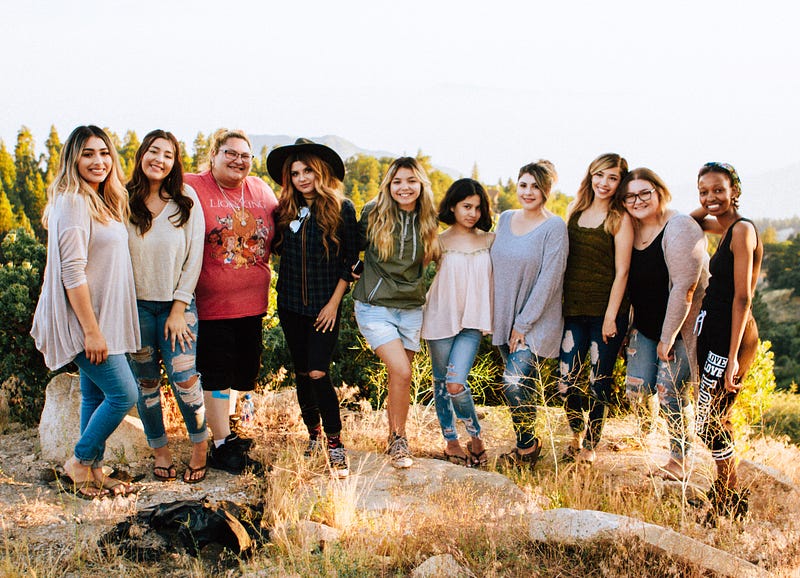
Ladies, happy International Us Month!
To celebrate International Women’s Day on March 8, I spent the day thinking about why I am so critical of mainstream feminism and what I want to see done to empower women. March 8 was the celebration of women’s rights all over the world, and while I’m usually hard on mainstream feminism when I write these essays, I’m going to take a break from that in recognition of the occasion. The day is about the empowerment of women, and looking forward to all the ways that can be accomplished. While women have made major strides since the inception of International Women’s Day, our work is not over yet. We’ve achieved the right to vote and the right to work in Western societies, but there is still a long way to go in the West, and women outside of Western society are still facing the same injustices our Western suffragette forebears conquered almost 100 years ago.
Women have never been truly powerless. Even when women could not hold property and were nothing more than human incubators with house cleaning functions, we still had our own forms of power, our own culture and our own societal norms working for us. While women were placed under expectations feminists call the Patriarchal Society, we held men under these expectations too. However, the vast balance of material power also went to the men, and even where women have had some kind of employment, it usually didn’t work out very well for the woman until women in the workforce became more common during the 20th century.
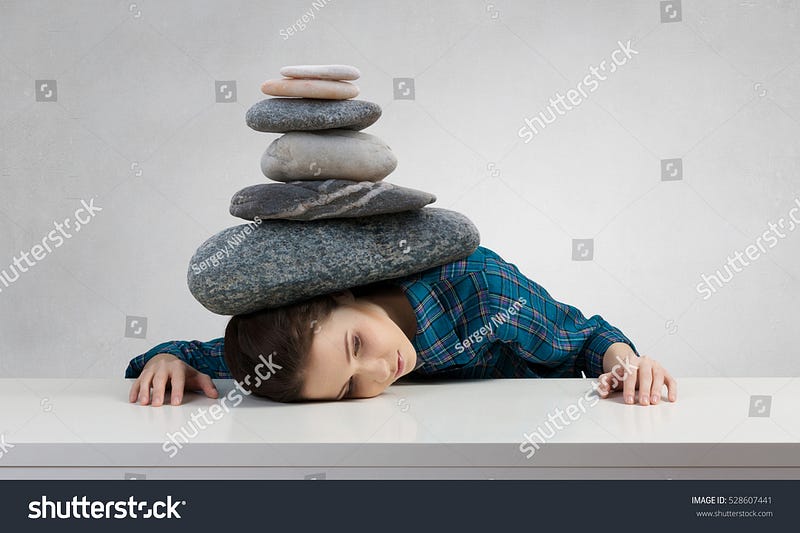
Women have succeeded at the material power part. More women than ever before hold positions in government, the higher echelons of businesses, in journalism, activism, and especially education. However, many modern feminists are quick to point out that there is still a gender pay gap and that women are still vastly outnumbered by men in positions of financial or political power. We have to ask ourselves, is this really because of blatant discrimination, or is there something else going on here? Of course, that’s a loaded question, because there is a lot more going on than simply sexism. The Patriarchal Society goes both ways, and now that the more obvious symptoms have been addressed, we need to look at the undercurrents that cause it all.
On this Women’s Day, I would beg every woman who calls herself a feminist to consider the following:
● “Feminism” isn’t just for women anymore.
What does “male” and “female” mean? Along with the biological differences come associated traits: men are supposed to be strong, always calm, leaders of the household, whose job is to go out and provide for the rest of the household; women are supposed to be nurturers who cook, clean, and bond with the children in an emotional way. Neither set of traits is specific to gender though. They are expectations, and when a man is better at housework or a woman is better at providing, social sanctioning takes place — the man is treated like a failure and the woman is treated like she doesn’t care about family. I would propose that feminism should embrace and empower all people with “feminine” qualities, especially the men. We need to normalize certain traits that aren’t actually female, but have become associated with women anyway. Sensitive cis-gendered men, gay men, and transgendered people (whether they were men before or after transitioning) are as much in need of feminism as women are, because the Patriarchal Society is attacking them also for perceived “femininity.” Instead of focusing on biology, it’s time to focus on normalizing the positive traits associated with both genders, and attack people’s notions of the vast majority of them.

● Stop demonizing men.
Generalizing and demonizing groups of people often leads to dehumanizing them. This progression has resulted in atrocities against minorities worldwide, including during the Holocaust, the Killing Fields, the civil wars in Rwanda, and more recently, the evacuation of the Rohingya. Women have suffered from this treatment, too… yet men are demonized in Western culture, almost universally written off as “at fault” in every confrontation with women. “Toxic masculinity” as attributed to all of them, so the ones who do not fit into this mold are unjustly lumped in with the ones who are, which, in addition to projecting onto the most vulnerable men, also creates too broad a definition of what toxic masculinity truly is. Some manifestations of toxic masculinity and abuse are aimed at men, and since this view sees all men as basically the same, the victims of the abuse and shaming that goes along with not being a “masculine” man do not get recognized. Part of feminism is about being socially supportive to each other, and it’s time we lead by example, and recognize men as individuals, too. Isn’t that what we want for ourselves? Let’s keep the demonizing to the demons, but let’s not assume every man is a demon.
● Don’t discourage “women’s work.”
Help with housework is worth its weight in gold, and most men just need a bit of nudging to help around the house. The problem is, some guys will catch flack from their friends. This is especially true if we ladies are the primary earners, because another important staple of “manhood” is that men should fill this role. One of the curses the Patriarchal Society casts upon men is the emasculation of men who aren’t providers. Another is a man’s role in the emotional needs of the family. The material benefits of good emotional health are just beginning to be examined academically, but classically, men are assumed to be logical and women to be emotional. Since many women are more logical than emotional, it follows that there are emotional men out there who are suppressing that quality in order to conform to expectations as a man. Since we’re standing up to the Patriarchal Society and its stereotypes about women, let’s stand up against all gender stereotypes.
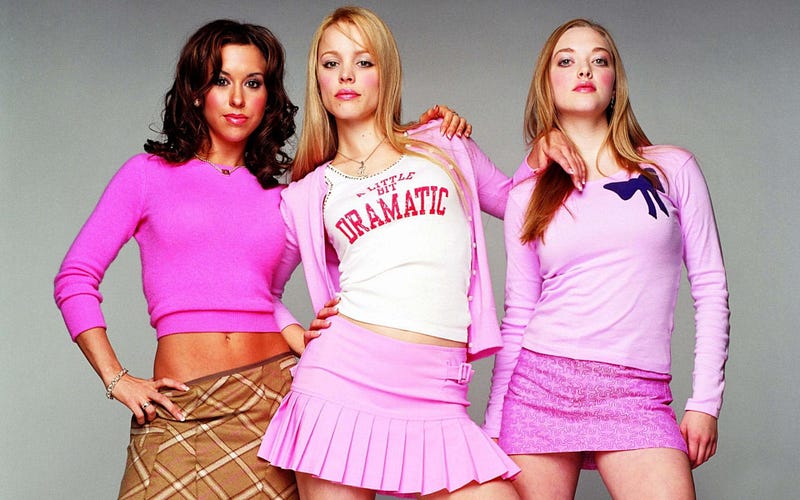
● Acknowledge the “mean girls.”
Despite being depicted in many movies, the “mean girl” trope is largely ignored in real life. If an accusation of “mean girl” is even hinted at with regards to a female public figure (see: 2016 election cycle), the accusations of misogyny start flying from the hardcore feminists. But “mean girl” women do exist, and most often their victims are the men their meanness tramples over. A woman who is truly powerful doesn’t need to be mean, which also means that it’s okay to admit that women can do bad things, and it’s okay to admit that we can do bad things to men. A huge part of the feminist movement has always been about men accepting us, but it’s long time we accepted ourselves, without judgment, warts and all.
● Use symbolic interactionism.
Sociologist George Herbert Mead coined this term to describe the social phenomenon of small, private interactions between many separate social groups building up to establish social norms. These small exchanges, if they resonate culturally, get repeated by people until they become the norm and everyone is doing them. This is probably where the Patriarchal Society came from, and it is the only way to defeat it. It is said in psychology that women are more “wired” for this type of social interaction while men are more wired for aggression, but current research with neuroplasticity is showing that perhaps the reason we are “wired” this way is because it is what we’re being taught is normal, and if we change what we are taught, we can redefine normal in a way that benefits everyone. During previous human history, even the strongest female warrior still needed maternity time, but today the necessity for a new interpretation of gender roles is both required and healthy.
I can hear it now: “What kind of feminist are you that you want to give men better treatment? Isn’t that the opposite of feminism?” To which I reply with a resounding NO. Feminism thus far has been lopsided, which reflects the lopsided outward appearance of the Patriarchal Society, but does not penetrate its thin veneer. Beneath lie social attitudes about gender roles that are harmful to both genders, and particularly stressful both mentally and physically on the men. Adjusting social attitudes, especially in places where the Patriarchal Society is strong and thriving, is going to involve adjusting social attitudes about men, too. It’s going to involve teaching them it is okay to feel, to care, to nurture. It is going to involve teaching them it’s okay to let the woman be the provider and that asking for help is not shameful. Sadly, these are ideas even women are resistant to, and they get reinforced by observing our own families, and by the people we interact with starting in childhood.
We need to redefine both the male and the female in ways that resonate with today’s world, not yesterday’s. We need to change the social attitudes we have about ourselves as well as each other. We want men to listen to and understand us, and if we don’t think they are, perhaps it is because we don’t extend the same courtesy to them, not really. We expect the same things of them that they do of themselves, and we listen to them with those expectations in mind. When “every man” is going to harass or assault us, we are not going to be inclined to truly hear their cries. We have to stop assuming men are always going to be villains and demanding that they one-sidedly allow us to be the leaders and providers we can be: we have to allow them to be the feeling, emotional humans they can be.
We get to vote in most democracies. We get to work at any job we want (although a disproportionate number of us work low-wage jobs, in large part because of the perceptions discussed above). We get to drive, dress sexy, hold property and divorce our husbands. We used to be the chattel of men, but over time we reduced it to merely dependent on them, and today we’re becoming more their equals. Now that we’ve shown men that we can be like them and still be women, it’s time to show them they can be like us and still be men. Looking toward the future, I believe the best way to empower women is to be fair, be just, and acknowledge all the inequities, not just the ones to women. It’s time to start applying the “femme” part of feminism to “female” traits and not just female biology. Some men need feminism just as much as we do.
If you like what I am writing and want to help support it, clap for my story to have it featured more prominently! I also now have a Patreon page and Paypal.Me, where you can support my writing by helping to allow me more time to do it!