
The Next Silicon Race Is About To Happen
And chip manufacturers will have no choice but to join
Contrary to what you might assume, I am no clairvoyant, nor do I have insider information on what the silicon manufacturing industry is going to look like in five or ten years. In fact, it might not even be silicon, and it doesn’t matter. The race that everyone in the computing hardware industry will want to join, and will do so as soon as yesterday, is one in power consumption.
Gone are the days when geeks and nerds were comparing their PSU wattage while the rest of the world was comparing dick-sizes. Bigger is not necessarily better and when it comes to power consumption, it is absolutely and indubitably not better. In fact, quite the opposite, the smaller, the better. Heck, if it could run on thin air without negatively affecting air quality, it would be even better. Imagine your computer becoming an air-purifier, without needing to ever be plugged in! But one can dream, of course, so let’s revert to reality because low power-consumption computers are a reality, and have been for quite a while. Never really that impressive though until 2020 because perhaps until then nobody (exceptions apply) really thought they ought to be.
Well, it’s 2022, and the race for the lowest consumption chips out there is not just an “ought to be”, any more but a necessity. An urgent one. Maybe Intel, nVidia, AMD a few others, just like the muscle-car, monster-truck and SUV fetishists might have you believe otherwise, but I’m fairly certain they see the writing on the wall, just don’t quite know whether to openly react or how to react to it yet.
Of course, this is not an Apple, versus Intel, AMD or whoever else you might want it to be about kind of story. In fact, just forget brand names, forget even that there are commercial, industrial, data-centre, super-computer level chips being created out there. This race will be about anything that computes and uses power. Why? Because we have no choice.
All the signs are there
Whether naysayers like it or not, the signs have been there for ages. A famous one that comes to mind is the 1998 Swiss Air flight that crashed due to the on-board entertainment system overheating. Heat, as most people know, is an entirely normal byproduct of using electricity. The heavier the load, the more heat. That’s probably oversimplified, but you get the gist of it. You have an airplane full of electronics for in-flight entertainment, and what do you get? High power consumption, which results in a lot of heatin fact, so much that it took down an entire airplane. That was 25 years ago. Funnily enough, the solution wasn’t to find less power-hungry systems, but to beef the wiring up and add more and better fire-retardant insulation.

But maybe a 25-year-old case doesn’t hit close enough to home, so you need something more recent. While everyone is merrily swiping, scrolling, TikToking and Shazaming stuff, few wonder how that all is even possible, where all that data is stored or retrieved from. Well, a lot of it in Ireland. A small island in the Atlantic, home of Guinness and Leprechauns. Both are totally real, but to meet the latter, you need to consume ten pints of the former. And speaking of consumption, it appears that data centres in Ireland are on track to using 70% of Ireland’s electricity within just 7 years! If you think there’s nothing wrong with that number, you’ve got to be kidding me!
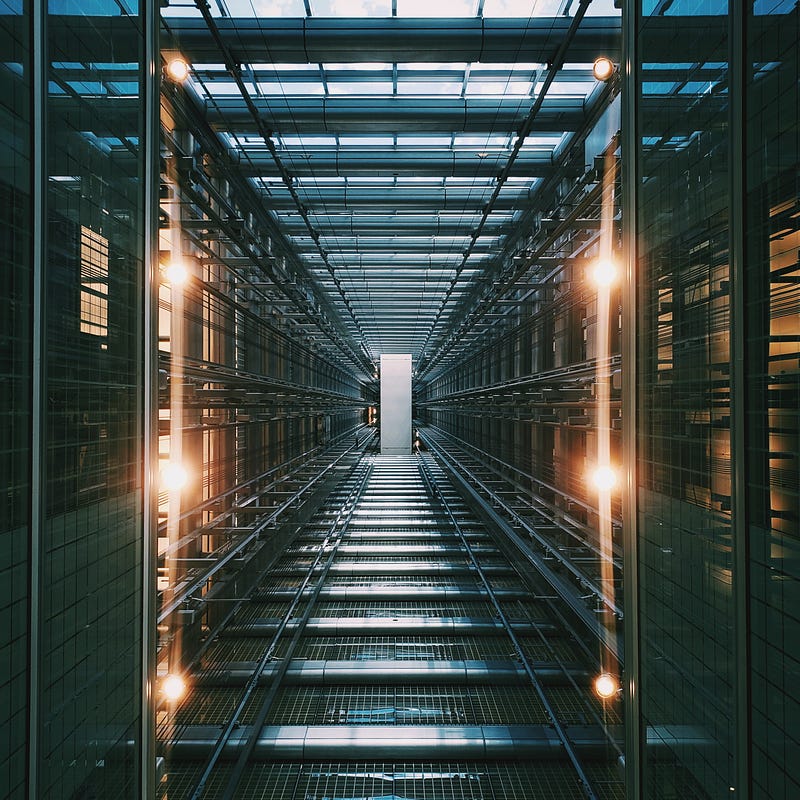
In a world of transition from fossil fuels to greener energy sources, an entire country’s 70% of energy would end up being used by data centres alone. That leaves the rest of industries, businesses, and civilians with a measly 30%! That’s entirely unsustainable. Now, you might say, build more power plants, and I might respond with “Oh really?!?”.
Is really the solution to high energy consumption, more power plants?
I’m certain that’s what the planet needs, power plants covering 25% of its surface! Clearly not the solution. No matter how much I love green energy, I don’t think the entire Sahara should be covered in solar panels or every coastline obstructed by wind-farms. I want quite the opposite, I want a 50×50 cm solar panel to power an entire household on an overcast day! And the onus not to be on the solar panel becoming hyper-efficient, but our electronics becoming very low-powered devices.
Contrary to popular belief, I’m not an environmentalist nut-job. I care just enough not to make things worse, and maybe help here and there without breaking my back in the process or walk 500 miles’ of protests. I’ll be honest, my primary reasons are financial, and I think most people will agree with me. We prefer not to pay through the nose for electricity, charge our Dyson three times a weekend just to clean the house once or have charging cables dangling all around the house just in case one of them goes on red!
The world is increasingly digital, so is education. The pandemic only accelerated this trend. Take for instance the COVID-19 tracker apps. They all need devices and infrastructure to run on. Accelerating a cashless society means banking is increasingly relying on digital solutions. Streaming media is becoming commonplace even in third-world countries, heck, my parents went from not even owning a TV to each owning an iPad and using it for hours every day! Children use tablets and Chromebooks to study, teachers have an omnipresent computer in each classroom, and parents are running out of plugs when the kids come home!
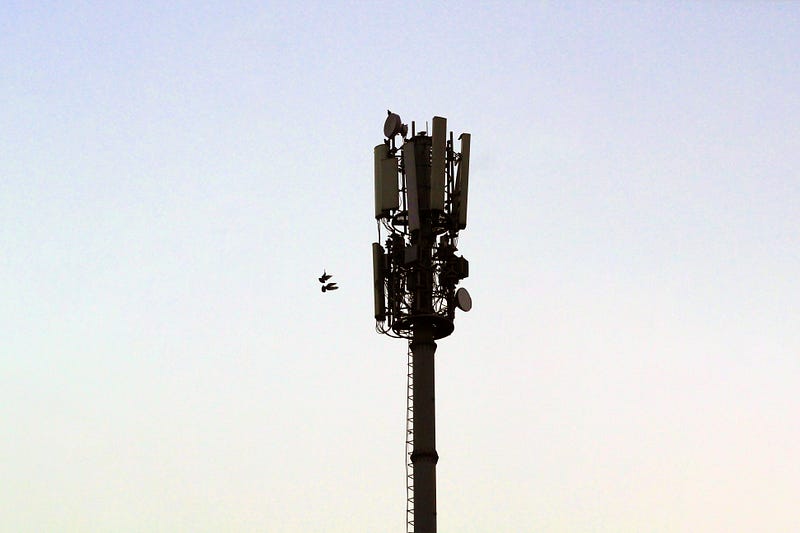
And then of course you have 5G, which ignoring all the conspiracy theories people came up with, something it actually does do is use more power. What? Did you think a gigabit internet antenna just runs on nothing? Sure, all tech gets more efficient over time, but the current 5G push is happening now, so newer, more power-efficient antennas won’t replace currently deployed ones overnight. Additionally, 5G requires a lot more antennas than 3G and 4G did.
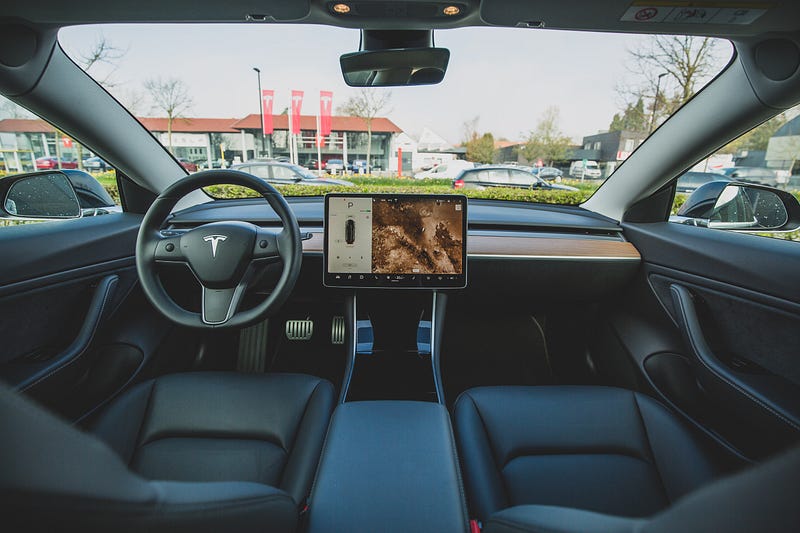
Electric vehicles are another one. While their electronics are the least of our problems, the cars themselves are massive energy consumers, which will increasingly take up our grid’s capacity. In a world where we want 530 million electric cars on the roads by 2040, we really need to look at where can we cut energy consumption. What most people initially misunderstand is that large consumers are often not the issue, but rather the smaller ones in astronomical numbers are the ones that really flip the scale.
An anecdotal example is the light-bulb. Until quite recently, everyone was using incandescent technology to light their homes. About 15 years ago, however, I convinced my parents to fully adopt fluorescent lighting. The electricity bill drastically dropped. Another ten years later, I started pushing LED lighting. The result was a further drop in electricity bills, all the while we kept having a better and better lit home.
I’m not being woke
Regardless whether you see being woke as a good or bad thing. I’m not, because I was born and raised in a society and a family that considers everything in today’s so called “woke culture” as just the norm. If you think recycling is woke, take a history lesson in 60s to 80s Eastern Europe, and you’ll learn it’s a lot older than your technicolor bins you’re still struggling to remember what to put in. If running electric trains and trams instead of 3–5L ICE cars is woke to you, go back to that same history lesson, you’ll learn some more. The bottom line was that nothing was garbage, energy and resources were nearly as precious as human life.
Honestly, I don’t quite get today’s generation. As a child in the early 90's, whenever I got a toy that ran on batteries, my first question was: How many? The lower the number, the happier I was. Why? Because I had very little pocket-money or none at all, so every time I wanted to do a few races with my remote controlled car or train, or play with my Tetris, I needed batteries, and it was easier to ask for money to buy two, than four! As a 7-year-old in ’92 I was already incredibly conscious that energy was expensive. Heck, I got so energy-conscious, that my later 9-year-old brain figured out that I could just get a variable power transformer and use that for most of my toys, instead of batteries that kept running out. I was a stupid little kid, and I was already more conscious than half the computer hardware industry seems to be today. Yes, I did just say that, and I’m bloody proud of it!
Forget solar-storms, we’re crippling our grids just fine on our own
No matter how we put it, use any kind of mathematical equation, the future, as it is, looks incredibly power-hungry and the one component that’s everywhere and can reduce its power consumption is the humble silicon chip. Well, Apple or Intel might call it mighty, but humble or not, chips are everywhere and the less power they consume, the less likely an energy-grid integrity and reliability crisis is.
Whether we like it or not, we got ourselves into a pretty precarious corner, in which the modern world runs on electricity. All of it. And until the core building-blocks of every single electronic device uses even a single milliwatt more than it absolutely needs to, we’re on the edge of collapse.
Perhaps it seems unfair that I yet again hold chip manufacturers responsible for our society’s future, but it was always an inevitable responsibility. When you start innovating at exponential speed, you find yourself responsible for humanity’s future, so let’s see those ultra-low power chips roll in by the trillions. Yesterday, please!
Attila Vago — Software Engineer improving the world one line of code at a time. Cool nerd since forever, writer of codes and blogs. Web accessibility advocate, Lego fan, vinyl record collector. Loves craft beer!


