The new South Korean president won’t fit all standards for American conservatives
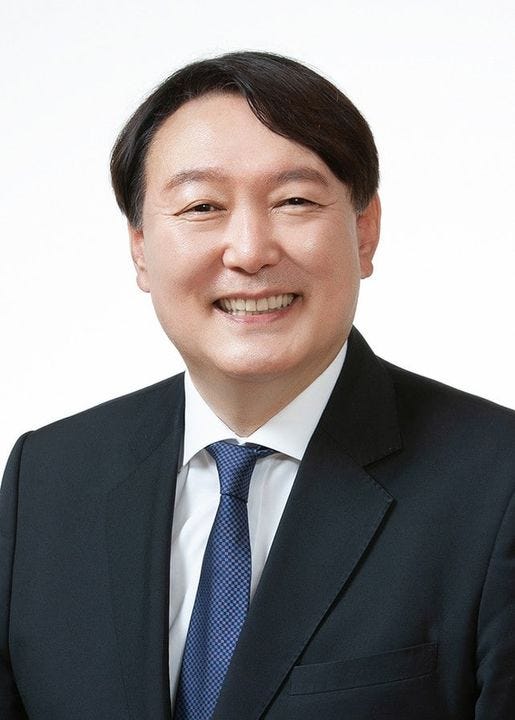
Media are widely reporting that South Korea took a turn to the right last week after the conservative presidential candidate, Suk-yeol Yoon, defeated the candidate of the incumbent liberal party, Jae-myung Lee, by a razor-thin margin of about 1 percent.
Overall, that’s a good thing. Current South Korean President Jae-in Moon, who by law can’t run for re-election, was once widely popular and took office as a reformer after a corruption scandal that destroyed the main conservative party. However, President Moon has been compared — in my view, correctly so — to America’s President Jimmy Carter, whose naivete and weakness caused serious problems. President Moon tried to “play nice” with both North Korea and China, getting very little in return, and serious internal corruption scandals in his own party sapped the political reservoir of goodwill with which he entered into office in 2017.
While the election of a conservative Korean presidential candidate is mostly good news for American conservatives, there are many caveats and qualifications.
The most important of those qualifications is that “conservative” in a South Korean context doesn’t always mean what it means in the United States or in a broader Western political context. The fact that the conservative party is known as the “People Power Party” should be an indicator that Korean politics are very different from ours in America. An even more important caution is that the party, in its current form, was founded just two years ago in February 2020 as a merger of several previous parties. The largest of those conservative parties was once known as the Grand National Party, historically the pro-military party, but at the time of the merger it had changed its name first to the Saenuri Party and then more recently was known as the Liberty Korea Party.
Many South Korean political debates, and even the spectrum of political opinion on certain issues, would simply be unrecognizable to many foreign political observers. That’s true even for many countries in Europe that, like Korea, are largely monoethnic and monocultural.
Trying to explain South Korean politics to an outsider is complicated and requires massive amounts of “back story” to make sense. Comparisons to the United States fail at many points.
One of those key points is political stability.
The American political system uses the world’s oldest written constitution that is still in force, and while there have been many changes over the last two and a half centuries, our system is part of the broader Anglo-American cultural and political system of representative governance that traces its origins back nearly a thousand years. As much damage as conservatives believe the radicals of the 1960s have done to American constitutional norms, or even if the American liberals are right on their worst fears about Donald Trump, the basics of our system of government aren’t in serious question by either side. We have a two-party system in America, we haven’t had a serious challenge to that two-party system since the 1850s when the Republicans replaced the Whigs, and for all the complaints about the Republican and Democratic parties, having a two-party system largely succeeds in forcing those who want radical change to move incrementally, making those changes over periods of many decades, not in just a few years and not with just a single election.
By contrast, although Korean culture is far older — its recorded history goes back, at minimum, more than two thousand years, and the culture’s claims of antiquity date back to the dimmest mists of Asian history which would make Korean society as old as that of China — the country has only been a functioning democracy since the 1980s.
Imagine a political system in which the main conservative political party, one with deep ties to the former military dictatorship and whose last president, President Geun-hye Park, was the daughter of South Korea’s most successful military dictator-president, Chung-hee Park, fell apart. Not only was the conservative president impeached, removed from office, and sent to prison for corruption, her party essentially collapsed and was replaced by a new party. That new party ended up selecting as its nominee a former federal prosecutor who helped put the ex-president in prison. Not long before this week’s election, that conservative party went through a merger with another minor party whose candidate decided to back Suk-yeol Yoon.
To illustrate just how chaotic and unstable Korean politics has been over the last half-decade, remember that our worst experience in modern history with presidential instability followed the 1972 election in which Richard Nixon won by a massive margin, but was forced out of office before finishing his term. Imagine if, rather than resigning, Nixon had been impeached and thrown into prison rather than being pardoned. Then imagine if the Republican Party had fallen apart, and the Democrats had won in 1976 despite a new conservative party being organized to oppose the election of Jimmy Carter. Then imagine if, out of frustration with Carter and the Democrats, a key prosecutor in the Carter Administration who had helped put Nixon in jail resigned his office, decided to make a first-time run for office against the Democratic Party’s nominee in 1980, and successfully won the presidency as the head of the conservative party.
That level of instability simply couldn’t exist in American politics. If it did, our country wouldn’t have the level of influence it does in the world. Chaotic politics lead to chaotic economics, and serious internal instability makes it impossible for national leaders to focus on problems beyond their borders.
To understand Korean politics, it’s important to understand that Korea had been known for centuries until the late 1800s as the “Hermit Kingdom” and had cut itself off from most of the world. Korean systems of governance had no influence whatsoever from the outside world, and certainly not from the West, until a century and a half ago.
A brief period of opening to Western trade and educational influence started in the 1880s but was largely aborted by the Russo-Japanese War from 1904 to 1905, which ended in Korea being given to the Japanese as a protectorate and then being taken over as a colony from 1910 to the end of World War II in 1945.
After the end of World War II, while South Korea had the form of a republic modeled largely on American and British systems of governance, it was in fact a military dictatorship that enjoyed widespread popular support due to fear of the North Korean Communists. Many residents of South Korea had fled the Communists or had seen the damage firsthand done by Communists during their invasion of the South. Not surprisingly, they were very willing to vote for military dictators who thought little of individual rights or personal freedom.
Elections were held, the Korean National Assembly met and passed legislation, and the generals who ran the country probably could have won a fair election. For that reason, the dictators tolerated some political opposition. However, serious opposition to the ruling military leadership would result in dire political consequences at best. Arrest, torture, and worse could and did happen to those who got on the wrong side of the generals.
The result was that for most of its relatively short history, South Korea has been run by an anti-Communist government that had the ability to seriously penalize its political opponents, even if it chose not to do so. The threat was often more effective than actual penalties since people avoided criticism of the government.
Not surprisingly, the anti-Communist governments of South Korea were very interested in promoting business, growing the economy, and maintaining political stability and culturally conservative traditions.
However, that’s not the same as being conservative in an American context. Being pro-business and being pro-free enterprise are related concepts but not identical concepts. Supporting people’s personal freedom to make their own choices without government interference is a core principle of American small-government conservatism, whereas in South Korea, speaking in that way sounds more “liberal” than “conservative” in their political context.
The details get very complicated, but what counts for this purpose is to say that in foreign policy, South Korea’s new president will likely take a hard line against North Korea, take a suspicious approach toward China, and support a pro-American foreign policy while expressing serious concerns behind closed doors about the policies of the American Democratic Party.
In domestic policy, however, many American conservatives wouldn’t like the new South Korean president’s policies very much, regarding them as being “big government” intrusiveness into people’s personal lives.
Where things get messy is that South Korean economic policy is largely dominated by what they call “chaebols” — a word that’s difficult to translate but roughly equivalent to “family-owned business conglomerate.”
The policies of the South Korean military dictatorship, and before that, the policies of the Japanese, encouraged the creation of large family-owned companies that quickly acquired outsize influence not only in business and commercial life but also social and political life.
Those chaebols do have parallels with major European companies — think of the Rothschilds or other European family-owned businesses that have been powerful not just for decades but centuries — but there is no modern equivalent in America. Our few large family-owned companies, such as Ford Motor Company, are the exception, not the norm. In most cases, major family-owned corporations either lose economic dominance within a few generations, or the family members lose control via stock dilution within a generation or two.
Imagine an America in which the Trump Corporation was one of America’s largest companies, but there were twenty or thirty others of comparable size, all run by families that promoted into leadership their family members and senior executives who married into the families, not just occasionally, but from generation to generation.
Then imagine what our American political system would look like.
That’s South Korea — a nation in which business and political interests are closely intertwined, and in which there are tremendous temptations in both parties to bend public policy to favor corporate interests.
It’s a world that is very different from America.
A complicating factor here is that unlike most of the Korean conservative movement, Suk-yeol Yoon likes the economic policies of American conservatives such as Milton Friedman. Earlier in his career, he opposed the military dictatorship and that opposition is widely believed to have caused him to fail his bar exams over and over again before finally being admitted to the bar so he could practice as a lawyer. That background logically led him into South Korea’s liberal political circles, but recent events have brought him into conservative politics.
While a supporter of free-enterprise thinkers in America, in Korean politics, he’s backed by a populist coalition whose older members are often long-term supporters of the previous military government, and whose younger supporters tend to be male and tend to believe that “elites” have “stacked the deck,” so to speak, against those who didn’t graduate from the right universities and don’t have the right connections in elite business circles. It’s too much to say that South Korea politics has taken a populist turn, but there are indicators that South Korea may be seeing a populist and anti-elitist revolt. For a liberal party, that would be nothing new. For a conservative party in a deeply traditional country like South Korea, it would be shocking.
That’s a very mixed background and it’s anyone’s guess where he’ll end up on key issues in Korean economic policy.
So yes, American conservatives should be glad that South Korea will have a conservative president.
But we need to understand that being “conservative” in a South Korean context looks very different from what we consider “conservative” in America. His foreign policies will largely be ones we support as American conservatives, but his domestic policies will, at times, look very strange to American eyes.


