
The New Outdoors Movement
Where it’s headed; plus a list of essential resources
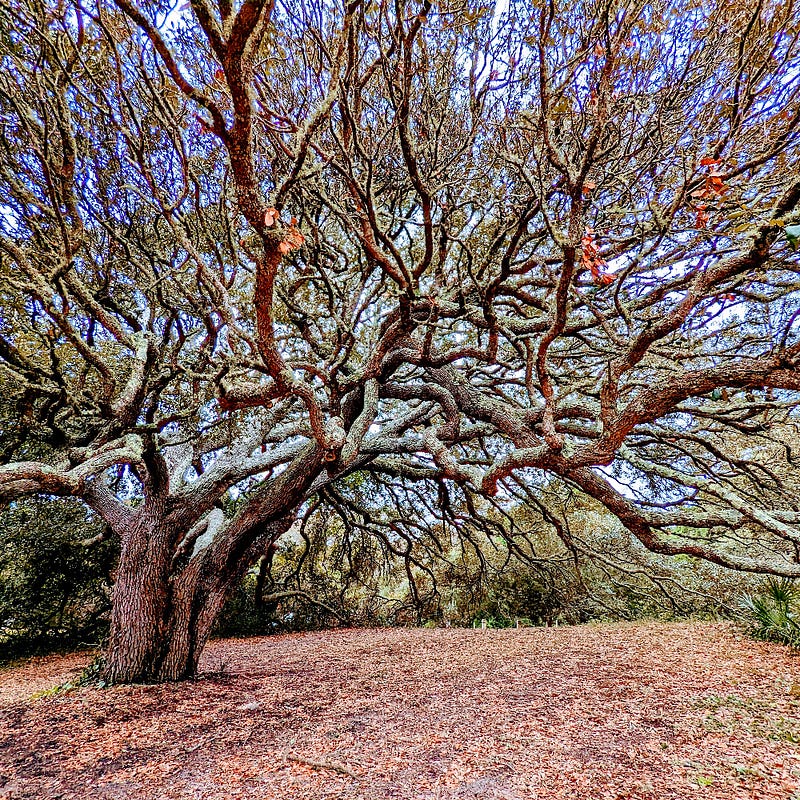
The old, now outdated, and now recognized as a threat-to-our-survival view of nature reduced the outdoors to a set of resources that could be extracted from it.
The newer, more enlightened view recognizes that our need for nature is deeper and broader than a set of material things. We need nature itself, as it is, in its totality. And — because humanity now has the power to destroy entire ecosystems—nature needs us.
To my knowledge, what I’m calling “the new outdoors movement” doesn’t have a name — or at least it didn’t until now. This movement started thousands of years ago. It began with spiritual seekers from various religious traditions who went into the wilderness and later returned with newfound wisdom. It continued with writers as varied as Rumi, Henry David Thoreau, and Rachel Carson. The movement picked up speed in the 1970s and continues to gather momentum today.
The science is now in: we can’t be the best versions of ourselves unless we spend time in the outdoors. In particular, in the last two decades, science has brought new understandings of how spending time in nature is intertwined with human wellness. All of this confirms that when we work to protect nature, we work to protect ourselves.
Our task must be to free ourselves . . . by widening our circle of compassion to embrace all living creatures and the whole of nature and its beauty. ― Albert Einstein
What I see is a confluence of new understandings in different fields. It’s exciting that medical research, brain science, sociological studies, and anecdotal evidence have so many parallels and crossovers. For example, findings in areas such as forest therapy, blue mind, psychology, and awe theory are all reinforcing the understanding that nature is essential for us in more ways than we previously believed.
Below is a list of starting points. Most of them reflect only a “piece” of the movement. The one that probably does the best at bringing together the various elements of the movement is The Nature Fix by Florence Williams. This list is one that I’d like to expand and continue to add to. Please reply to this piece and suggest additional resources!
The New Outdoors Movement —
A list of resources & organizations (mostly U.S.-based)
Books
- The Nature Fix by Florence Williams. Comes closest to providing an overview of the entire movement. (affiliate link)
- Rooted: Life at the Crossroads of Science, Nature, and Spirit by Lyanda Lynn Haupt. A wonderfully-written, imaginative invitation to strengthen our connections with the natural world.
- The Awakened Brain by Lisa Miller. Examines the science of spirituality and explains that outdoor experiences and religious experiences activate the same regions of the brain. (affiliate link)
- The Comfort Crisis by Micheal Easter. Explains how outdoor challenges benefit our health and well-being. (affiliate link)
- Last Child Left in the Woods by Richard Louv. Documents how modern childhood often leaves children with nature deficits. (affiliate link)
- Biophilia by E.O. Wilson. The basis of what came to be called the biophilia hypothesis, the idea that humans feel affection for and need nature due to the deep connections we had with nature throughout our evolutionary history.
- Braiding Sweetgrass by Robin Wall Kimmerer. Blending science and indigenous wisdom, Kimmerer explores the unique role of plants in supporting all aspects of human wellness.
- The Web of Life by Fritjof Capra. This book challenges conventional cultural and scientific assumptions and explores the interrelationships and interdependence of psychological, biological, physical, social, and cultural phenomena.
Aspects of the New Outdoors movement:
- Awe Theory (downloadable pdf)
- Horticultural Therapy
- Wilderness therapy
- Forest bathing/forest therapy
- Awe Walks
- Nature Connection Guide (provides additional information on forest therapy)
- Blue Mind and Blue Therapy
- NatureQuant and the NatureDose app
- The “three-day effect,” the Nature Connection Pyramid, and the “20–5–3 Rule”
- “Soft Fascination” and Attention Restoration Therapy
- Greener cities movement resources include: Biophilic Cities, Build Healthy Cities, 10-Minute Walk, and Children and Nature
- Nature prescriptions, Ecotherapy, Dose of Nature, and Walk with a Doc
- “Diversify the outdoors” and “access for all” resources include: Urban to Wild, Outside I Can, and DiversifyOutdoors
- Children & Nature Network and Forest School
- Nature deficit disorder
- Nature of Americans (study & recommendations)
- GP RED and the annual Shift Summit
- Outdoor & environmental education resources include: Outward Bound, NAEE.org, OutdoorEd.com, Neefusa.org,
- Environmental advocacy: The Nature Conservancy, Sierra Club, Wilderness Society, Trust for Public Land, National Resources Defence Council, American Rivers, Environmental Defense Fund, and Ocean Wise.
- Nature-Based Solutions and Biomimicry. See also Abundanism.com and Regeneration.org
- The New Outdoors (publication on Medium) That’s us. We are tiny, but we can grow, and by working together we can keep an eye on everything above and find the common threads, which doesn’t yet seem to be happening anywhere else.
It’s heartening to see so many organizations such as those above doing such good work. What resources would you suggest adding to this list?


