
READING & WRITING
It Doesn’t Matter How Much But What You Read
How the right book selection will improve your writing
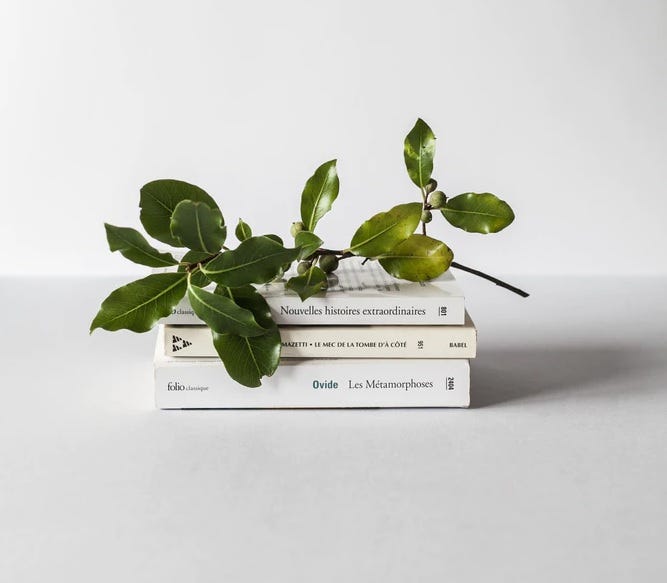
Every day new videos about books appear on Youtube, not about their quality but their quantity— My Must-Reads 2020, New Years Reading List, How I Manage to Read 30 Books a Week — but aren’t you sick of it? You’re spending more time watching videos about books and in the end, you didn’t read a single one.
Don’t get me wrong, those videos are still infinitely more interesting and inspiring than make-up tips or celebrity news, but to read a set number of books in a specified time, to master a challenge to surpass other readers, is simply not the purpose of reading. You have to choose wisely how to spend your time and also — what kind of books to read.
I used to read just for fun. Exciting thrillers with the typical suspense curve got me agitated, shallow romantic novels with a dramatic incident moved me — naturally, I craved the cliché happy end. But what remained at the end of this total waste of time? Can I still remember the plot in a year, have characters indelibly burned themselves into my memory, have they completely changed my basic principles? The clear, absolute and irrefutable answer is…
No.
And then I discovered the classics
By ‘classics’ I don’t necessarily mean classical literature, not only dusty antiquarian collectors’ items, because even books from the last decade can be(come) classics. A classic represents a certain epoch, a time that it influenced and shaped to a great extent. Each genre offers classics — it’s not all Pride & Prejudice and The Catcher In The Rye, but Dracula, The Strange Case of Dr. Jekyll and Mr. Hyde, The Great Gatsby, Anna Karenina, 1984, Shining or Crime and Punishment. What’s so special about them is that they outlast time, unite countries and centuries, all through their unique appeal and literary beauty. They’ve survived, they’ve remained, they’ve outlasted decades— for a reason.
Our time is precious and we only live so many years. Sure, I’d love to read more, I’d love to read 365 classics a year, I’d love to finish my ever-growing booklist, but I most likely never will — it’s simply impossible for ordinary people with a 9-to-5 job (which I am unfortunately tied to). I can only read in my free time, I read whenever possible, so I guess I could read a bunch of novels in a week, but I don’t. I stick to 2–3 classics a month.
Why is that?
It will improve your writing
My approach to reading a book isn’t just simply going from the first page to the last. It’s not about reading speed — it’s about enjoying the tone, the flow, the beat of the lines. I always go for sound instead of story. There’s a poetry within the lines of each novel, but you can not discover that unless you take your time, sit down and engage.
Also, I want to get maximum benefit and content out of my precious reading time. It makes no sense to read a book that doesn’t give anything back other than time passing. I’m longing for wisdom in the lines, for ideas and inspiration, for things that I don’t know yet and that I’ve never heard of before. If there is anything I don’t get — amazing, I’ll look it up or watch a documentary about the historical context or read another book (that’s why my booklist is constantly expanding). That’s the moment when reading becomes educational.
To improve writing through reading, I try to absorb (not steal) the writer’s style, feel the rhythm and sound he/she is using, read aloud from time to time to fully immerse myself in the text. I investigate the structure of the novel and try to trace the character development — why did the author choose a certain kind of narrator and how would a different one change the course of the story? I analyze the setting, the way of creating an intoxicating atmosphere and tension, the mesmerizing mediation of emotion — what makes it so compelling and inviting?
Becoming a better writer goes along with becoming a better reader. All of that takes time and effort, it demands full attention and devotion. But in the end it’s worthwhile to engage instead of simply finishing a 30-books-a-month challenge. So let me conclude with a poem of Emily Dickinson — because if you’re not interested in educating and surpassing yourself, please, PLEASE, read a few classics — even if it’s just to show off. And who knows, maybe it’ll trigger something in you, inspire you, touch you, move you, amuse you, upset you or maybe, maybe even help you grow a bit.
XCIX
There is no frigate like a book To take us lands away, Nor any courser like a page Of prancing poetry.
This traverse may the poorest take Without oppress of toll; How fugal is the chariot That bears a human soul!
by Emily Dickinson
Do you feel inspired, interested, incited, invigorated? Please consider supporting by simply buying me a coffee. Thanks for making a difference.
