
The Nakba vs the Holocaust
Our battle between politics and human suffering.
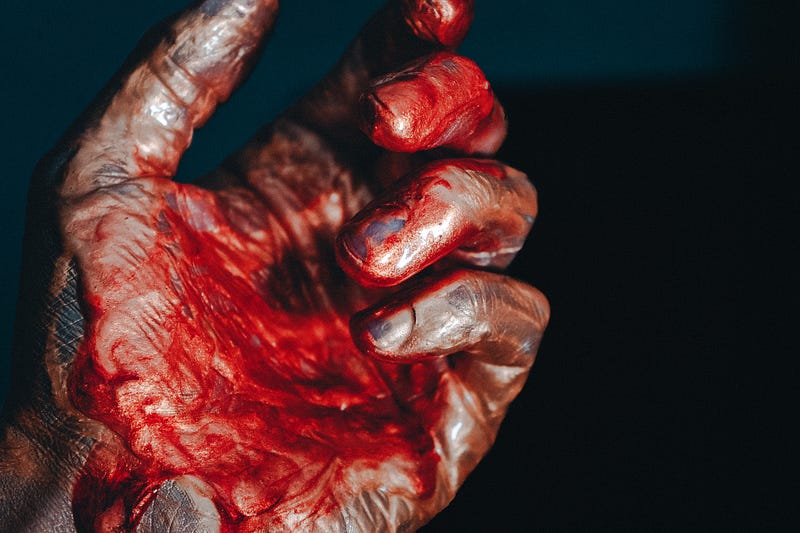
ca·tas·tro·phe: an event causing great and often sudden damage or suffering; a disaster.
May 15th came and went. Just another day for most people.
Few will know the significance of this day. For many, it recalls a time of suffering. For others, an attempt to diminish their own suffering.
The same calamitous event is viewed differently through opposing political lenses.
The Nakba.
The Nakba Catastrophe
The United Nations this past week marked the 75th anniversary of the dispossession of Palestinians. The day is known as the Nakba, catastrophe in Arabic.
Israeli officials called for a boycott as they felt the event was only intended to demonize their country. The US and the UK were among thirty countries that voted against a UN General Assembly resolution to adopt this year’s commemoration. They subsequently skipped this year’s event.
The event commemorated the Nakba when 700,000 Palestinians fled or were driven from their homes in what is now Israel. The Nakba refers to the Palestinians having lost their homeland during and after the 1948 Arab-Israeli war.
The Nakba story was covered in a moving and emotional film, Farha, a historical drama about a Palestinian girl’s coming-of-age experience during the Nakba. The film is based on a true story about a girl named Radieh.
The Nakba was a tragedy. Why is it that we cannot openly discuss these human travesties? Why does one group wish to honor the dead while another calls for it to be forgotten?
Politics and power.
The Greater Death
Most people are aware of some of the tragedies of World War II. The War spread through Europe, Asia, and Africa and even came to the borders of the United States.
The overly simplistic explanation of the War was that Germany invaded Poland in 1939. This is true but there is much more to the story. Any student of history knows that wars begin decades if not hundreds of years prior. Understanding the history doesn’t condone the action of the perpetrator. It just highlights the sensitivities and complexities.
Humans like simplicity. We want an easy story where we can connect the dots to make sense of things. If you show a sixteen-year-old a map of Europe today, they can point to Austria. Then show them the map of Europe fifty years ago, one hundred years ago, one thousand years ago. The maps of old are nothing like the maps of new and the borders no longer reflect the realities of the past.
Maps tell us a story of moving populations, conflict, famine, natural catastrophe, and destruction. They show us that the history of the world is not simple but convoluted and twisted. There is not one story that tells us the truth.
We like to use death as a measure of hurt. The bigger the number, the bigger the pain. There is truth to this. Most would agree that we would much rather have one person die rather than two. But, whether one or two, the tragedy is similar.
Roughly 50 million people died in World War II. But we don’t tend to talk about this total number. We focus on the story of the killing of Jewish people. This makes sense as the nature of the killings was horrific. But, again, the overall death tragedy was ten times larger.
This is where we get into a problem. It is at this point where someone can be called out for being Semitic which is what happened to those countries in the UN General Assembly who support the Nakba.
We are allowed to honor one tragedy but not another. One calamity is enshrined in the history books, the other banished.
Why is it we need to compete on which deaths and pains are worse? And these are just two of thousands of major tragedies that have occurred over time.
Equally devastating tragedies are happening today.
The Death Competition
No one wants to be part of a cataclysmic event. But when we are part of one we sometimes argue that our tragedy was the worst.
The Holocaust was devastating. The Nakba was unimaginable. The 50 million deaths in World War II were incomprehensible.
Yet these are only a handful of our historical wounds.
- China (1960): 30–45 million deaths as a result of the Great Leap Forward government programs.
- Soviet Union (1932): 3–5 million people died of starvation and disease in the Ukraine region as a result of forced population transfers.
- Bengal (1943): 3 million people due to forced famine when Churchill diverted grain exports to the UK.
- Cambodia (1975): 1.5–3 million people killed in a mass genocide that killed up to 25% of the entire population.
- Bangladesh (1971): 1–3 million people killed by Pakistan.
- Rwanda (1994): 500K — 1 million died in tribal disputes.
- Myanmar (present-day): Over 400,000 Rohingyas massacred by the military.
- Congo (c. 1900): 10 million deaths as a result of Belgian colonialist rule.
- Indonesia (1960): 500K — 1.2M deaths from Suharto’s politically motivated policies.
Death has been a part of history. Loss happens every day around the world from South Sudan to Myanmar. In fact, there are currently twenty-seven active global conflicts around the world happening right now.
We are a violent world. We always have been and we will be for the foreseeable future.
So why do we believe that one death is more impactful than another?
Please Stop
The Israeli-Palestinian conflict is a no-win situation. It will be impossible to ever come to any agreement as to who had it worse or who was there first. Both have perfectly strong arguments that go back over 4,000 years.
We Can Either Talk or Fight
One isn’t working and never has. We are left with one choice.
medium.com
Israelis have a right to a homeland. And their history has been rife with challenges. Just as the Palestinians have a right to a homeland and their history has been equally tragic.
Just as many countries and people have suffered immeasurable devastation throughout history and into today.
As long as we continue to throw numbers around and argue as to who has it worse, we will get nowhere. And if we want to play this game then we can ignore any of this discussion and focus on more pressing issues such as the abuse in the Catholic church, depression in schools, rape against women, and escalating male suicides which affect significantly more people than any event in our history.
Who has it worse?
It is all tragic. There is far too much suffering in the world and as long as we continue to debate as to who has it worse or who started it, the suffering will continue.
I cannot imagine being a mother and seeing my child ripped away from my arms in a concentration camp. I cry as I see images of fathers holding their bloodied children after bombs have rained down on their town. I scream when I read of another young boy or girl taking their life because they cannot handle the pressure of society. And I collapse when I read of another rape.
When are we going to stop this nonsense? Aren’t we all tired of it? And in an instant, we can stop it. If we want the horrors to stop, we can do it.
We need not compare as to who has it worse. Everyone can make their case. And we can equally honor all losses.
Just be kind to each other.
Please.
If you enjoyed my story you may sign up here to receive an email for new articles. If you want to subscribe to Medium to read all the stories, including my articles, please use my link. There is no extra cost to you.