
The myth that we only use 10% of our brains is wrong but weirdly not so far from the truth
How metabolic pressures and biological safety measures shape brain activity
There’s a popular myth that we only use 10% of our brains. And although this is wrong, in a funny way it’s actually not so far from the truth.
Do we really only use 10% of our brains?
There’s overwhelming evidence that we use all of our brain regions. But research also shows that we only use a small percentage of our brain cells at any given time.
Not 10%, as the fraction of brain cells active at any time varies depending on the region you look at and the task that the organism’s engaged in. But studies have consistently found that the active fraction of brain cells is often around 10–20%.
Metabolic pressures and the brain
Lots of interesting answers emerge when you ask why this is the case. For instance, the brain is only about 2% of our body but takes up roughly 20% of our metabolic budget.
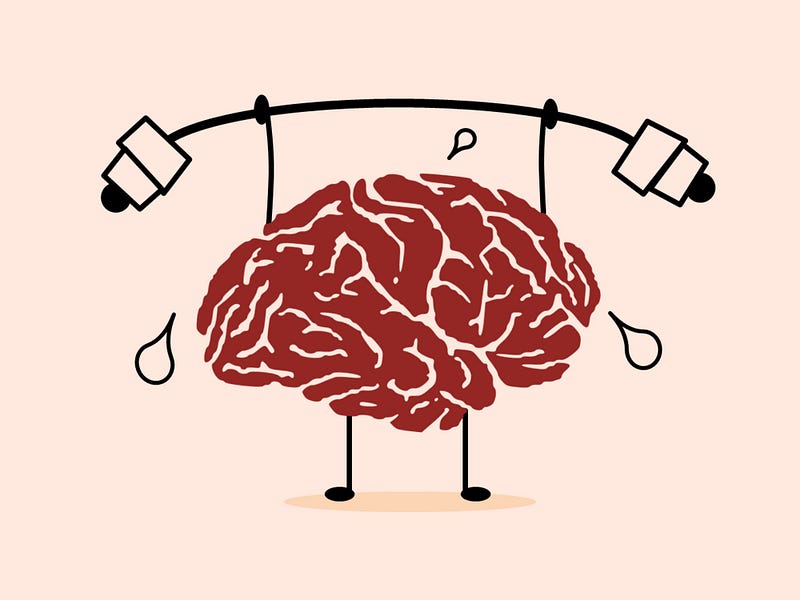

Because the brain is a costly organ, evolution puts pressure on the brain to work efficiently. This means using the least possible resources to meet our needs and accomplish our goals.
From this point of view, it makes sense to recruit a relatively small fraction of cells in distributed networks throughout the brain. That’s because this turns out to be an efficient way to process information.
The technical name for this is ‘sparse coding’, borrowing from the computer metaphor of the brain. But there are other reasons to keep a lid on the brain’s activity.
Epilepsy, head knocks, and the brain’s excitatory-inhibitory balance
Brain cells that use electrical signals to communicate with each other are called neurons. They are mostly either excitatory, meaning that their signals make other neurons more likely to send a signal of their own, or inhibitory, meaning that they make other neurons less likely to send a signal of their own.
These two populations are heavily lopsided throughout much of the brain, including the cortex — the grey, wrinkly part of the brain that makes up about 80% of its total volume. In the cortex, the excitatory neurons outnumber the inhibitory neurons roughly 5–10 to 1.
To prevent runaway excitatory activity, inhibitory neurons have a higher baseline level of activity that allows them to keep the excitatory neurons in check. But if this balance between excitatory and inhibitory activity is compromised, runaway activity in excitatory neurons can occur. For example, this happens when a person with epilepsy or head trauma experiences a seizure.
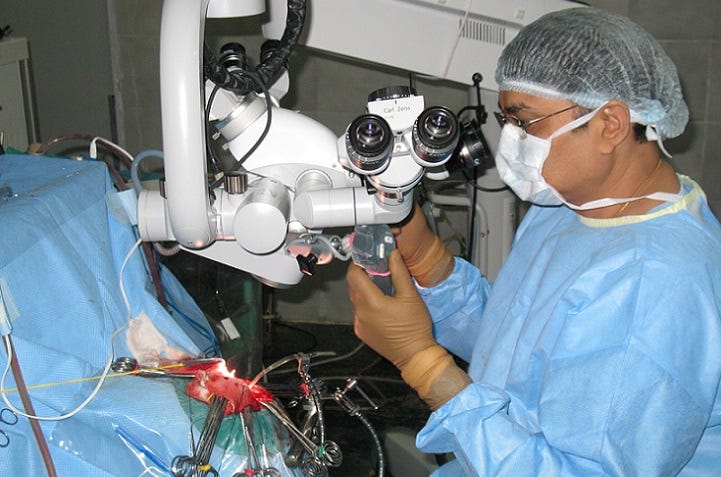

What are the takeaways from this? Since most neurons in our cortex are excitatory, increasing the fraction of our neurons that is active at any one time would compromise the brain’s excitatory-inhibitory balance, and be metabolically expensive. To avoid these problems, the brain attempts to operate within a safe range of moment-to-moment activity.
Increasing the percentage of neurons that are active at a given time would also interfere with how the brain goes about its work. The brain is always in conversation with itself, the majority of which occurs within hemispheres, as each half of the brain is much more connected with itself than they are with each other.
From one brain region to the next, a signal being sent must be distinguished from other possible signals, and then responded to. Hopefully with something useful, but all brains make mistakes.
Neurons are already being bombarded by a huge number of signals, with 10s of billions of electrical messages sent between our 90 or so billion neurons every second. These signals are summed, combined with other signals, and used in an amazingly complicated network of brain-wide communication.
Collectively, these processes take care of our body’s internal world, learn about its external world, and coordinate our thoughts and behaviour. So, what would happen if we juiced up our brains so that every neuron was firing at the same time?
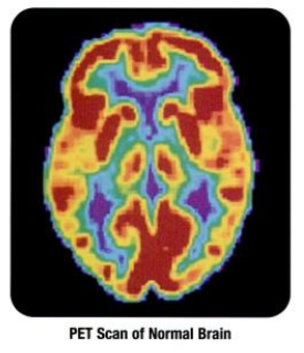

Aside from the colossal seizure, the brain would be unable to make sense of anything it’s doing, because it would be a mess of unreliable signals. Okay, but could we increase the active fraction so that we enhance our brain’s function without causing a system crash?
Honestly, I don’t know if that would be possible. But sending electrical signals is relatively expensive, and the metabolic costs of increasing brain activity quickly begin to rise faster than gains in information processing. That means any gains would be offset by large costs from increased metabolic demand. Maybe that’s why Scarlett Johansson disappeared when she reached 100% brain use at the end of the movie ‘Lucy’.
Key points
The brain is not being underused and lying dormant, waiting to be awakened. Even when we sleep, its energy and resource use remain fairly stable. This also makes sense in the context of evolution, as it wouldn’t be wise to invest about 20% of our resource budget into a brain that we’re mostly not using. Nature can be very unforgiving towards wasteful spending and tries to invest in things that pay for themselves.
The brain is busy all the time but tries to keep that activity within limits that optimize its performance as a system. Not bad for an organ that spends its entire life trapped in a dark, silent box (our skull), successfully teaches itself, and uses roughly the same amount of electricity as the lightbulb in your fridge.