
The Mysterious Death of Van Gogh
This article discusses various mental illnesses, suicide and suicidal thoughts and tendencies, murder, and includes light graphic content.
On July 29th, 1890, Van Gogh was found, unresponsive, in his room. He had been shot in his stomach, and, despite attempts to nurse him back to health, died two days after the shooting. The common theory at the time — and one that is still popular today — is that Van Gogh committed suicide. However, there is another possibility; that Van Gogh was murdered.
The story of Van Gogh is tragic, and one that is often repeated as a tale of depression and mental illness in art and creators. Van Gogh suffered from psychotic episodes and delusions, depression, and often neglected his physical health as well, drinking heavily and rarely eating. He was an outcast during much of his life and spent time in mental hospitals and asylums because of his psychotic episodes. In a famous act of rage, he cut off his own ear with a razor and sent it to a brothel maid (some choose to label the receiver of the ear as his “girlfriend”, which she was not). Given his history of mental illness and struggles to accept himself, Van Gogh’s death was solidified in history for some time as a suicide. This does seem like the most plausible conclusion, but recently, some historians and art culture fanatics have chosen to dispute this claim.
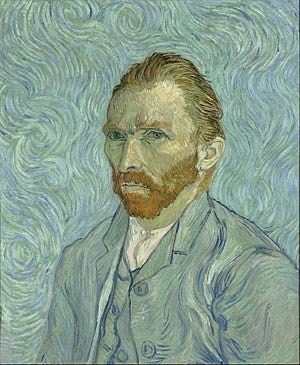
First, the claim that Van Gogh had left a suicide note is false. A common scene in movies and writings portrays the tormented painter showing a note that he supposedly wrote. However, the only paper found on his body was a letter to his brother. The contents of this letter were excited and even hopeful for the future; he mentioned ordering new paints and seemed happy in his writing. Attempts to romanticize the painter’s death have led to false consensuses amongst the public, with many people still believing that Van Gogh’s body was found with a suicide note on his body, or in his room. Some common rumors include that he addressed a suicide note to his brother, left mention of what he was going to do in a letter to his brother, or wrote the note on a scrap of paper in his pocket, addressed to no one. A similar rumor is that Van Gogh admitted to committing suicide on his deathbed. While police interviewed him as he lay in a hospital dying, a policeman asked him, “Did you intend to commit suicide?” Van Gogh replied, “I think so.” He was clearly confused and also moments away from his death. His answer was only accounted by witnesses of the questioning, not the policeman himself, and the story came out a while after Van Gogh’s death.
Another confusing part of Van Gogh’s supposed suicide is that he shot himself in the stomach. If he was attempting death by his own hands, why would he shoot himself in the stomach of all places? His death was prolonged and incredibly painful. Plus, he was apparently out in some fields near where he was staying. Why would he force himself all the way back to his room with such an intense and painful wound if he was attempting to commit suicide? The placement of the bullet and his horrific journey back to his room from the fields implies that someone else inflicted the wound upon Van Gogh and that he may have been attempting to get help after the shooting. Even after he was found, records do not state that Van Gogh committed suicide. They say that he was “wounded”, but never confirm whether or not he was the creator of said wound. There was an undeniable lack of evidence at the time Van Gogh was shot, and nothing more appeared after his death that pointed to it being a suicide. The theory arose given his past history of depression and psychotic episodes. Some of Van Gogh’s friends also attempted to solidify the case by claiming that he did commit suicide, but said friends were not present at the time of his death, nor had they been able to visit him while he was incapacitated in his room and at the hospital. They attended his funeral and were spoken to after the event.
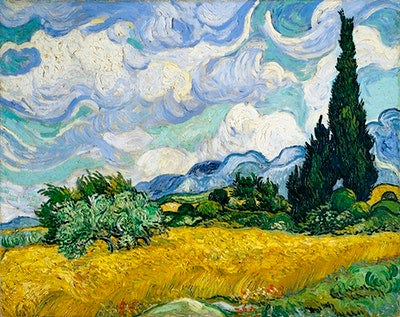
New research from Steven Naifeh and Gregory White Smith, two award-winning biographers, claims that the two men have been able to find somewhat solid evidence convicting a man of the murder of Van Gogh. Réne Secrétan, a man who enjoyed getting groups of drunken teenagers together to harass Van Gogh by throwing rocks at him and taunting him, confessed that he owned a “malfunctioning pistol” and would frequently dress up and brandish said pistol. Although he never confessed to the murder of Van Gogh, evidence from Naifeh and White Smith suggests that Van Gogh was shot by a stray bullet coming from a side of the field he was in at the time of the shooting. The malfunctioning pistol and the fact that Secrétan would have often tormented Van Gogh from the edges of the field he was in create another possible story that blames Secrétan for Van Gogh’s death. The book that Naifeh and White Smith wrote about Van Gogh and the evidence they claim points to his murder is called Van Gogh: The Life, and can be purchased here.
So where, then, did the story of Van Gogh’s supposed suicide come from? Other than the accounts from townspeople long after his murder and Van Gogh’s friends, it mostly came from Van Gogh’s history of mental illness and psychotic episodes that created the idea of a depressed, tormented painter that couldn’t live with himself any longer. After his death, when his work was just beginning to be discovered, art auctions and art critics enjoyed portraying him as a “madman” and used his mental illnesses to their advantage, to create a tragic tale behind his art and give his life and his work an air of mystery. Later still, films and literary works about Van Gogh used his death and supposed suicide as a way to romanticize him and give their work a sense of tragedy. This spiraled into rumors about suicide notes, official diagnoses by doctors and policemen, and even confessions from Van Gogh himself about his own suicide. Unfortunately, other than Secrétan — whose supposed guilt is still somewhat spotty — there is no one to blame for the murder of Van Gogh, and no one to confirm its truth. In the end, there are two equally convincing arguments; one that believes that Van Gogh was an unhappy, tormented soul who eventually committed suicide in 1890, and one that claims that he was brutally murdered in a field before dying from his wounds two days later. Both theories lack evidence. For now, at least, it seems that the story of Van Gogh’s life will not yet have an agreed-upon conclusion; who truly caused his death, we may never know.
National suicide prevention hotline: 1–800–273–8255, available 24 hours a day https://suicidepreventionlifeline.org/
Sources: False tales of Van Gogh’s suicide Biographical evidence of Van Gogh’s murder Van Gogh gave his ear to a brothel maid Further information on Van Gogh’s death General information on Van Gogh


