
The Murahachibu Effect In Japan
Be conscious of your surroundings in the land of the rising sun.
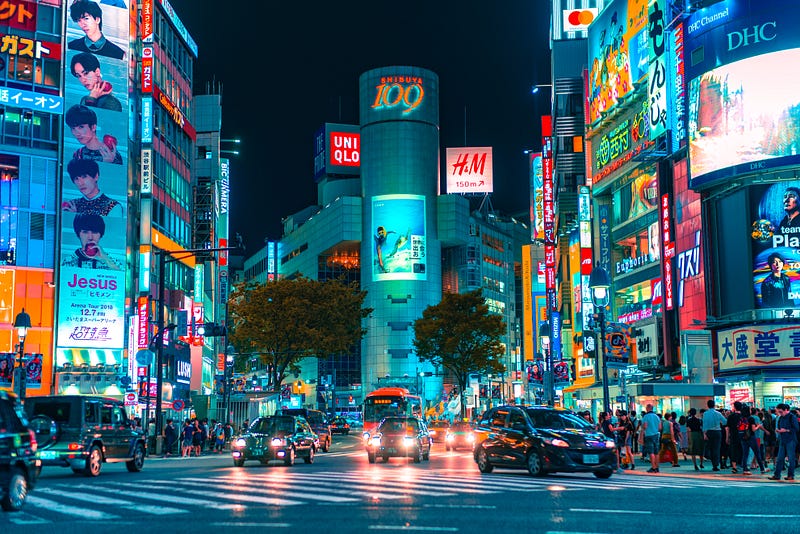
In Japan it is very common to avoid situations or actions that could disturb or irritate others, the collective well-being is considered far more important than the individual comfort. Of course, not everyone is true to these guidelines, but the majority pays attention to details that might seem small to the rest of us if we consider the great differences between eastern and western society.
There is really no excuse at all to skip any of these social rules, given the government itself has made sure people do not forget about them by putting up hundreds of signs around the cities just so you remember them wherever you are.
Before jumping into these few rules, some history might be useful to understand the reason behind this behavior.
As it is known geographically, Japan is constituted by many small islands around it. In the Edo Era between 1603 and 1868, the population started growing a lot, finding themselves living altogether in small areas. People realized they needed to get along to live in a community and establish social order, and so these norms were fixed to promote peace among this great nation’s residents.
Let’s go back to March in 2011, when the Great Tōhoku earthquake and tsunami destroyed many coastal areas of Japan, initiating a series of large tsunami waves provoking the massive nuclear incident in Fukushima Daiichi. During these tough times, it was crucial for everyone in Japan to aid each other in the uncertain situation.
Those who didn’t help or caused a ruckus, would be marked as vexatious and eventually be ignored and kicked out of society. Here’s when the Murahachibu (村八分) effect is applied, literally translating to ostracism.
If you’re walking around malls, stores, cafes, everywhere you go around the street including train stations, you’re going to see posters indicating the do’s and do not’s; politely asking passengers or customers to collaborate by not disturbing others.
Let’s talk about eating
This norm can put you in a tricky situation, given you will see a few people eating on the street and there’s really no signs anywhere that says you can’t eat outside. Still, you shouldn’t eat while walking, outside of the building or at the public transport.
The reason behind this is pretty simple. We are avoiding getting the street dirty, getting ourselves and other people dirty, and getting the seat where someone else is going to sit later, well, guess what? Yes, dirty.
If you are on the street and you bought something for the go at the “combini” or convenience store for the non-weebs; it’s better if you eat outside of the store if you really need to, and dispose of any residue or garbage in the nearby trashcans that are usually available at the door.
Do not throw garbage on the streets.
At a restaurant
Just as it isn’t nice to point fingers at people on the street, or pretty much anywhere in the world, in Japan it isn’t well seen to point at the food, mostly if it’s in someone else’s table.
Now, something that really annoys waiters and the rest of the kitchen personnel, is asking for an ingredient to be changed or removed from the menu you had ordered.
Normally, the ingredients and the portions are fixed so they won’t need to change them or accidentally put more or less in someone’s plate. But most importantly, changing a dish as the customer is an act of disrespect towards the chef who’s the one who prepared and created the recipe.
Regularly someone who asks for a change in the menu is considered very capricious, who only cares about themselves and their own preferences. There is no reason for you to have something different than the others, and you have no power over other clients or the personnel.
The only acceptable exception is in case you have an allergy to one of the ingredients, the restaurant will be considerate of you and put in the request to the cooks. It depends a lot on the kind of restaurant you’re in.
While using the public transport
Although it isn’t written anywhere, if you get in a train or a bus, and leave your belongings around in the middle of the hallway, or tourists who are trying to transport their luggage to their hotel, leaving their items in front of the doors. Nobody will stop you to say something about it, but you will surely get avoided and slowly be excluded.
One way to avoid it could be placing your stuff on your lap if you’re sitting, or putting your luggage in between your legs so it doesn’t move around and take extra space.
If you take the subway
It will be surprising, but taking the rapid transit during weekdays in Japan might be the quietest thing you will ever experience in public. Of course, this is because even though you will see many people in it, none of them are acquaintances, so nobody talks to each other.
You are allowed to talk in the metro, just keep a low volume and avoid laughing in an exaggerated pretentious way.
This situation is different during weekend nights, where large groups of friends and coworkers go out together. The norm still applies and people try to be as quiet as possible.
Don’t be selfish
Now, whenever you use the escalator, DO NOT take the entire spot, move to the left side of the escalator and leave your right side open, so anyone who is in a rush can pass by without causing an unnecessary interaction that could be a nuisance to both of you. (Some other cities can have this rule reversed, for example in Osaka you are supposed to take the right side to leave the left free.)
Taxis
If you decide to take a cab because you can afford it, just so you want to be more comfortable after a long day or trip, go right ahead, nothing wrong with that! But even if you’re not interacting with anyone else but the taxi driver, there’s also a little detail you have to keep in mind.
I know for sure that for many of us, it is very difficult to just let anyone do things for us. We want and try to minimize other’s efforts at the time they’re trying to be serviceable to us, even when we are paying for it. But in Japan, let people do their job.
If the taxi driver is reaching out to grab your luggage or items to put them in the trunk, do not interfere with it or offer your help. Even when we are trying to be considerate this can be taken in a wrong way.
Two important lessons
First, we must avoiding causing trouble. Continuing with the taxi driver example, if you were to damage the car or hit someone because for some damned reason it slipped off your hands or who knows, any other extraordinary bad luck situation happens, you will be responsible and it will be your fault for causing an unnecessary problem.
Second of all, and the most important one; in Japan it’s believed that if you’re working and someone offers to help you, it means they think you’re not doing a good job or you’re making a mistake. It’s better to not intervene with someone else’s duty, which also applies for any other situation where you are receiving a service.
Hygiene or manners?
This is something I don’t entirely understand quite yet, but it is how it is. If you need to blow your nose in public, you better have some training at sniffing and patience for until you can find a private place.
We all have had that awkward situation where we want to sneeze or clean our nose in public. It can be disgusting to have someone blow their nose right besides you and see them pocketing the dirty napkin later, but I would prefer that a thousand times, rather than someone sniffling every 2 seconds trying to hold it in.
In Japan, once again it isn’t a written rule, but people will get annoyed by it. The problem isn’t whether it is icky or not, but the loud noise it makes when you try to eject out what’s residing in your nose.
There‘s no need to mention stuff that comes with common sense, such as throwing garbage in the street, insulting people, swearing out loud or being rude, things that are not okay in any country. But it can happen that we make mistakes in Japan without intending to, because we might be doing something that is completely normal for us in the country we live in.
It’s all about researching and paying attention to your surroundings. Read the signs, Google questions you might have and ask close friends who might know about these social norms before you visit any other country, not only Japan!