avatarDavid Liira, Kin.

Free AI web copilot to create summaries, insights and extended knowledge, download it at here

2952

Abstract

lity improves. As you go through each one, focus on taking deep breaths and holding at the extended position of each movement to give your body more time to adapt to each stressor. Although counterintuitive to some degree, the slower you can move through these, the better your results will be! In a matter of weeks and months, you’ll begin to notice your body loosen up and grow stronger.</p><p id="f8ef"><i>Here’s to waving goodbye to joint stiffness and getting into great shape!</i></p><h2 id="886b">1) Lumbar Rockers</h2><figure id="5470"><img src="https://cdn-images-1.readmedium.com/v2/resize:fit:800/0*6i5WxHU9S_NqATgY.png"><figcaption>Image from <a href="https://hep.physiotec.ca/show-exercise.php?idExercise=217533&amp;orig=browse&amp;PHPSESSID=qps43osrt6smcnhcb6ga9msm6eab7usp">Physiotec</a></figcaption></figure><p id="b6a8"><b>Application: </b>10–15 reps/side</p><p id="c25d"><b>Cues: </b>Start by lying on your back with the knees bent to approximately 90 degrees. Next, raise your hands behind your head and slowly rock your knees from side to side. Begin with a smaller range of motion, and gradually increase the length of each rep as you warm up. This is a great active way to get movement through the lower back and pelvis.</p><h2 id="0cea">2) Spinal Flexion Mobility</h2><figure id="32d5"><img src="https://cdn-images-1.readmedium.com/v2/resize:fit:800/0*jTkyPJRzviLmCYB9.png"><figcaption>Image from <a href="https://hep.physiotec.ca/show-exercise.php?idExercise=217533&amp;orig=browse&amp;PHPSESSID=qps43osrt6smcnhcb6ga9msm6eab7usp">Physiotec</a></figcaption></figure><p id="998b"><b>Application: </b>10–15 reps</p><p id="cb11"><b>Cues:<i> </i></b>Start by sitting in a neutral position with the legs straight out in front of you. Next, hinge the hips and flex your spine forward while walking the hands down the legs — being intentional about rounding through the spine. Reach as far forward as you can on an exhale and then hold for 2–3 seconds at the end range. Slowly move back to the starting position by reversing what you just did and get ready for your next rep. If you feel super inflexible here, consider using a strap or towel around the feet to assist in your flexion.</p><h2 id="3541">3) Dynamic Child’s Pose</h2><figure id="33a3"><img src="https://cdn-images-1.readmedium.com/v2/resize:fit:800/0*YHIA60GuswfCdYP9.png"><figcaption>Image from <a href="https://hep.physiotec.ca/show-exercise.php?idExercise=109447&amp;orig=browse&amp;PHPSESSID=a3fksffse9conh1kq35ahodj7di9me2i">Physiotec</a></figcaption></figure><p id="621f"><b>Application: </b>8–10 reps</p><p id="188e"><b>Cues: </b>Start in a quadruped position (1st picture) and then slowly lower your hips towards your heels. The focus here is to create as much length from the bottom of your pelvis to the tip of your fingers. Remember to take a deep exhale as you drop into each rep.</p><p id="0bc5">The child’s pose is an easily modifiable movement that allows y

Options

ou to target many of the joints and muscles that often feel the stiffest as you age. This includes the hips, low/mid/upper back, shoulders, and knees. Furthermore, this challenges you to get down on the floor and maintain your lying-standing mobility, something that will come in handy if you ever have a fall.</p><h2 id="0d8c">4) Toe Touch Squat-to-Stand</h2><figure id="5537"><img src="https://cdn-images-1.readmedium.com/v2/resize:fit:800/0*lbEIdTMfEHsP9iqj.png"><figcaption>Image from <a href="https://hep.physiotec.ca/show-exercise.php?idExercise=217533&amp;orig=browse&amp;PHPSESSID=qps43osrt6smcnhcb6ga9msm6eab7usp">Physiotec</a></figcaption></figure><p id="74d6"><b>Application: </b>10–15 reps</p><p id="a19b"><b>Cues: </b>Begin by hinging at the hips and lowering the arms to the floor. Don’t worry if you can’t touch your toes, just do your best. Next drop into a squat by bending the knees, lowering the hips, and raising the chest/head. Rest at the bottom of your deep squat for one to two seconds and then extend up to a standing position. Not all of us can rest comfortably in a deep squat position, but simply do your best to get as low as you can while maintaining control within a pain-free range of motion.</p><h2 id="9bb0">5) Running Man (balance/stability focus)</h2><figure id="a31f"><img src="https://cdn-images-1.readmedium.com/v2/resize:fit:800/0*4Q_VipbYdQI6zrHf.png"><figcaption>Image from <a href="https://hep.physiotec.ca/show-exercise.php?idExercise=217553&amp;orig=browse&amp;PHPSESSID=f72bs9g59700ee2c5qcotr9nek2fqiua">Physiotec</a></figcaption></figure><p id="9770"><b>Application: </b>10–12 reps/side</p><p id="383f"><b>Cues: </b>To start, stand on one leg. Lift the other knee towards your chest and make sure your arms are in the corresponding runner’s position. In slow motion, bring the raised leg back and down towards the ground without touching the ground with the toes. Be sure to bend your hips — not your back — as you reach backward with the moving leg. Swing your arms in a running motion as you move your leg back and forth.</p><figure id="8d00"><img src="https://cdn-images-1.readmedium.com/v2/resize:fit:800/0*zczOYzH1Yuaco92V"><figcaption>Photo by <a href="https://unsplash.com/@switch_dtp_fotografie?utm_source=medium&amp;utm_medium=referral">Lucas van Oort</a> on <a href="https://unsplash.com?utm_source=medium&amp;utm_medium=referral">Unsplash</a></figcaption></figure><h1 id="ae37">In Closing,</h1><p id="1ce8">Don’t let age-related joint pain get in the way of you living life to the fullest. While you can’t turn back the clock entirely, doing five to ten minutes of dedicated mobility work each day will be transformational for your current functionality and overall healthspan. Are you ready to retake control of your life and develop more strength and mobility than ever? The best is yet to come!</p><p id="2877"><i>You got this.</i></p><p id="0c85"><b>-DavidLiira.Kin</b></p></article></body>

The Mt. Rushmore of Exercises for All Seniors

The secret to preventing stiffness as you age lies within!
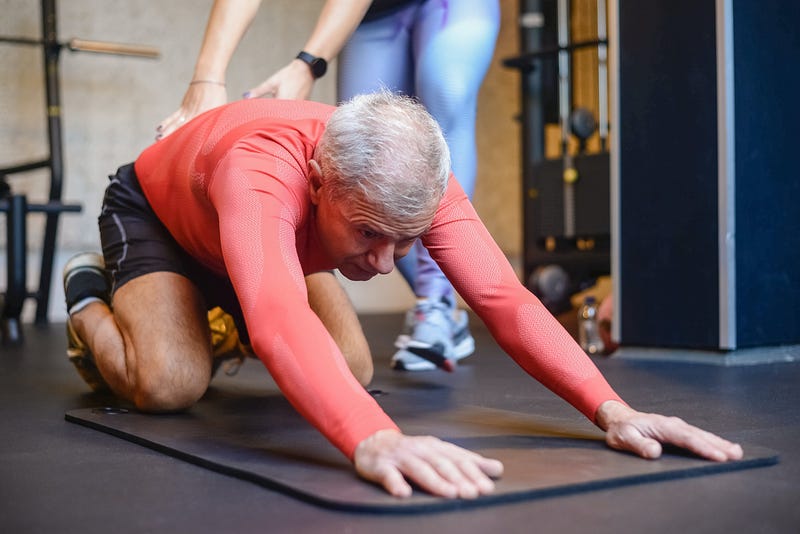
Image from Kampus Production on Pexels

Want to know the easiest way to extend your health span? Move intentionally for 5–10 minutes per day. This will help your joint health, balance, neuromuscular strength, and so many other aspects of fitness that will contribute to a more functional life. In this article, we’ll zoom in on the four movements I find to be most useful for the ‘older adult’ population to prevent the onset of complications and foster independence for years to come.

The first question we should be asking is why the body gets crankier as we age. A big reason for this is as the body grows old, our fibroblasts struggle to make glycosaminoglycans (GAGs) at a consistent rate. It just so happens that these highly polar sugar units are the very products that attract water to lubricate joints and improve shock absorption. Consequently, there is less water in your cartilage, bones, and muscles causing increased stiffness, pain, and oftentimes, injury.

Once we feel this discomfort increase, we often make the mistake of lying low and not taking any risks to stop further complications. I know of many clients who have halted their running and other activities because of stiffness, but this is the last thing you want to do. This sedentary habit only compounds soreness as you prevent your tissues from moving naturally.

Although we can’t completely stop aging, we all possess a powerful tool for maintaining activity for years to come… mobility exercise. The simple act of getting out of your chair and performing light stretches consistently can be a huge difference-maker in your quality of life in the golden years. Without further ado, it’s time to zoom in on four practical ways to move more throughout your day to fight back on stiffness and get the most out of every day. Once you get going, you may surprise yourself with how much younger you feel!

Your Checklist for Healthy Joints and Happy Muscles

Please note that the movements below come with risks. If you have any musculoskeletal injuries or chronic conditions that may put you in danger during exercise, please talk to a health provider before following the advice below. While I’m confident that these exercises are accessible to virtually everyone, some people may have more preliminary work to do than others. Please do your due diligence to set yourself up for success!

While these exercises aren’t flashing or fast-paced, they will guarantee that your overall mobility improves. As you go through each one, focus on taking deep breaths and holding at the extended position of each movement to give your body more time to adapt to each stressor. Although counterintuitive to some degree, the slower you can move through these, the better your results will be! In a matter of weeks and months, you’ll begin to notice your body loosen up and grow stronger.

Here’s to waving goodbye to joint stiffness and getting into great shape!

1) Lumbar Rockers
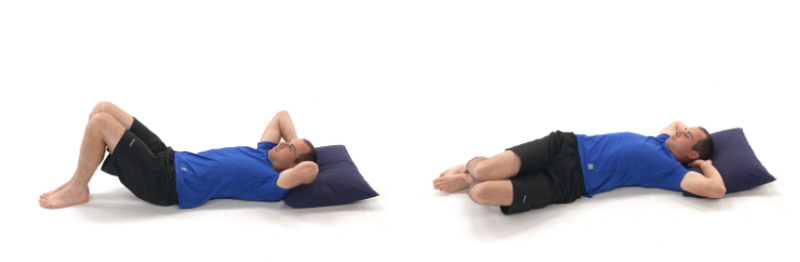
Image from Physiotec

Application: 10–15 reps/side

Cues: Start by lying on your back with the knees bent to approximately 90 degrees. Next, raise your hands behind your head and slowly rock your knees from side to side. Begin with a smaller range of motion, and gradually increase the length of each rep as you warm up. This is a great active way to get movement through the lower back and pelvis.

2) Spinal Flexion Mobility
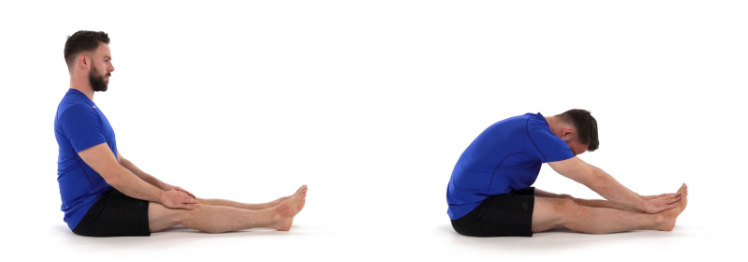
Image from Physiotec

Application: 10–15 reps

Cues: Start by sitting in a neutral position with the legs straight out in front of you. Next, hinge the hips and flex your spine forward while walking the hands down the legs — being intentional about rounding through the spine. Reach as far forward as you can on an exhale and then hold for 2–3 seconds at the end range. Slowly move back to the starting position by reversing what you just did and get ready for your next rep. If you feel super inflexible here, consider using a strap or towel around the feet to assist in your flexion.

3) Dynamic Child’s Pose
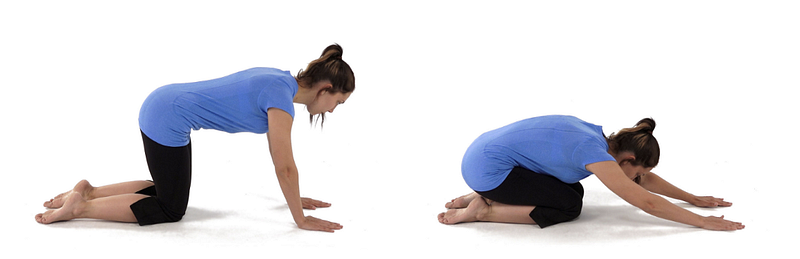
Image from Physiotec

Application: 8–10 reps

Cues: Start in a quadruped position (1st picture) and then slowly lower your hips towards your heels. The focus here is to create as much length from the bottom of your pelvis to the tip of your fingers. Remember to take a deep exhale as you drop into each rep.

The child’s pose is an easily modifiable movement that allows you to target many of the joints and muscles that often feel the stiffest as you age. This includes the hips, low/mid/upper back, shoulders, and knees. Furthermore, this challenges you to get down on the floor and maintain your lying-standing mobility, something that will come in handy if you ever have a fall.

4) Toe Touch Squat-to-Stand
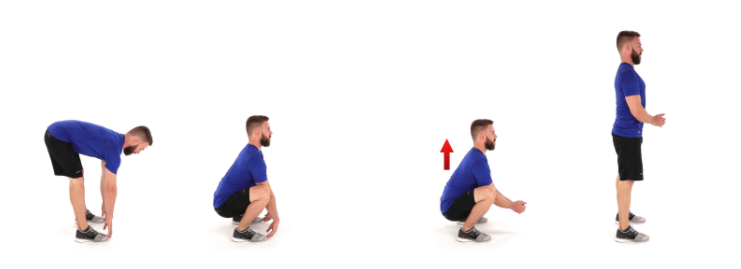
Image from Physiotec

Application: 10–15 reps

Cues: Begin by hinging at the hips and lowering the arms to the floor. Don’t worry if you can’t touch your toes, just do your best. Next drop into a squat by bending the knees, lowering the hips, and raising the chest/head. Rest at the bottom of your deep squat for one to two seconds and then extend up to a standing position. Not all of us can rest comfortably in a deep squat position, but simply do your best to get as low as you can while maintaining control within a pain-free range of motion.

5) Running Man (balance/stability focus)
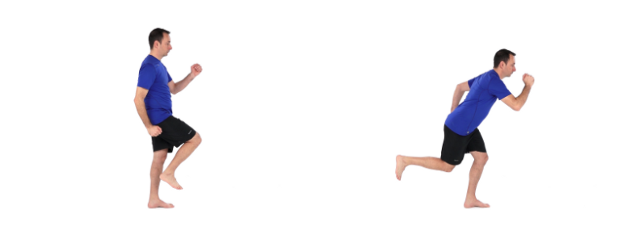
Image from Physiotec

Application: 10–12 reps/side

Cues: To start, stand on one leg. Lift the other knee towards your chest and make sure your arms are in the corresponding runner’s position. In slow motion, bring the raised leg back and down towards the ground without touching the ground with the toes. Be sure to bend your hips — not your back — as you reach backward with the moving leg. Swing your arms in a running motion as you move your leg back and forth.
Photo by Lucas van Oort on Unsplash

In Closing,

Don’t let age-related joint pain get in the way of you living life to the fullest. While you can’t turn back the clock entirely, doing five to ten minutes of dedicated mobility work each day will be transformational for your current functionality and overall healthspan. Are you ready to retake control of your life and develop more strength and mobility than ever? The best is yet to come!

You got this.

-DavidLiira.Kin

Health
Fitness
Science
Advice
Inspiration
Recommended from ReadMedium