The ‘Mouse that Roared’ May Have its Tail in a Republican Mousetrap
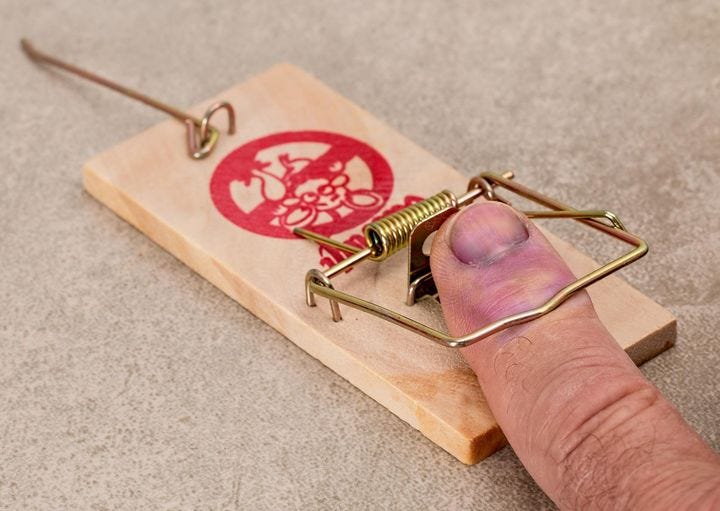
If Missouri Senator Josh Hawley and Florida Governor Ron DeSantis get their way, Mickey Mouse won’t be able to escape the mousetrap.
It’s widely known that the Disney Corporation exercises significant influence in Florida politics. In principle, that’s not a bad thing. Conservatives support free enterprise. We ought to be just as willing to support Disney’s right to advocate for what it believes is good public policy as we support the right of Hobby Lobby, Chick-fil-A, Sinclair Broadcast Group, or any other company to advocate for conservative policies.
The complication with Disney’s recent legislative advocacy is that Disney has a decades-long history of not only advocating for what it sees as good public policy that benefits the entire state, but also getting all sorts of special carve-outs in legislation that benefit Disney exclusively or primarily.
Governor Ron DeSantis has already worked to eliminate a special tax district in Florida that Disney uses to essentially regulate itself. The details get complicated, but the existence of such districts is a long-recognized tool for economic development, not just in major urban areas but also small towns. Right here in rural Missouri, we have a number of similar districts in Pulaski County with their own governing boards, and one of them was used to keep Walmart — St. Robert, MO in the city by creating a special sales tax that was used to build and maintain the infrastructure for St. Robert Boulevard. The district was clearly a success and was responsible for many businesses that now exist along St. Robert Boulevard getting built.
What Senator Josh Hawley is now proposing will, if passed, affect much more than just Disney.
As the two linked National Review articles point out, Disney has benefitted for years from a special extension of copyright protection that allowed Disney to keep its copyright on Mickey Mouse, obviously one of the company’s iconic properties, that would have expired if Congress had not extended the copyright. The “Mouse Copyright” was already in trouble, but Hawley’s bill goes even farther.
Quoting the article: “Republicans in Congress were willing to let Disney’s copyright to its original, Steamboat Willie Mickey Mouse — which is scheduled to sunset in 2024 — expire. But Hawley’s bill would put an immediate end to protections on all copyrights exceeding 56 years of age.”
What is Hawley’s motivation? Quoting him: “The age of Republican handouts to Big Business is over. Thanks to special copyright protections from Congress, woke corporations like Disney have earned billions while increasingly pandering to woke activists. It’s time to take away Disney’s special privileges and open up a new era of creativity and innovation.”
Here are the National Review links:
Hawley Proposes Bill to Strip Disney of Copyright Protections: https://www.nationalreview.com/news/hawley-proposes-bill-to-strip-disney-of-copyright-protections/
Republicans Threaten to Let Disney’s Mickey Mouse Copyright Lapse over ‘Radical Political Activism’: https://www.nationalreview.com/news/exclusive-republicans-threaten-to-let-disneys-mickey-mouse-copyright-lapse-over-radical-political-activism/
It’s important to state here that there are numerous important principles at stake.
One of them is the right of a company to advocate political positions. As conservatives, we should be just as much in favor of Ben and Jerrys’ right to engage in longstanding advocacy of liberal causes as part of their branding as we are of conservative companies advocating conservative causes.
Another principle is that speech has consequences. When a company advocates things that make sense for its brand, existing customers are happy and potential customers will be motivated to buy their product. When a company advocates things that don’t make sense for its brand, problems can be expected. Conservatives and liberals have engaged in politically motivated corporate boycotts for decades, and while those boycotts often don’t work very well, it is absolutely essential that we maintain the right of customers to buy whatever products they want and not to buy those they don’t want.
The final principle is that when a company asks for special privileges from government, there is a real potential for real problems.
It’s one thing for a company planning a major expansion to go to a city or county or state and ask for road upgrades to handle more traffic. There’s a clear economic benefit to the community and to the company, and it’s quantifiable in tax dollars.
It’s a very different thing when a company such as Disney goes to Congress, as happened years ago, and asks for extensions of copyright protections to benefit Mickey Mouse. A case can be made for or against extending the length of copyright protections, and I’m not firmly convinced of Hawley’s argument for shorter copyrights. That’s a complicated question and the answer is not self-evident.
Disney has every legal right to advocate for whatever policies it likes. However, Disney’s corporate executives need to learn that if they’re going to ask for special favors, they’d better be very careful to avoid offending anyone before asking for those favors. Controversial companies don’t often get what they want, or at least they don’t get what they want without a fight.
Disney, by its own decisions, walked into the mousetrap and got its tail caught. Only time will tell whether Disney is able to pull its tail free, but at a bare minimum, Mickey Mouse’s rear end is going to hurt for a while.