
The Mother’s Hug : Do You Miss It?
Mother’s Hug is as old an expression of bond like no other in human history. Yet some misses it lifelong for no fault of their own
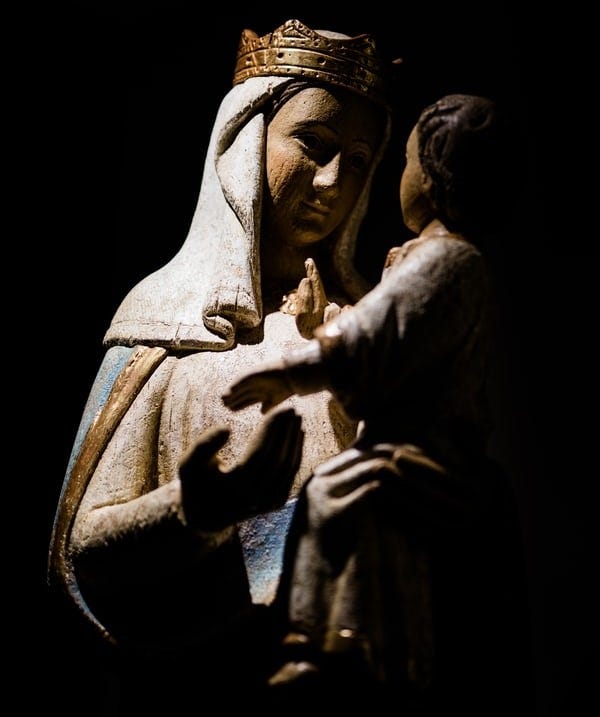
We come into this cold, unknown world without our own will. The just-born has no idea how to protect himself (or herself or itself) in such an environment, just out from a warm, enclosed womb, secured and sustained by the mother. So the baby starts crying, helplessly, not knowing what else to do…., until the baby is cleaned, wrapped and returned to its mother, who hugs the bundle instantly achieving a sense of relief, fulfilment and immense joy after so much pain of giving birth.
How does the mother, the first time mother or a many-timer, know that the baby needs a hug? No one knows what electrical or electro-magnetic or supersonic signal transmission occurs at that moment of bliss but the baby finds all the comfort it needs, all the protection it deserves and all the assurances it probably seeks as a living being at the top of the biological pyramid. For the child, there is nothing like a mother’s hug — whether poor or rich, Christian or Muslim or Hindu or Buddhist and so on. Although born in a barn, Jesus got his hug from mother Mary. After Krishna was born, he was taken away from his biological mother Devaki and left with Yashoda, foster mother (to save Him from the tyrant king), who hugged the little Krishna and raised Him. Mother’s Hug is as old an expression of bond like no other in human history.
If I may ask you, “Do you remember your mother’s hug?” “I can’t remember but I am sure she did hug me”, would perhaps be your reply.
As we all grow up from the mother’s lap to confidently start walking as homo sapiens, we continue to get hugs from our mothers many times over. So we take it for granted, without ever remembering the first all-important hug. As we grow up to become adults, our mothers stop hugging us until they enter the grey horizon of their lives and are often separated from their children by physical and geo-graphical distances. Then, the moment we meet our mothers, we hug our mothers, as if to return those early hugs with all the affection and love accumulated over the years gone by.
But it may not be exactly the case, as always. At least not with Bob, as far as he remembers.
Bob was born to a middle-class family. His father, Alex ran a small jewellery shop in a small town; He got married to a young girl, all of fourteen when he himself twenty. When his wife was pregnant for the first time, she was a teen. She was sent to her paternal home just because Alex had a wanderlust and was not sure if his own mother could take care of the childbirth. Thus Bob was born in his maternal grandfather’s home, when his father was away in the hills en-route to a pilgrimage in the Himalayas. The wanderer did not know that he had become proud father of a son. Bob became the first child in a home with three other siblings who would join him later.
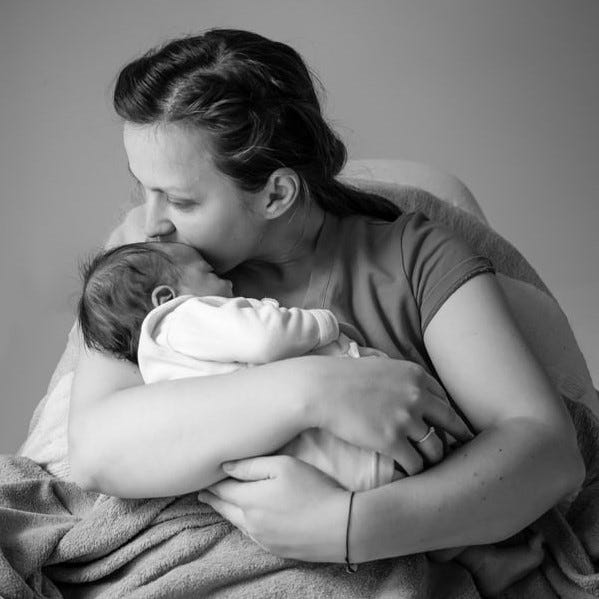
Bob’s mother was a strict disciplinarian. Moreover, she believed that showing her emotions to children may not be good for their upbringing. So, Bob was raised, literally with an iron hand by his mother. In an extended family with two uncles and aunties and a total of nearly a dozen cousins (more would join almost each subsequent years), there were more play and fights than studies and lessons. As a result, Bob was often confined to a room with lessons to study. Initially, till the age of six, he was made to sit on the floor of the kitchen on a bamboo mat and asked to read aloud so the mother can hear while she cooked, cleaned and did all other chores. There were little opportunities for the mother to hug Bob.
One day while playing with his cousin brothers and sisters, Bob got involved in a fisticuff, as children often do. When his elder cousin sister complained about the fight to Bob’s mother, the young mother became so angry that she took out an iron rod, used to stoke the coal-fired oven and beat Bob up. One blow landed on his right knee and Bob was unable to get up for the next few days. Bob’s mother might have felt sorry for her outburst but the disciplinarian in her prevented her from hugging Bob and saying, “Are you hurt, my child? Don’t cry, it would be alright soon”. Bob did not remember if his mother said so or repented over the beating.
At the late age of six, Bob was admitted to a nearby school. Alex, who never finished school himself, was not terribly interested in admitting his son to a school. It was Bob’s mother, who took upon herself the task of educating her eldest son in the most regimented manner. Every evening, she sat down with little Bob to provide lessons in English and Bengali (most Indian children learn two languages simultaneously!) and basic arithmetic. The poor boy, tired from the day’s activities and afternoon’s play, used to doze off by Seven O’clock. So his mother pulled him up as early as Five in early morning and made to study in the faint light of a kerosene lantern, sitting by a window when it was not even dawn in the winter. Where is the time for mother’s hug? Bob could not recall such an experience.
Bob’s sister Joey was born when he was about four years old. Joey was fond of food and less interested in academic pursuits, if those are the right words. Bob’s mother was rather too particular about the quantity of food her children should have, lest they overeat. As always, Joey always felt a little hungry. Once she could not resist the temptation of stealing a bottle of honeyed pickle from her Aunt’s room. Unfortunately, she was caught and the ‘offence’ was brought to the knowledge of her mother. Joey was hardly five year old then. As an exemplary punishment, she was locked in an old, unused room full of junks for half-a-day. That room had a live beehive about four feet tall with buzzing bees. The terrified poor girl simply hunched in a corner overcome with a mortal fear she could never forget in her lifetime. She would never steal.
Bob was too terrified to protest or say a word. When she was brought back, she was murmuring incoherently in a state of shock. Even in this incident, Bob could not recall whether their mother was regretful about being rather too harsh to little Joey. All he could remember was that his mother did a clean-up of his little sister and gave her something to eat to calm her down. No hugs, no tender moments.
Still, Bob would not refer to his mother as being a cruel person or a heartless mother. She looked after her children well. She was just being too strict to raise her children in as perfect a manner as possible under the given conditions and circumstances. Her unstinted pursuit of educating Bob since early childhood brought good dividends, earning him the accolade of being the best student award, year after year in the school. He went to join one of the best universities purely on merit, earning a scholarship. In a large family of traders and shopkeepers, where no one ever crossed the High School examination, this was no mean achievement. While Bob remains grateful to his mother, something always bothers him. He cannot remember even a single incident of being caressed or hugged by his mother. This has remained as an emptiness in a quiet corner of his mind.
Over a period of time, Bob got settled in life, having a decent income, a loving wife, two children, who in turn grew up as decent individuals and well educated. Yet, despite all this, Bob misses his mother, whom he lost in a heart attack which happened before his eyes many years ago. She could not be saved despite being inside a hospital and all the prayers Bob could muster. Her death remains the most profoundly sorrowful experience of Bob’s life. When Bob stays alone looking back and searches his memory of six decades to find even a glint of a feeling of mother’s hug, he finds none. Absolutely none.
Such a poor fellow, Bob!
Authors Note:
I have full copyright of this story. Any form of copying and/or modification without my express consent will be unlawful.
If you like this story, you are invited to read a dozen plus stories in my first book of fiction, “The Autumn Leaves: Stories of Myriad Hues”, available on Amazon; The eBook costs $3.99, while the paperback costs $9.99
To read my other published stories, please visit www.medium.com/@bdatta.enc
I can be contacted via e-mail at [email protected]