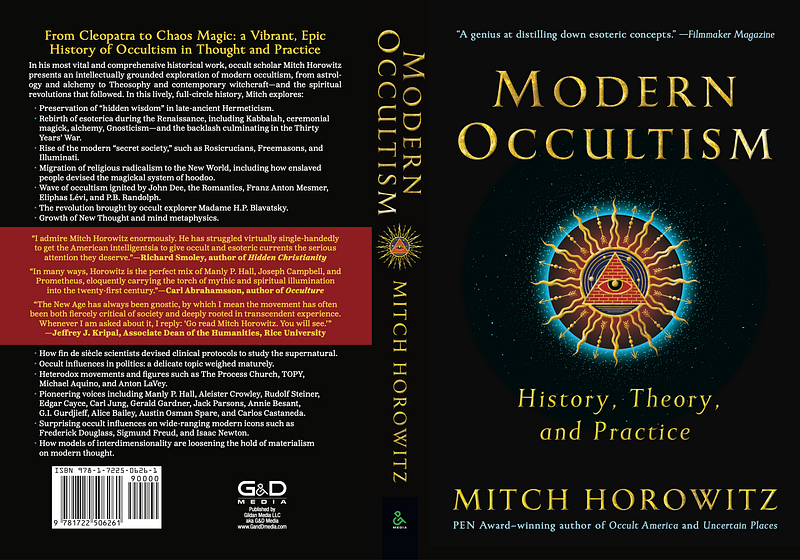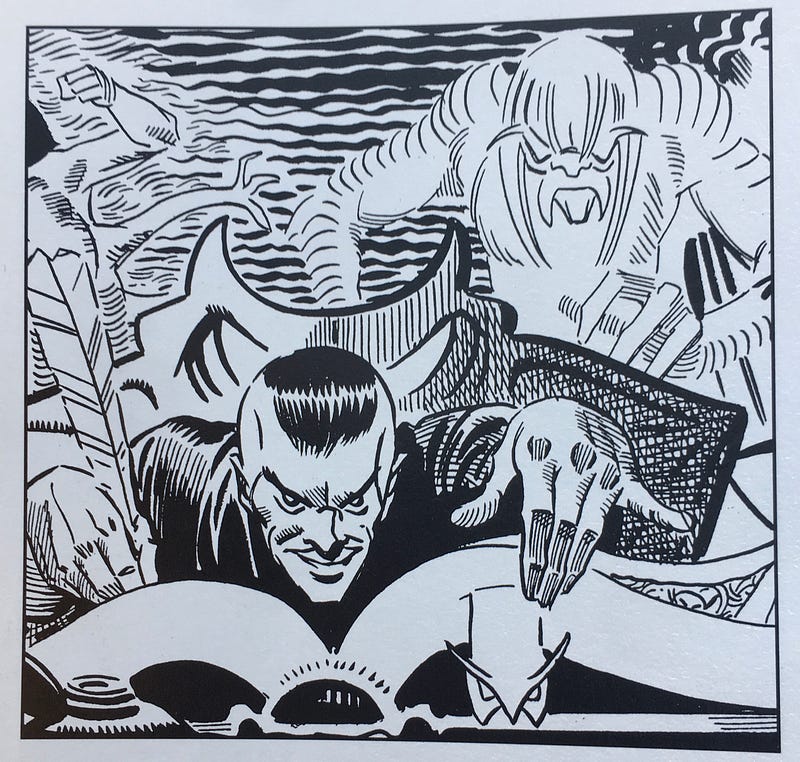
The Most Revelatory Books I Read While Writing Modern Occultism
There were many greats — these ten stood out
In nearly twenty years as a historian of the occult, I have been touched by many great works. While writing my latest book, Modern Occultism (September 19, 2023)— a history of occult thought from late-antiquity to the present — these ten assumed a special place.
So much is missing from this short list; so many authors who touched me (and who appear in the narrative) are absent — not because I value their work any less than the titles noted here but because these books rank as personal “discoveries,” which I consider uniquely illuminative of the field. Still other writings, testimonies, and experiences emerged from primary sources or field study. (I call myself a “believing historian” so my skin is in the game.)
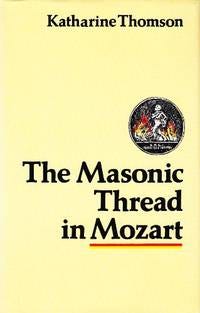
1. The Masonic Thread in Mozart by Katharine Thomson (Lawrence & Wishart, 1977)
This unjustly rare volume definitively explores esoteric themes in the life and work of composer and dedicated Freemason (following his father) Wolfgang Amadeus Mozart (1756–1791). The most arresting chapters explore Mozart’s proximity to the Illuminati, the short-lived Bavarian revolutionary sect that has been assigned a wildly oversized cartoon afterlife in conspiracist literature and thought. Historian Katharine Thomson is especially adept at placing a human face on the group’s handful of initiates who strove in vain to render monarchical Bavaria into a Jeffersonian democracy.
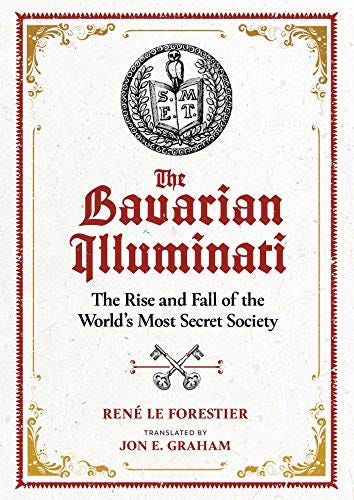
2. The Bavarian Illuminati by René Le Forestier (1914), translated by Jon E. Graham (Inner Traditions, 2022)
Yes, them again. Jon E. Graham’s 2022 translation of French historian René Le Forestier’s 1914 study corrects a centuries-long malady in which the Illuminati’s fantasy reputation has swelled absent nearly any work of scholarly historicism based in primary sources. It so happens that for a secret order the Illuminati were assiduous at record keeping. Forestier traces the order’s actual history from 1776 until its demise about nine years later under crushingly prohibitive and persecutory laws issued by the Bavarian monarchy. Within a few short years, the Illuminati was “blamed” for the French Revolution — a charge that Thomas Jefferson dismissed in 1800 as “perfectly the ravings of a Bedlamite.”
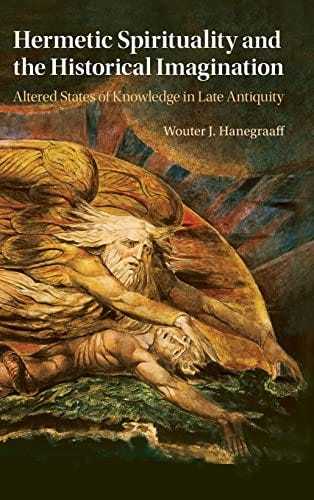
3. Hermetic Spirituality and the Historical Imagination by Wouter J. Hanegraaff (Cambridge University Press, 2022)
Although I have some differences in approach from Hanegraaff, my work as a historian would be far lesser without his oeuvre. Hanegraaff is among a handful of classicists and historians who fostered the academic field of esoteric, occult, and Hermetic studies. Other trailblazers include Joscelyn Godwin, Jacob Needleman, Antoine Faivre, Frances Yates, Jeffrey J. Kripal, April D. DeConick, James Santucci, and Mircea Eliade. I consider Hermetic Spirituality and the Historical Imagination perhaps Hanegraaff’s most important work because he returns to the primary sources of late-ancient Greek-Egyptian literature not only to clarify meaning but also to highlight the enduring problem of our threadbare receipt of original and reliable Hermetic writings. Much of the modern occult, as I consider in the book, is based on Greek expositions of Ancient Egyptiana — which are disadvantageously fragmentary.
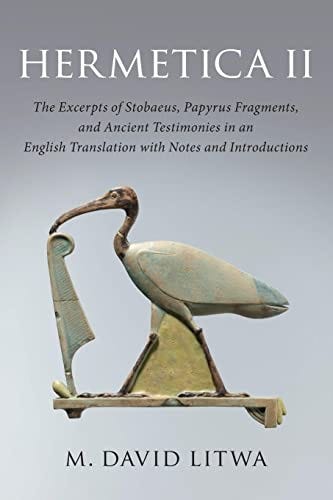
4. Hermetica II: The Excerpts of Stobaeus, Papyrus Fragments, and Ancient Testimonies in an English Translation with Notes and Introductions by M. David Litwa (Cambridge University Press, 2018)
I have long praised Hermetica by Brian T. Copenhaver (Cambridge University Press, 1992) as the first truly serviceable English translation of the Corpus Hermeticum and the dialogue Asclepius. Another noteworthy translation is The Way of Hermes by Clement Salaman, et al. (Inner Traditions, 2000). Litwa has carried the ball further down the historical field by providing a wide array of translations of work by the last Hermeticists, such as Macedonian writer Stobaeus, whose birth and death dates are unknown, but who wrote in the early fifth century A.D. at the outer cusp of classical antiquity. In 529 A.D., the Roman Emperor Justinian closed the Platonic academy in Athens, leaving figures like Stobaeus nowhere to write and teach. Litwa captures the work of these final, elegiac figures.
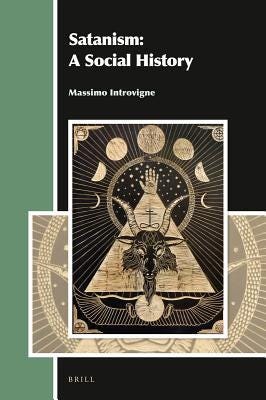
5. Satanism: A Social History by Massimo Introvigne (Brill, 2016)
Next to the Illuminati, no concept has been more butchered by purveyors of “what everyone knows” than Satanism: a topic on which many have opinions and few any familiarity beyond entertainment, religious convention, and Satanic Panic canards. Sociologist Introvigne provides a wide-spanning field study of modern Satanic practice among groups and individuals, most of whom are no more threatening than members of Spinal Tap. He properly contextualizes Satanism as a modern literary, occult, intellectual, ethical, political, and aesthetic tradition. My favorite line does not appear in the book. Asked at a New York City lecture whether Satan, a symbol of rebellion to Romantics and 19th century radicals, could be considered a Marxist, Introvigne, in his mellifluous Italian accent, replied: “I would not say that Satan is a Marxist; I would say that Satan is more of a social democrat.”
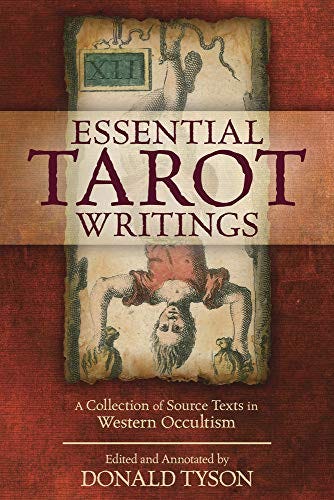
6. Essential Tarot Writings edited and annotated by Donald Tyson (Llewellyn, 2020)
Occult scholar Tyson has performed the important service of publishing, among other key documents, complete English translations of seismically influential — and fanciful — 1781 essays on Tarot by French esotericists Court de Gébelin and Comte de Mellet. “It would not be an exaggeration,” Tyson writes,” to say that the occult Tarot owes everything to France, and that it originated from the pen of a single man, Antoine Court de Gébelin.” You do not read these 18th century essays for the history of Tarot — you read them for the history of the Tarot mythos, specifically the notion that the onetime deck of playing cards is a coded book of wisdom from Ancient Egypt. The English translation of these essays was a remarkably neglected and overlooked task until Tyson’s effort.
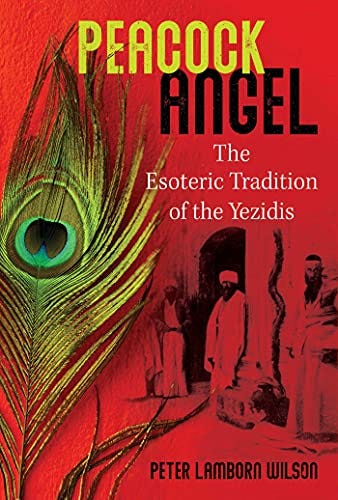
7. Peacock Angel: The Esoteric Tradition of the Yezidis by Peter Lamborn Wilson (2022, Inner Traditions)
The Yezidi people are probably the most persecuted religious minority on earth. Long rumored as “devil worshippers,” these Persian seekers abide a deeply esoteric — and peaceful — faith that involves worship of a fallen angel, Melek Ta’us, or the peacock angel. Although the Yezidis appear only fleetingly in Modern Occultism, their plight and remarkable survival underscore so much in esoteric and occult tradition. Published the same year as author Wilson’s death, Peacock Angel is the clarifying history of a group, as the jacket copy puts it, that “does indeed worship ‘the Devil’ — but the devil is not ‘evil’.”
8. Upstate Cauldron: Eccentric Spiritual Movements in Early New York State by Joscelyn Godwin (State University of New York Press, 2015)
I have worn out countless highlighters reading Godwin’s many books, which are a unique resource among works of occult history. Not only is this one no exception but it revealed to me new ideas, wrinkles, and connections about Central New York’s Burned-Over District, a topic on which I mistakenly thought I knew it all. Only Godwin could uncover this insight about Wizard of Oz creator L. Frank Baum: “Baum never expected The Wonderful Wizard of Oz to be a best-seller. He published five other books in 1900, and probably had more hopes for The Art of Decorating Dry Goods Windows and Interiors.” It is difficult to capture the range of influence that emerged from dwellers of the snaking stretch of land connecting Albany and Buffalo in Central New York in the 19th century. Godwin, as usual, uncovers all the secrets.
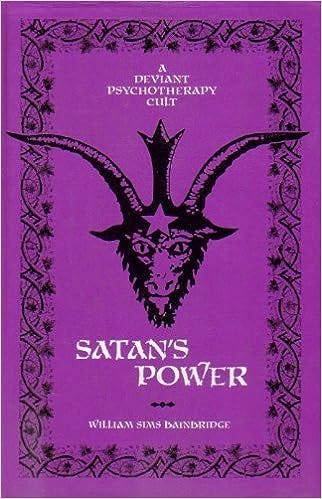
9. Satan’s Power: A Deviant Psychotherapy Cult by William Sims Bainbridge (University of California Press, 1978)
Lurid title aside, this is the sole work of field scholarship on The Process Church and a study universally recognized for its quality, proximity, and reliability. Bainbridge, a sociologist, gained the group’s trust and transparently joined for the purpose of documentation. In his highly readable monograph, Bainbridge alters proper names, referring to The Process as “The Power.” I am stricter in my use of cult than Bainbridge. He writes, “I define cult as a culturally innovative cohesive group oriented to supernatural concerns.” Acknowledging colloquial usage and understanding, I define cult as an abusive and isolating community of belief. Hence, I call The Process a sect. Another work deserving honorable mention is Love, Fear, Sex, Death: The Inside Story of the Process Church of the Final Judgment by Timothy Wyllie, edited by Adam Parfrey (Feral House, 2009). In addition to rare first-hand insights, Love, Fear, Sex, Death includes a greatly clarifying historical essay by artist Genesis P-Orridge about the punk-arts-magick collective Thee Temple ov Psychick Youth (TOPY), which got swept up in England’s (thankfully short-lived) Satanic Panic.
10. The Elusive Science: Origins of Experimental Psychical Research by Seymour H. Mauskopf and Michael R. McVaugh (The Johns Hopkins University Press, 1980)
This book being out-of-print represents one of the great gaps in the historical catalogue of modern science. Mauskopf and McVaugh present a rare and invaluable survey of ESP research as a scholarly field from its inception in the late 19th century to its emergence as a recognized academic science in the 1930s thanks largely to the efforts of Duke University researchers J.B. and Louisa Rhine. It is difficult to overstate the integrity and meticulousness that the Rhines brought to the field. Polemical skeptics often misrepresent or misreport the Rhines’ work and that of other parapsychologists — a problem of near-crisis proportions on Wikipedia — and The Elusive Science provides an uncommonly clear and deeply researched corrective. I hope that an enterprising publisher restores it to print.