
The most powerful antioxidant known to date
Astaxanthin supports skin, fertility, anti-inflammatory reactions and immune system
Antioxidant power
Astaxanthin is a molecule extracted from Haematococcus Pluvialis, a green alga known for its high antioxidant potential.
Haematococcus Pluvialis Astaxanthin is a carotene, therefore a provitamin A; it is therefore a lipophilic element, i.e. a thermostable active ingredient that spreads effectively especially in tissues with a high-fat concentration: adipose tissue, central nervous system, integumentary system (skin), lung, etc.
Astaxanthin is used as an anti-photosensitizer, or as a molecule capable of inhibiting the side effects triggered by photosensitivity; the latter can be defined as an "excessive reaction towards exposures, tending to be harmless, to solar radiation in the ultraviolet (UVA) or visible range".
Astaxanthin is an antioxidant that reduces photosensitization reactions
Astaxanthin is the most powerful antioxidant known to date; it is now known that its protective effects from free radicals are well 550 times more powerful than tocopherol (vitamin E). By virtue of its antioxidant power, astaxanthin is also a molecule capable of reducing or canceling the clinical manifestations of photosensitivity. These are similar to "intense sunburn" and represent skin changes characterized by erythema, edema, papules, urticarial reactions (itching) associated with vesicles in the most exposed areas (apex of the ear, nose, cheeks, neck, forearms, and back of the hands ); more rarely, the photosensitivity reaction extends to the whole body.
Astaxanthin positively affects fertility
Astaxanthin has been tested as a food supplement for increasing human fertility. The first randomized study was double-blind and observed the reactions following the integration with natural astaxanthin and placebo in males of a sample of infertile couples; subjects had seminal fluid with lower reference values than recommended by the World Health Organization. Dietary supplementation with astaxanthin resulted in:
Reduction of the Reactive Oxygen Species (ROS - oxygen free radicals) in the seminal fluid. The serum Reduction of inhibin B (a hormone that selectively inhibits the production of Follicle Stimulating Hormone responsible for the production of spermatozoa) The increase of the rapid linear progressive motility of the spermatozoa No significant change in the morphology of spermatozoa The increase in total pregnancy and monthly pregnancy levels of 54.5% and 23.1%, compared to the placebo group which, on the contrary, reported lower values: 11.2% and 3.6%.
Anti-Inflammatory Properties
It is well established that various proinflammatory markers in the skin are increased as a result of UV exposure. Keratinocytes play a crucial role in the photodamage response after UV exposure by releasing proinflammatory mediators. It has been shown that Astaxanthin treatment prevents the deleterious effects of UV by decreasing UV-induced reactive nitrogen species production, inflammatory cytokine expression, and apoptosis in keratinocytes. A recent report showed that Astaxanthin inhibited the gene expression of several pro-inflammatory biomarkers, and tumor necrosis. More importantly, studies showed the ability of Astaxanthin to inhibit the production of inflammatory mediators, indicating that Astaxanthin may offer an attractive new strategy for treating skin inflammatory diseases.
Immune-Enhancing Effects
Astaxanthin significantly influences immune function in several in vitro and in vivo assays. For example, in vitro studies on human lymphocytes have demonstrated enhancement by Astaxanthin of immunoglobulin production. The immunomodulatory action of Astaxanthin has been also reported in dogs and cats, enhancing both cell-mediated and humoral immune responses. In these studies, Astaxanthin increased natural killer cell cytotoxic activity, suggesting that Astaxanthin may regulate Natural Killer cells that serve as an immunosurveillance system against tumors and virus-infected cells. Moreover, other authors have shown that Astaxanthin increased cytotoxic T lymphocyte activity in mice. Activated T cells and Natural Killer cells produce interferon-γ, which is involved in immune regulation and B cell differentiation; therefore, Astaxanthin may enhance immune responses and potentially exert antitumor activity. Astaxanthin increased antibody production in mice, restored humoral immune response in old mice, and induced the production of antibodies.
Astaxanthin supplements: how to take it
As anticipated, astaxanthin is a provitamin A; its integration is not subject to particularly binding recommendations, but in general it is recommended to take it for OS between 2 and 8mg / day. Astaxanthin in Foods For topical use it is possible to reach 20-100 parts per million.
Astaxanthin in food
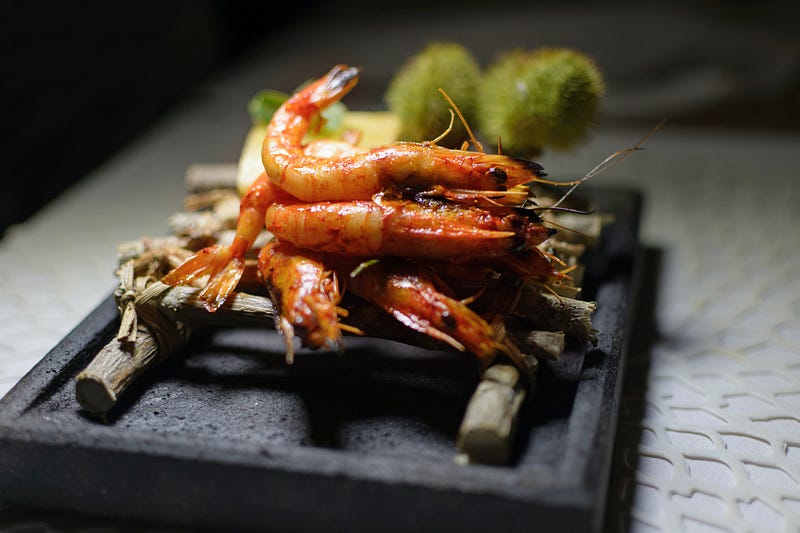
Astaxanthin is a lipophilic carotene, therefore an easily identifiable purple-red pigment. Its synthesis occurs exclusively in plant-type organisms (see the alga Haematococcus Pluvialis), which entering the food chain first penetrate the meat of crustaceans (shrimp, prawns, crabs, etc.) and then those of fish. Typical examples of fish rich in astaxanthin are salmon and salmon trout (whose reddish meats are due to food supplement piloted by humans with small red crustaceans. Therefore, salmon trout is NOT a cross between trout and salmon!). Those among readers who delight (or have delighted) with assiduity in the culinary arts will have noticed several times that ending the cooking of crustaceans in a pan (for example, prawns sauteed with brandy or lard scarf), the remaining oil assumes a pleasant reddish color. That pigment is precisely the astaxanthin which, thanks to the typical fat solubility, spreads rapidly in the cooking fat of the crustaceans.
Evidence from Human Clinical Trials
Park et al. conducted the first comprehensive study to investigate the action of dietary Astaxanthin in modulating the immune response, oxidative status, and inflammation in young healthy adult female human subjects. After eight weeks of supplementation, Astaxanthin enhanced both cell-mediated and humoral immune responses. In a recent study, it was demonstrated that the continuous consumption of Astaxanthin for four weeks alleviated aging-related changes in the skin. The authors also measured the levels of malondialdehyde (MDA), a recognized biomarker of systemic oxidative stress. In particular, 31 middle-aged subjects received 4-mg daily doses of Astaxanthin, and the plasma levels of malondialdehyde decreased during Astaxanthin consumption (by 11.2% on day 15 and by 21.7% on day 29) so reducing also the oxidative stress. Tominaga et al. conducted an in vitro study and in parallel, a randomized, double-blind, parallel-group, placebo-controlled study with 65 healthy female subjects for 16 weeks to verify the effects of oral Astaxanthin supplementation (6 or 12 mg) on skin integrity. The authors demonstrated that pre- and post-treatment with Astaxanthin dose-dependently decreased the secretion of inflammatory cytokines from UVB-irradiated keratinocytes. Furthermore, the clinical study demonstrated that skin moisture content and deep wrinkles were not significantly changed in the Astaxanthin-supplemented groups, whereas these parameters significantly worsened in the placebo group during the study period. In addition, skin elasticity improvements were observed in the high-dose group compared with that of the placebo group in participants with high skin moisture content. In 2001, Seki et al. conducted a small pilot study with Astaxanthin from H. pluvialis to investigate the wrinkle reduction effect on the skin of 45 healthy subjects. The authors observed an anti-wrinkle effect in female human subjects, using a topical cream containing Astaxanthin combined with other active ingredients. A dermatological assessment revealed a significant reduction of wrinkles and puffiness on the lower eye and cheeks after two weeks of use. A second preliminary human study performed by Yamahita in 1995 showed in healthy male subjects that topical natural Astaxanthin from krill significantly reduces erythema by 60% after UV-B exposure. In a second study, the same author administered to 49 healthy female subjects (mean age of 47 years) 2 mg of Astaxanthin or placebo. After six weeks of treatment, significant improvements were observed in skin moisture and elasticity. In another study by Tominaga et al. , the effect of Astaxanthin on wrinkle reduction and skin elasticity was investigated in 28 female subjects (20–55 years). The combined use of a dietary supplement and a topical product containing Astaxanthin for eight weeks showed a reduction in the overall average wrinkle depth. The latest trend in antiaging strategies is to use a combination of dietary and oral supplements to produce extra physiologic benefits. Several studies demonstrated that the combined administration of Astaxanthin with other compounds, particularly collagen hydrolysate, may show additive or synergistic effects for preventing or reversing the skin aging process. Consistent with this, a recent study with 44 healthy subjects showed that a combination of Astaxanthin (2 mg/day) and collagen hydrolysate (2 mg/day) for 12 weeks improves elasticity and barrier integrity in human skin. In an open-label noncontrolled study, 30 healthy female subjects received for eight weeks 6 mg per day of oral supplementation combined with 2 mL per day of a topical application of Astaxanthin. Significant improvements were observed in skin wrinkle, age spot size, elasticity, and skin texture. The same authors also conducted a randomized double-blind placebo-controlled study involving 36 healthy male subjects supplemented with 6 mg of Astaxanthin for six weeks. At the end of the study period, Astaxanthin improved wrinkles, elasticity, transepidermal water loss (TEWL), moisture content, and sebum oil level. These results demonstrate that Astaxanthin may improve skin condition in both men and women.
Sources: Astaxanthin in Skin Health, Repair, and Disease: A Comprehensive Review


