
TRAVEL | NAURU | PACIFIC OCEAN
The Most Obscure Place That I Have Been To
It’s a tiny island nation in the middle of the Pacific Ocean.
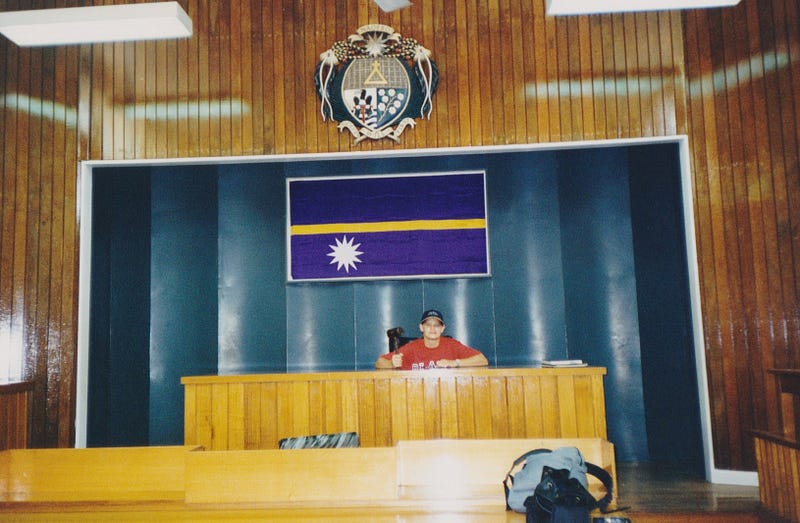
In 1994 I visited Nauru.
Nauru is a teeny tiny island nation whose size is just 21 square km (8.1 square miles). It is officially a republic and has its own country identity. It has just ten thousand inhabitants which makes it the second least populated country after Vatican City.
It is also the third smallest country in size after Vatican City and Monaco.
It is located in the South Pacific Ocean, northeast of Papua New Guinea, and almost right on the Equator.
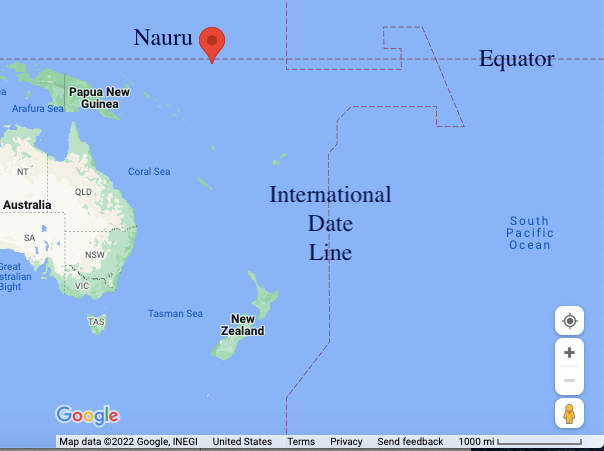
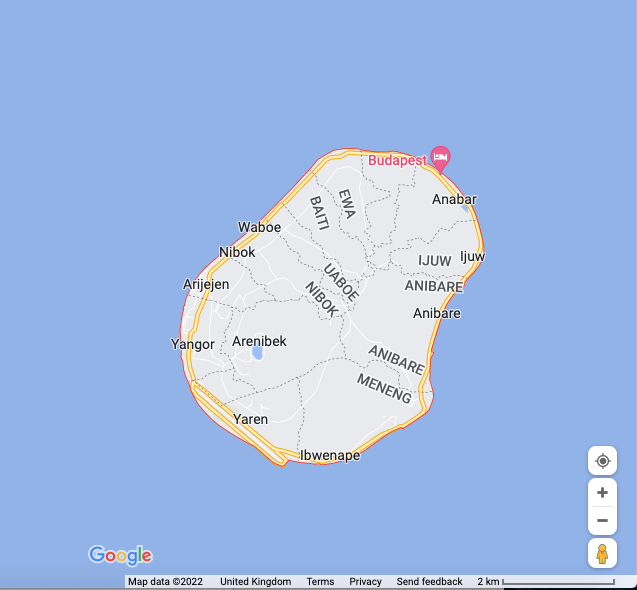
You can see how tiny this island is on the map below. Check out the distance marker in the bottom right-hand corner. According to this, it looks like the whole island road is between 14 and 20km (9–12.5 miles).
I was there as part of a school program that I was attending called Class Afloat, and we arrived there via a 188-foot tall ship known as a barquentine. If you want to learn more about the whole trip, I will link to the article at the bottom.
Of course, before going there, I had never heard of Nauru.
I mean, who really has?
As we did in the program, before we would arrive at a destination, we would learn about the local industries and certain things about their culture and customs. I already was in the know about the phosphate mining that has brought this tiny nation a small bit of fame.
I knew about it because my Grandfather in England had sent me a letter at a previous port of call, telling me that we would likely visit the phosphate mines when we visited Nauru.
My Grandpa had me convinced that he was the smartest person in the world back in those days. I mean who had ever heard of Nauru in the first place? Then to know what they are actually mining on top of it all?
My young 17-year-old brain couldn’t conceive of being so smart and knowing so much.
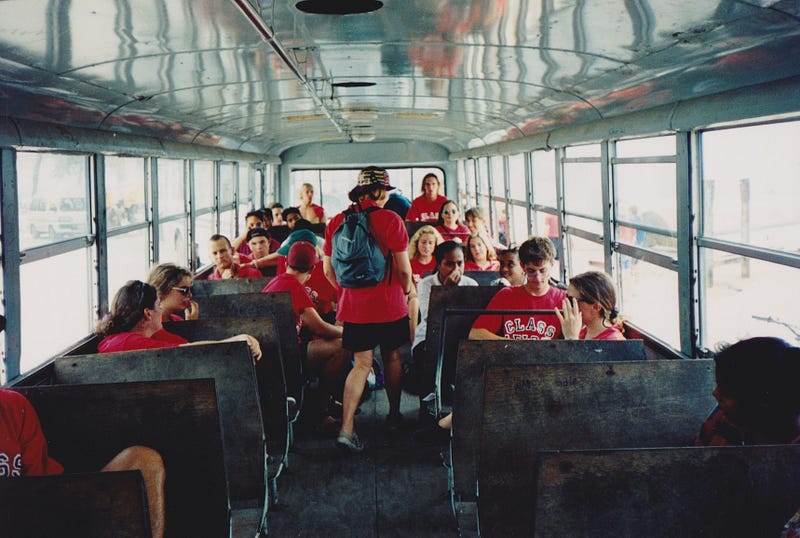
We did a short island tour on one of the days in a rickety old bus. It had wooden seats and I think the floor was wooden as well. Of course, being the only thing to talk about on the tiny island, the bus had but one place to bring us to, the phosphate mines.
In researching for this article, I read that the phosphate has now been exhausted, and it happened in the 1990s. So considering that they had been mining there for over a century already, they must have had some indication that they were going to run out when we were there in 1994. But I don’t recall anybody mentioning that.
Though, it is also entirely possible that they told me, but I wasn’t listening.
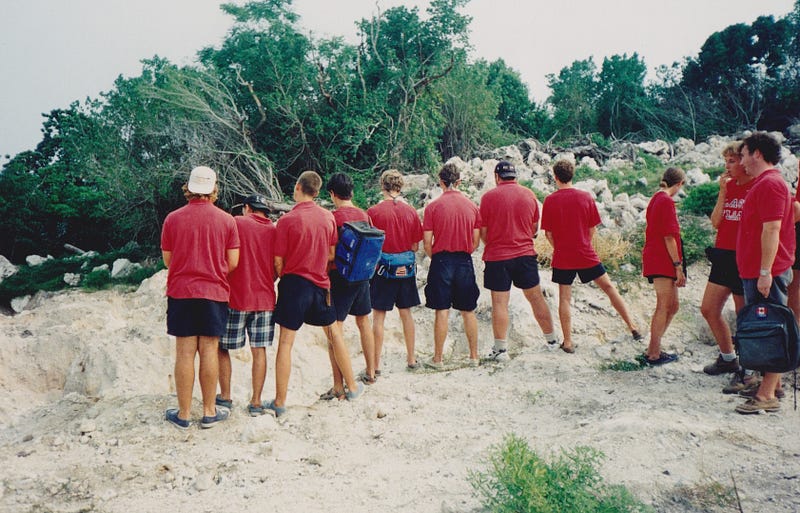
A few of the guys in our program started this silly thing where they would pose like they are peeing and then have their photos taken. In the above photo, they are peeing in the phosphate mine. No, they aren’t really. It was just for fun. But trust me I have about 50 of these pictures all in different locations from the tops of volcanoes to the Serengeti of Africa and many places in between.
What can I say? Boys will be boys.
After the mine tour, we made our way to the only hotel on the island for an island welcoming feast. Unfortunately, the hotel where the function was held had a pool, and the boys couldn’t resist doing what boys do best there either.
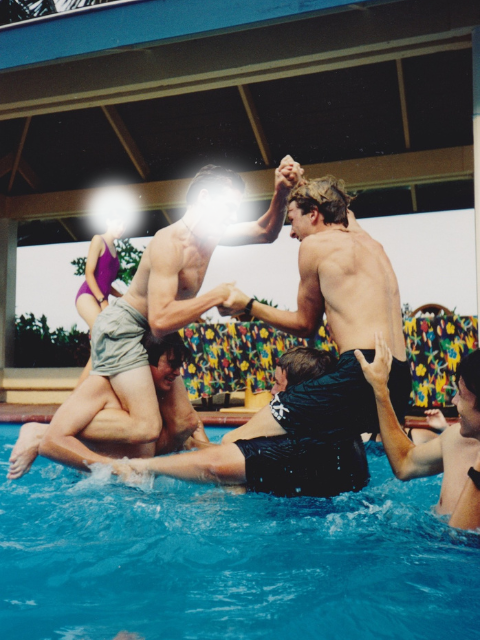
Sigh!
We only spent a couple of nights in Nauru, but I’m sure we made a big impression!
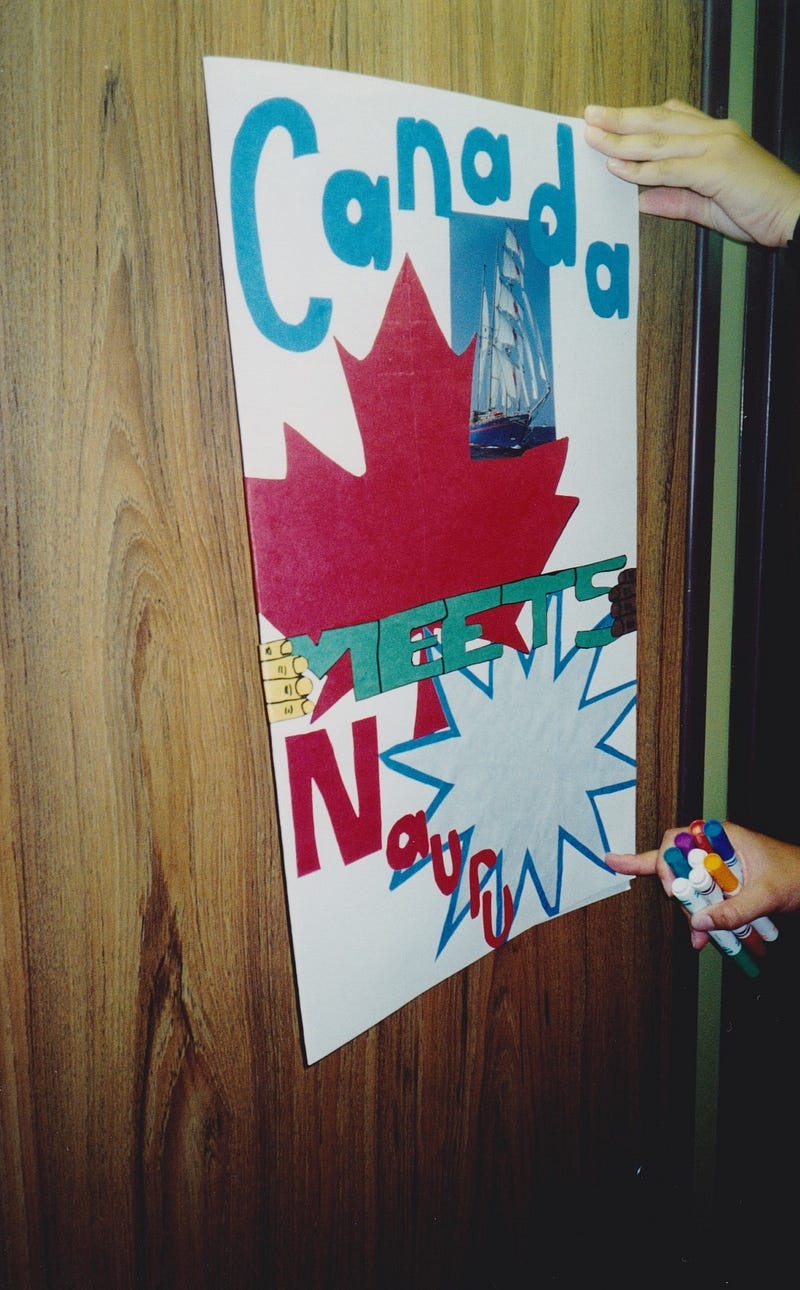
Before leaving, the ship director asked my cabin mate and me if we would make a card that we could all sign to memorialize our time in Nauru. This is what we came up with.
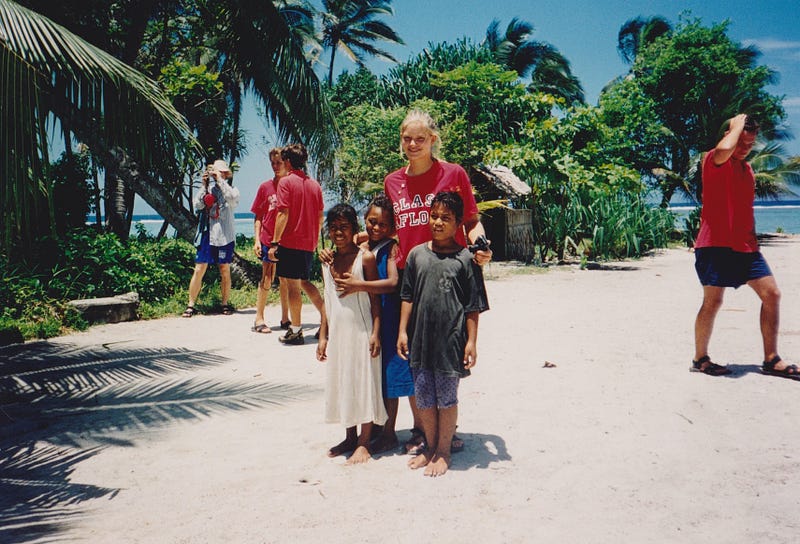
After having a celebration at the dock with the local kids, we pushed off and set sail to our next destination of Gizo, Solomon Islands!
Sadly, most of Nauru’s environment was devastated by the mining that took place for so many years. They say that all that is left is a 150 to 300 m (490 to 980 ft) fertile coastal strip that lies inland from the beach. It is where the island's coconut palms flourish, and more fruit trees grow around a solitary lagoon on the island.
Mining devastated 80% of Nauru's natural ecosystem, which has left those areas uninhabitable, and it is estimated that 40% of the marine life was destroyed by the mining runoff.
Wikipedia tells me that after the phosphate ran out;
To earn income, Nauru briefly became a tax haven and illegal money laundering centre.From 2001 to 2008, and again from 2012, it accepted aid from the Australian Government in exchange for hosting the Nauru Regional Processing Centre, a controversial offshore Australian immigration detention facility. As a result of heavy dependence on Australia, some sources have identified Nauru as a client state of Australia.
I can’t help but feel sorry for the people of Nauru. It’s but just a dot on the world's map, and running out of their main income and industry must have been heartbreaking and devastating.
I’m so glad we got to see it when we did, the last glimpse of a tiny island nation that was prosperous and happy!
Thanks for reading about my short adventure in Nauru. It is certainly a very obscure place that most don’t even know about!
Happy Travels!
xo Jill

Hi there, we are 2 Canadians, Jill and Chris from Artistic Voyages. We have been nomadic since 2017 living in numerous different countries, and experiencing the life and diversity of our planet on the ground and firsthand. We paint FREE murals in exchange for accommodation. Check us out on Ko-fi!
Subscribe to Medium through my referral link to get full access to my writing plus thousands of others! Plus sign up here to get my articles by email!
Join our adventure by hitting the links below!
Website | Instagram | Facebook | Twitter | Patreon| YouTube | Medium


