
The most important lesson I’ve taught my kids
Before I became a parent I thought I would teach my child manners, crafts and sport. After trying and failing on all three counts I finally realised what the most important lesson was.
Have you ever had a version of this conversation?
Parent: no, I’m sorry, but we can’t….go iceskating in July/eat chocolate for breakfast/shave the dog/paint the couch/something else utterly reasonable
Child (looking like you’d just suggested kidnapping the next door neighbour and raiding her cupboards for supplies): but it’s not FAAAAIIIIIRRRRR
Or:
Parent (magnanimously giving child 1 their last mint/sweet/stick of gum): there you are sweetheart
Child 2 (from the other side of the house, using some kind of psychic spider-sense): but I didn’t get any, it’s not FAAAAIIIIIRRRRR
If your answer is no to both then you have never had a child, or you have reached parenting skills way beyond ours. We used to have these arguments every day, hourly sometimes. Shopping was a nightmare, we had to sit down and work out how many comic books were equivalent to the teddy bear we’d just bought, it felt like we had to reinvent the barter system every time we wanted to treat one of our children. At the end, one of the children, or both, ended up feeling like they had the bad lot when they’d come away with half the candy-store or the majority of the reduced clothes rack in the kid’s section. Something had to give.
Our first response was to try to force our children to be grateful for what they had. I am a huge believer in gratitude practises, whatever stage of life you happen to be in. Losing sight of what we have is the easiest way to feel resentful for what we lack. I started reading about gratitude after seeing this quote from John F Kennedy: “As we express our gratitude, we must never forget that the highest appreciation is not to utter words, but to live by them.” If you haven’t thought about making gratitude a part of your life please consider it. Although there are lots of ways of doing this from journalling to joining gratitude groups on social media, I find the easiest way is to catch myself when I’m feeling negative and remind myself of 5–10 things I’m grateful for: the clothes I’m wearing, my wife, my children, my health, my new shoes, my favourite podcast, crisps (it’s usually crisps if I’m honest).
“I am happy because I’m grateful. I choose to be grateful. That gratitude allows me to be happy.”- Will Arnett
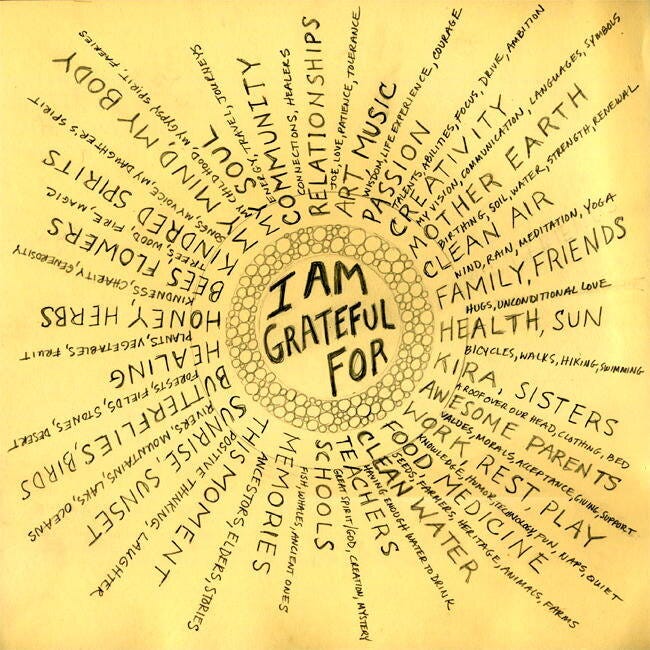
So we tried to ask our children to be grateful for what they had. Every time they complained about something they didn’t have (usually something the other one had and they didn’t) we would ask them to think about 5–10 things that they had that they were grateful for. Sounds like a good plan right? Well, best laid plans and all that. My children, it turns out, would rather shout at us than think of the things they had. After several weeks of trying, we recouped, replotted, replanned. It just wasn’t FAAAIIIIRR…
At this time we lives in Thailand and we were lucky enough to see people living in some pretty terrible conditions. I say lucky because so many children live life in a bubble in which they do not realise the privileges they have, even if these privileges are as small as a safe place to sleep and clean water. I certainly grew up in a bubble and it’s much harder to be grateful for what you take for granting, thinking the whole world takes it for granted as well.
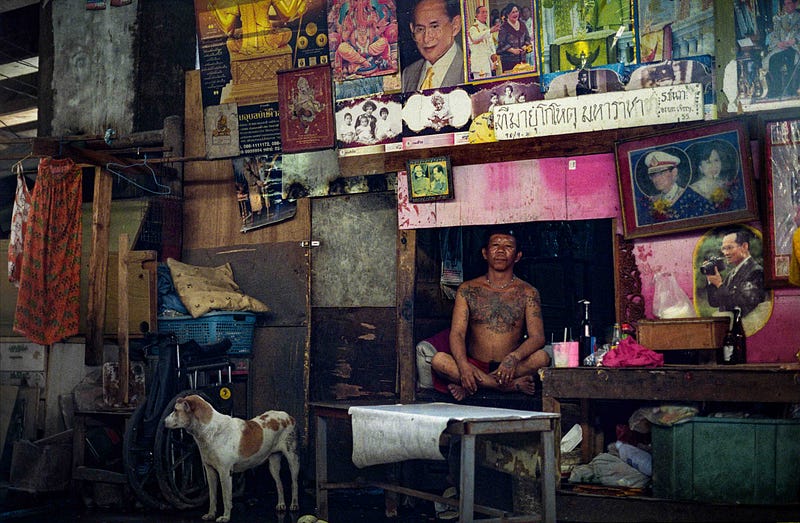
We lived near to the Khlong Toey slums in Bangkok and our school worked with a superb charity called ‘second chance Bangkok’ (https://www.scbkk.org/). It was through working with this charity that my daughters were able to see, first hand, the things that they had, which others didn’t, and the overwhelming disparities in people’s lives who were separated by less than a kilometre. However, simply seeing the inequalities in life clearly didn’t stop them arguing about fairness so we needed a clear mantra to help. This is the biggest lesson I have taught my children.
Parent: we’re having pasta for tea
Child: but I want sausages/lasagne/fried sweetmeats roasted on the base of a crispy poisson (it’s usually sausages). IT’S NOT FAAAAIIIRR!
With this, or any ‘it’s not fair’ argument I have now managed to cut dead any reproach with my own three words:
Parent: Life’s not fair
“Everyone knows that life isn’t fair. Saying it’s not fair suggests that you think life is supposed to be fair, which makes you look immature and naive “— Travis Bradberry
The first time we used this tactic, they tried to argue (my children argue the colour of the sky on a clear day). However, it’s impossible to argue that life is fair, it simply isn’t. Too often we bring children up to think that equality is the norm when it is only an aspiration, noble nonetheless. To bring children up to believe the world is fair is not only wrong, it is inhumane. When your child gets to the workplace and they have their eyes opened to the insidious realities of racism, nepotism, sexism, etc. they will be crestfallen. Instead we should inspire our children to work towards a better future while understanding the inequality in the world today.
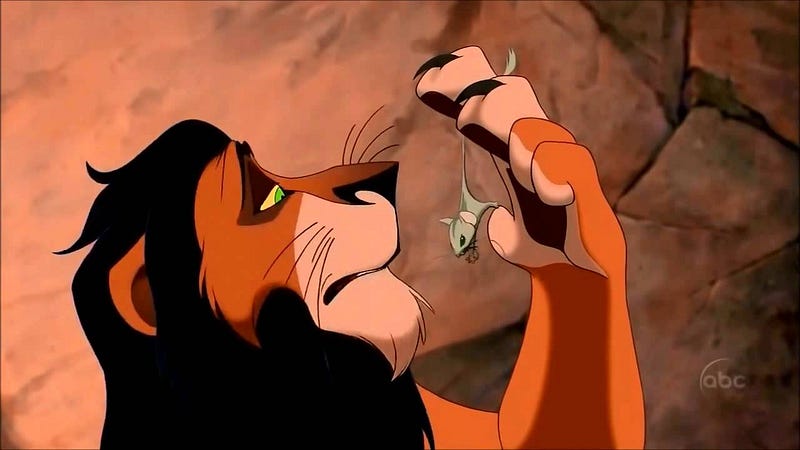
The next time your children argue over fair treatment try it. Three simple words of reality: life’s not fair. And if they argue, watch the Lion King and pay careful attention to Scar when he talks to the mouse.
Scar : [to mouse] Life’s — not fair — is it, my little friend? While some are born to feast — others spend their lives in the dark… begging for scraps.