
The Most Important Book I Read in College
What I learned then and what I learn now
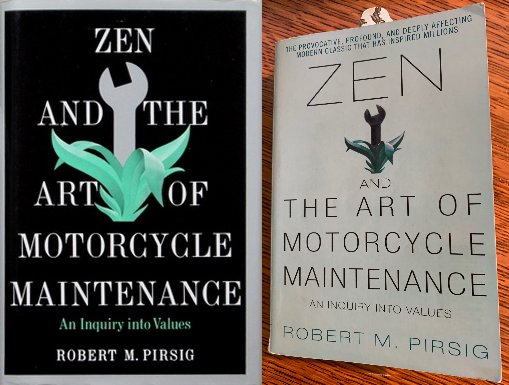
I have always made time to read. Sometimes it takes effort, but it’s always worth it. I remember a time in college while during final exams, term papers, and such, I mentioned to a friend something about a book I was reading. Before I could finish the thought, he interrupted and asked why I was reading anything but assigned works and wondered how I found the time.
I thought about that for a minute and responded, “I always make time to read, it keeps me sane.” I remember thinking more about his question and why reading was so important to me. I concluded it does, in fact, keep me sane. It is my escape. It grounds me. My horizons expand and I grow.
I need to tell you the title of the book that I was reading, which I wanted to share with him that day so long ago. Zen and the Art of Motorcycle Maintenance by Robert M. Pirsig. If you have read it, you know the impact it can have. If you haven’t read it, stop. Go buy it and begin. You will be better for it.
I can remember the day I first learned about this book. I was a young college student, sitting in a common area at the university, studying. A friend passed by and stopped to talk. He had a worn paperback book in his hand and I asked what it was. He held it up, and I made a comment about the odd title. “You’ve never read this!?” I said I had not. “Man, you of all people. Go get this book and start reading.” So I did.
Throughout the next few years of college, I read and re-read it many times. I thought about its premise and wondered and pondered. I have owned many copies, I always seem to give them away. I have given additional copies as gifts. I have given copies to my own children as they have gotten older.
What Makes This Book So Good?
I don’t know all the reasons it affected me and why it is so good. But I can share some ideas.
The premise of the book is about finding Value in life, relationships, tasks, jobs, exhibiting Care, and learning to determine Quality in life, even during trouble, hardship, and discouragement. I highlight these words because of the importance placed on them by the author.
These concepts of Value, Care, and Quality drives the book and drove me to evaluate my focuses while a young college student. The processes of determining these concepts in my personal life became habits. Finding joy and fulfillment in life is so important and, oddly enough, can get lost in a young person’s drive for acceptance and success.
Reading the book and using the author’s recommended processes of determining quality, making improvements, and looking inward for happiness were helpful to me through those years.
Those college years are hard. We are making decisions that will affect our lives for many years to come and will continue to have an influence for good and bad. College life is pressure-filled.
I have applied the lessons learned to my family life, my occupation, and jobs, writing. My writing is a particular part of my life in which these processes of finding Value, determining Quality, and exhibiting Care have been so important.
The author describes a cross-country motorcycle trip with his young son. He had an aging motorcycle that required constant care and maintenance. The needs and demands of the motorcycle are likened to his life, his education, his struggles, and the difficulties experienced. His life and the many personal, mental, and physical aspects of his person require similar care and maintenance.
He teaches that our purpose is to live life to its fullest, find and experience joy, learn, live, and immerse ourselves in experiences. Sometimes we are so busy trying to find answers to life’s difficulties that when an answer presents itself, we say, “Not now, I’m looking for answers.” We need to be prepared for improvement and appreciate it when we find it.
What is Best?
Determining Value, Care, and Quality becomes an ability to determine what is best in life. There is the concept of good, better, best. Many things are good, but determining what is best can often be difficult.
Pirsig advises us in the book to continually ask, “What is best?” This teaches us to evaluate focuses, relationships, pastimes, and anything else in life. This question helps us to get past the things that are of no value or that do not have qualified for us. In Pirsig’s words, this moves the “silt downstream”.
But as you ask this question, be careful, do not become a spectator. Live life, get involved. “It is better to travel than to arrive.”
In college, a time when life and its demands can overwhelm, confusing, and discouraging, the book helped me to analyze things. It helped me to determine what was necessary, important, and valuable — and the things that weren’t.
It is a Different Book Later in Life
Now, as a middle-aged man with adult children, an established career, and different life demands, the book is different for me. I have changed and the application of the lessons learned is different. The words are the same but the application is different but just as important.
In college I was still finding myself, deciding who and what I was going to be. Now, those decisions are all made. My own children are making those decisions while I am settled in life, but still learning and experiencing in different ways.
I will always need to learn and to remind myself to slow down and appreciate what life presents to me. I need to be sure to evaluate the experiences, my focuses and ensure that I am appreciating value and quality. Whether it is a new or old relationship, a good book, or simply time with my family. It is valuable and I must appreciate it.
The way Pirsig values his relationship with his son and learns patience as his son goes through his own struggles is meaningful to me now that I have my own children. We learn patience throughout life, even as older, established people.
His motorcycle has its own struggles as they climb in altitude — it sputters and backfires but the engine never dies, it continues to move forward despite the difficulties experienced.
As the journey continues, Pirsig learns more about his motorcycle, his son, his relationship with his son, and especially about himself. The journey is long and trials and joys present themselves in succession.
I still make time to read every day. I always keep a book in my briefcase, several on my nightstand, and when I travel I always have multiple books to choose from. Sometimes, although not always, this includes a copy of Zen and Art of Motorcycle Maintenance. My biggest problem now is making sure I have a pair of reading glasses within reach.
Robert Pirsig’s motorcycle and other items from his cross-country trip are now on exhibit in the Smithsonian.
Citation: Zen and the Art of Motorcycle Maintenance. HarperCollins Publishers.