Travel. Nambia. Nature.
The Most Famous Landmark of Namibia
A dried-out lake surrounded by nothing but dunes
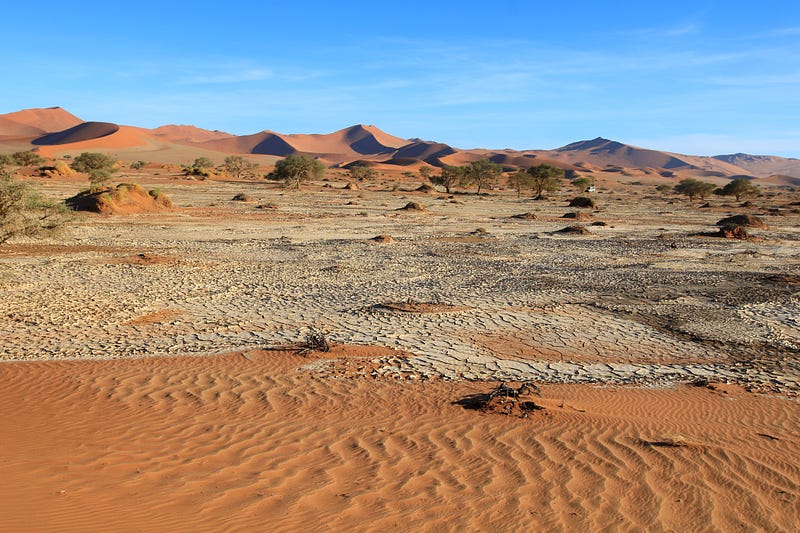
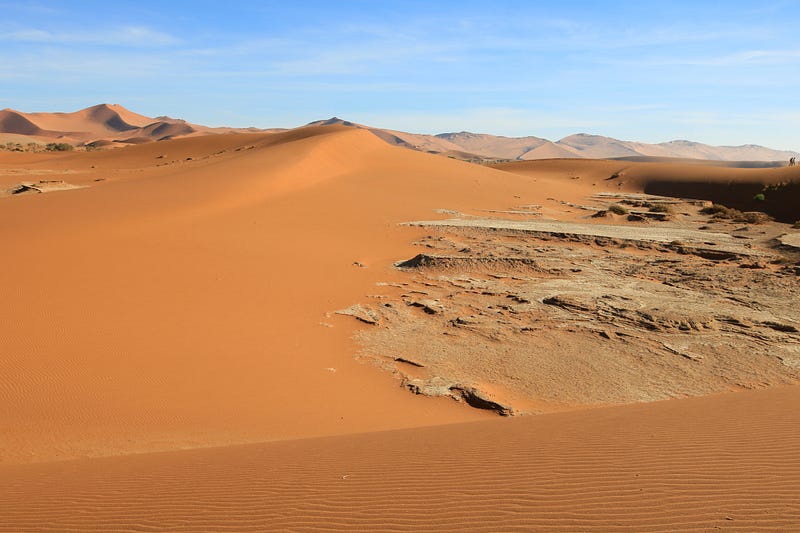
When you type in Namibia in Google Search, it will be the first picture in the imagines search result. A photograph of a dried-out lake surrounded by dunes. Deadvlei.
The landscape surrounding Deadvlei, Sossusvlei, and Dune 45 is probably the country’s most famous landscape feature. It’s dunes. It’s sand and nothing but sand: Blue sky and endless vastness.
That is what most people connect with Namibia, even though Namibia is more than just a desert. Namibia has lush green forests too. And thundering rivers rushing down a valley.
But that is not what the country is famous for; Namibia is renowned for its desert. The oldest desert in the world. And it is the second driest, too, just behind the Atacama desert.
The Namib Naukluft Park
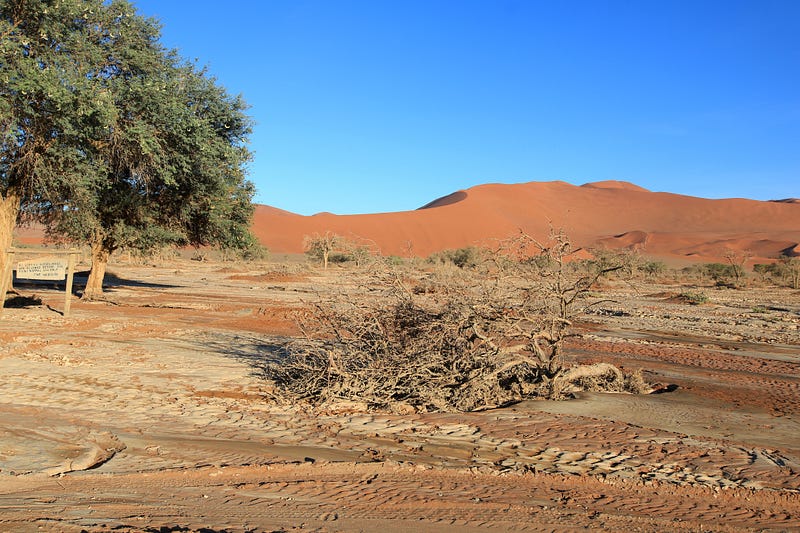
This park features a large part of the desert, mountain ranges, and endless coastline where dunes meet the ocean. The largest part of this park can’t be accessed. By car. Or at least not for the average traveler.
A few main roads lead through the park, bringing you across stunning landscapes, dry riverbeds, and dunes as far as the eye can see.
The world-famous sites of Deadvlei, Sossusvlei, and Dune 45 are located inside this park. Only accessible during the daytime, one is not allowed to drive there after dark.

Deadvlei
About 60 kilometers away from the closest sign of civilization, Deadvlei is a dry clay pan. The word comes from the Afrikaans language and stands for a dried-out marsh. It often gets translated mistakenly as the “dead valley.”
But the word “vlei” in Afrikaans does not stand for “valley”; it stands for “moor.” This might confuse you since I mentioned this is located deep inside the dunes’ dryness, in the middle of the Namib desert.
This pan once got fed by the Tsauchab river creating shallow pools. Trees would grow. But when the climate changed and drought hit the area, sand was blown around, and today’s dunes block the valley’s entrance. No water can enter Deadvlei anymore.
Except for the rain. Which rarely ever occurs. And not enough to fill a lake with water.
The trees died about 700 years ago. But because of the dryness of this area, they did not decompose. They burnt in the heat and became black from the sun. But they are still standing — most of them.
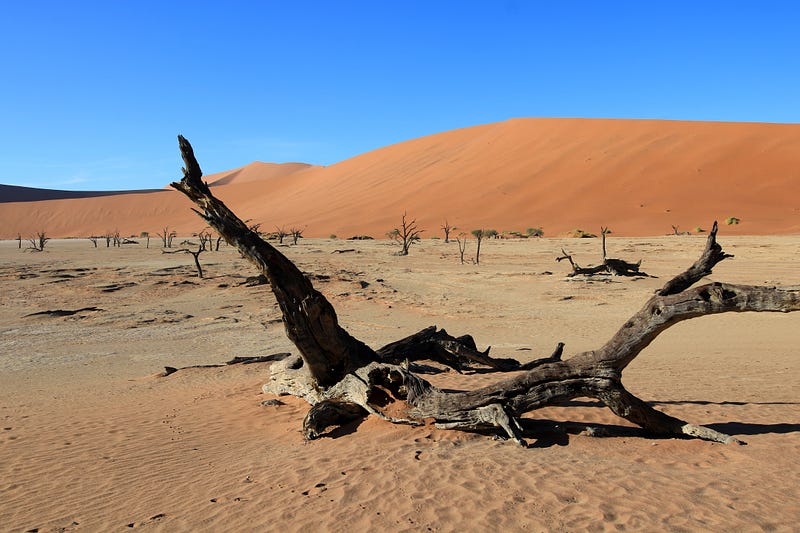
A lot of the clay formed in this area where the river couldn’t push further through to the sea is now a rock-like surface today. Similar to the trees, this got created by extreme heat and sun.
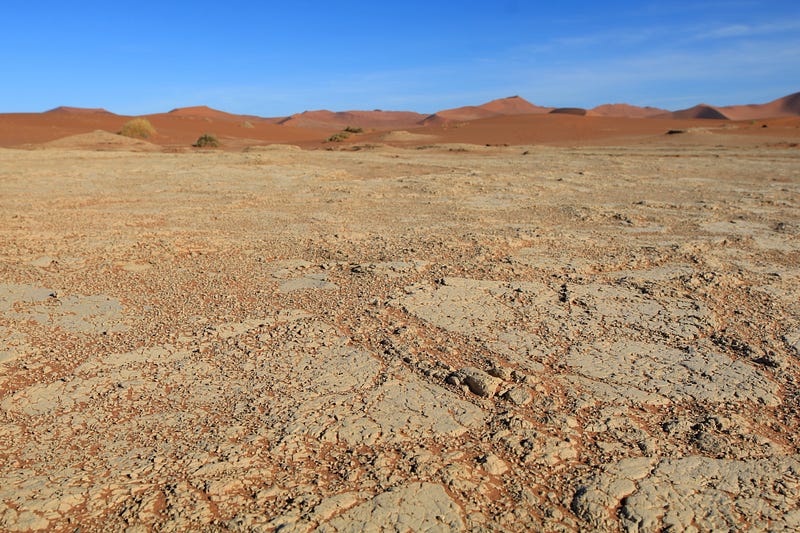
On few occasions, the river still runs down 150 kilometers from the mountains of the Namib Naukluft area and floods the pans between the dunes.
About once in a decade, the ephemeral river of the Tsauchab flows and makes it all the way to the dead end, which is this area. Dunes are blocking the way further towards the ocean.
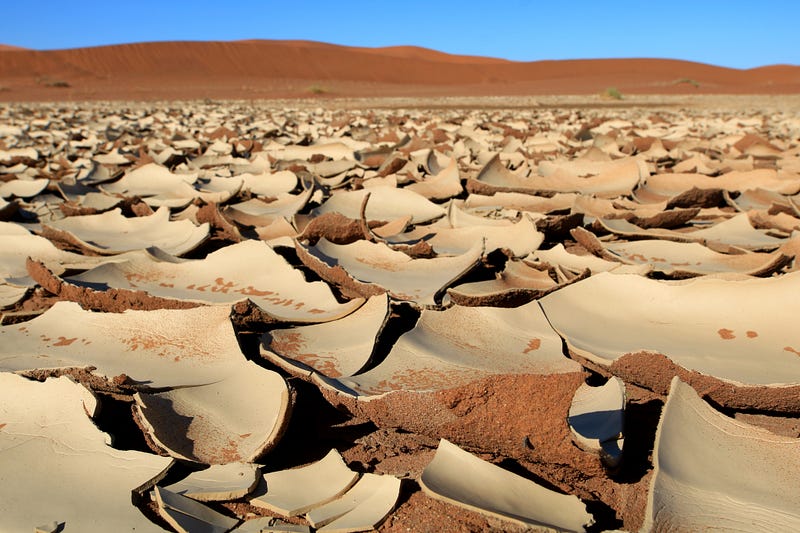
When the water dries out again, it leaves the earth cracked open. This is what it looks like when the sun is pulling moisture out of the muddy soil.
The dunes
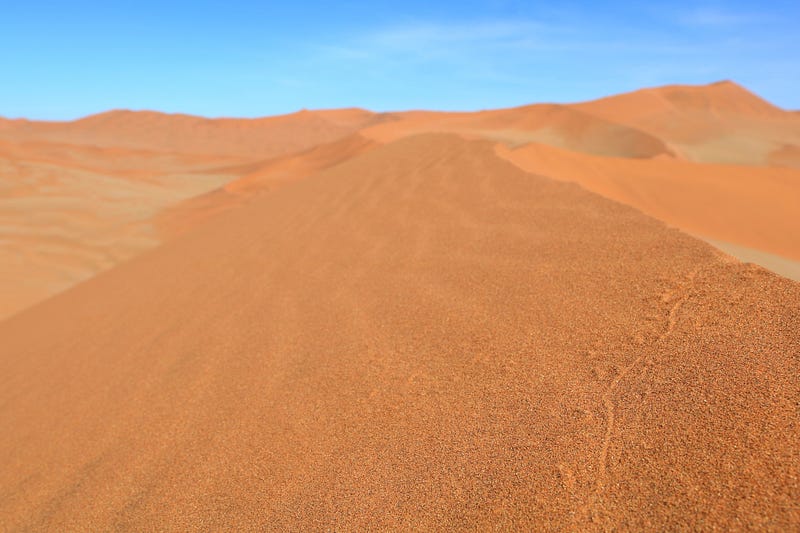
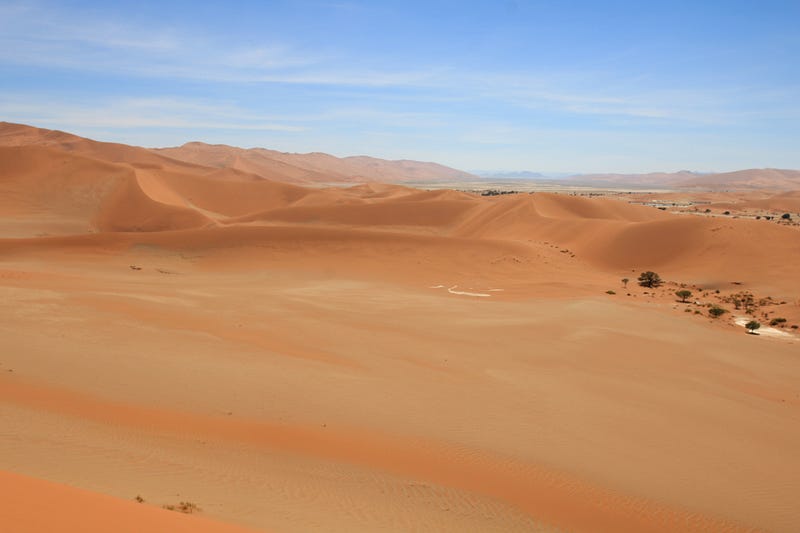
The dunes surrounding Deadvlei and Sossuvlei are said to be the highest ones in the world. Reaching heights between 300 and 400 meters, one can get quite a spectacular view across the dune belt once on top.
But such a climb should not be underestimated. Only early in the morning, these climbs can be achieved. The sand heats up incredibly in the sun and can reach 70 degrees Celsius in the afternoon.
Lots of water and two pairs of socks should always be taken with when attempting to reach the top of one of these dunes.
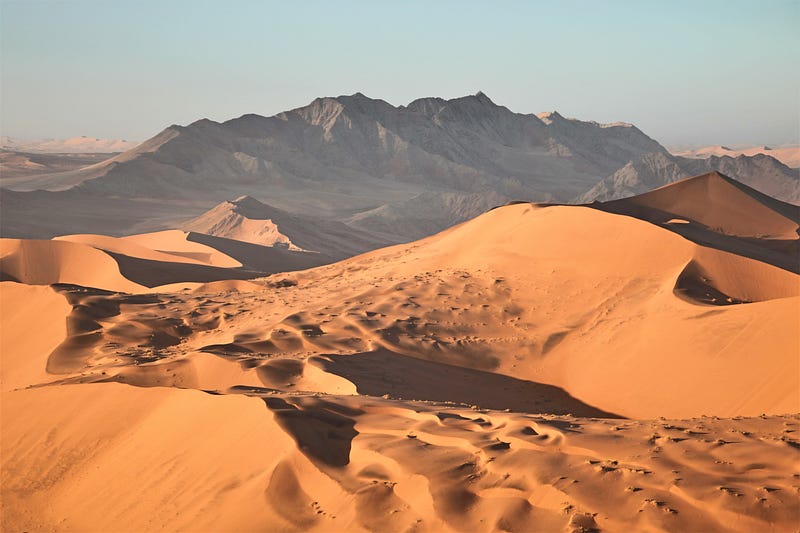
You can find lots of insects in the mornings on top of these dunes. Bugs, beetles, lizards, and even scorpions and snakes live in the sand. Countless tiny tracks across the dunes give away their presence.
Adapted to the heat and unforgiving sun, they manage to live and survive in these harsh conditions. Oryx antelopes are one of the biggest animals to be found in this area. Sometimes even on the dunes when crossing from one claypan to another.
Sossusvlei
Located in the same area as Deadvlei, it is also a dry clay pan. The meaning translates to “dead-end marsh.” Which refers to the end of the Tsauchab River. As mentioned previously, this river is blocked off by dunes.
Sossusvlei is the last part the river will flow into, and it is creating a lake when it floods once in a decade.
Lots of trees and bushes are surrounding the pan. High, red sand dunes are enclosing this dried-out lake from three sides. Except for the one side, the river flows in.
Being lucky to experience this once in a lifetime event, I happened to be at the right time at the right spot. The Tsauchab was flowing a few weeks ago when I was on a trip. The first two days, it was so strong nobody could enter the area since the river was crossing the road.
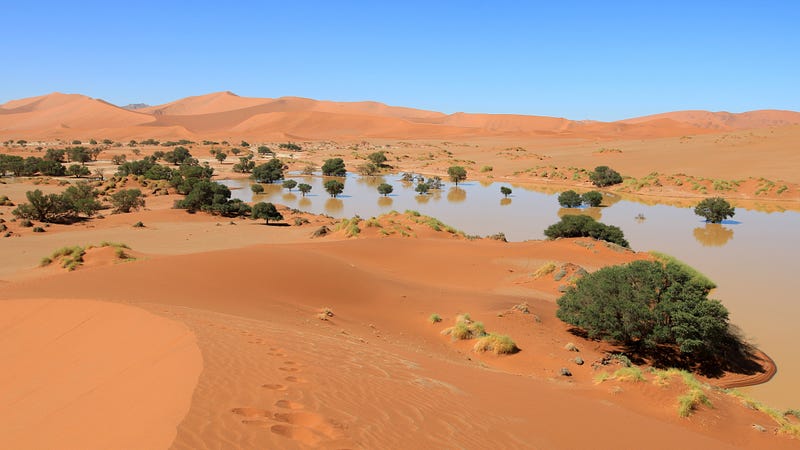
A few days later, when we visited the site, the river had stopped flowing but left behind this miracle — a lake in the desert. Lots of puddles were to be seen on the way to the pans.
Knowing about the event’s uniqueness, I couldn’t get my head around how lucky I was to experience this.
Describing the event of swimming in a lake in the desert will be the next article coming up.
I hope you enjoyed the photographs of the stunning dunes and clay pans of the Namib desert. It has been my third visit to the site and definitely not the last one!
More stories from my latest road trip through the desert…
Join my email list here.
Anne Bonfert is a traveler. Photographer. Writer. Teacher. Skydiving instructor. Adventure enthusiast. Nature lover. And fell in love with the African continent.

Sign up for our new newsletter to stay informed with up-to-date curations from our editors:👇