
Travel and Laos
The Most Beautiful City in Laos, a Place I Miss Every Day
A place beyond adventure, massage parlors, and tubing
Traveling is an opportunity to expand your horizon and to question what you accept as normal within the society you live in.
It takes you to places where people live in completely different environments, speak unfamiliar languages and think differently about various topics.
“The further you get away from yourself, the more challenging it is. Not to be in your comfort zone is great fun.”
— Benedict Cumberbatch
They belong to different religions, their daily chores vary from yours due to different social preferences and the way their residential neighborhoods are designed is quite different from what you may call familiar.
Where Familiar Meets Unfamiliar
There are quite a few spots in the world where the familiar western environment certainly does harmoniously blend with the ones of foreign cultures. Those places usually have a common history, where one nation was ruled by another or due to population migrations.
Hardly any place in the world has struck in me that sense as much as Luang Prabang. This town offers the visitor a rich 1,500-year history, with more than 700 years under the famous and notorious Khmer regime.
The charming and unparalleled mountain town of Luang Prabang has rightly been assigned a UNESCO cultural heritage site. It combines the European colonial heritage with the East Asian touch of the 15th-century royal dynasty.
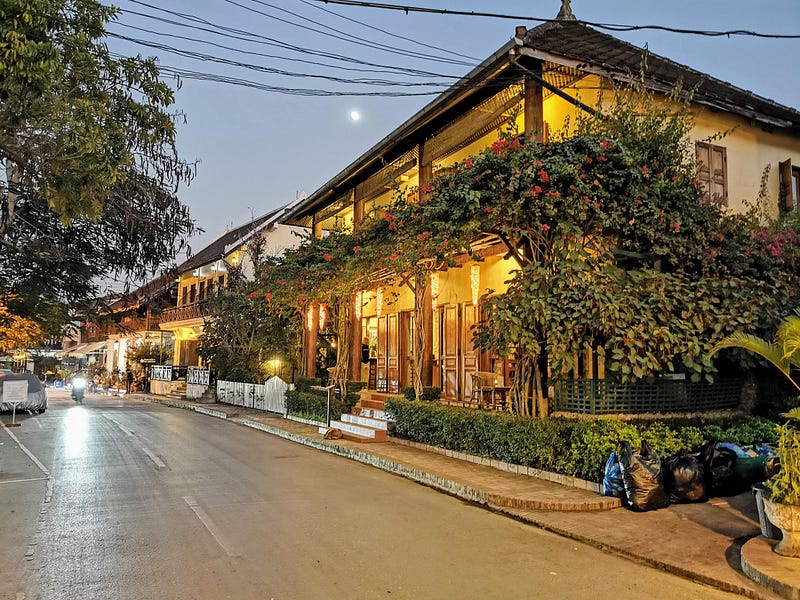
It’s a matchless mixture in a unique environment hardly found anywhere in South East Asia and certainly not Laos itself.
There aren’t many places Katharina that I visited twice on our trip around the world last year by conviction. We certainly ran into the same places due to logistical reasons, but other than Luang Prabang, we only visited Wellington in New Zealand twice due to the cities beauty.
Why is Luang Prabang fascinating?
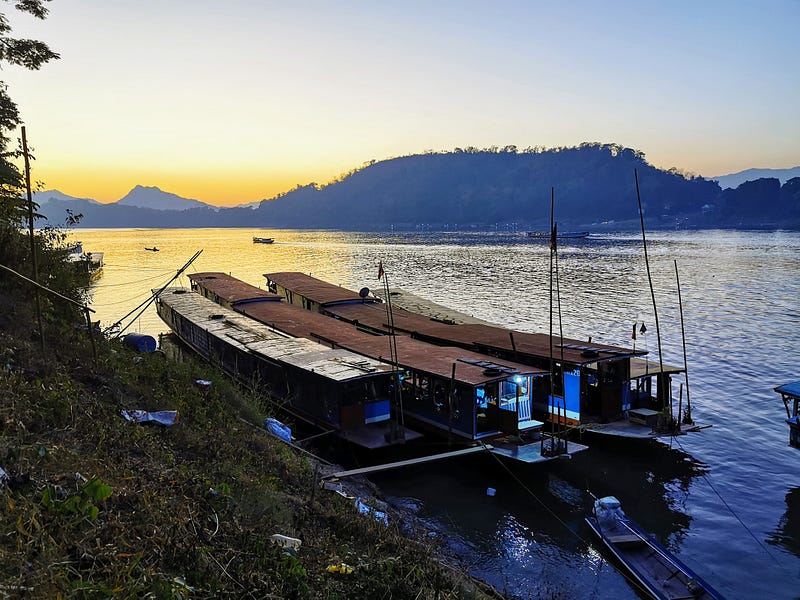
The northern city of Laos was built on a peninsula on the famous Mekong River and is almost completely embedded in a romantic mountain idyll.
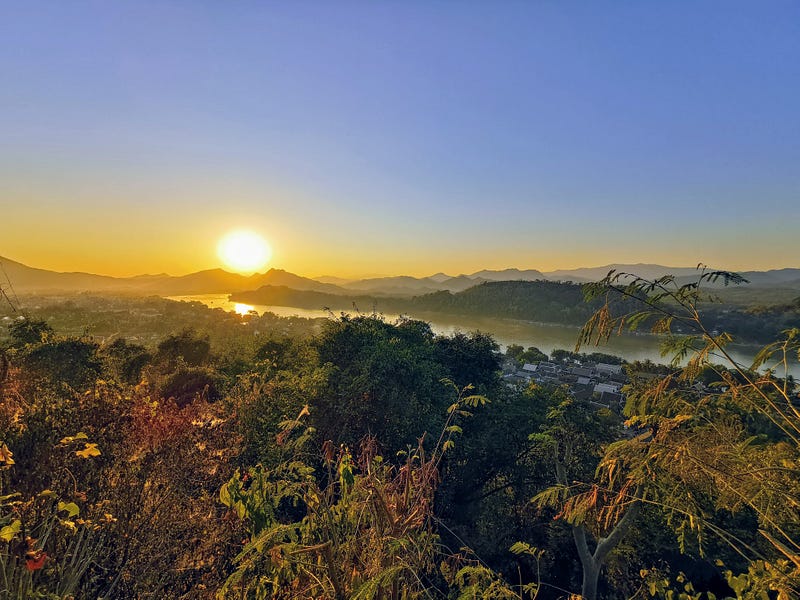
Around its foundation, there are many rumors and legends. One for example states, even Buddha himself came once in the city and predicted a prosperous fate for the settlement.
This is a legacy the monks and locals love to celebrate with dozens of decorations, celebrations, rituals, and music everywhere in the city.
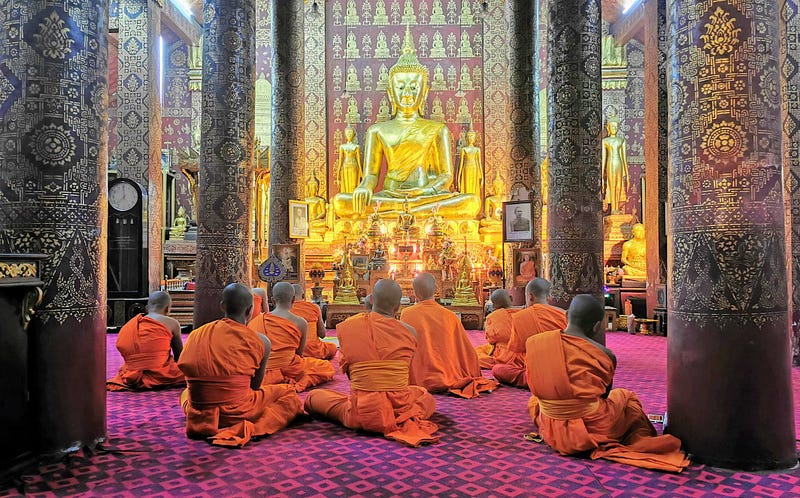
Buddha himself is certainly adored and loved throughout Laos, but in this town, we found him particularly frequent at every corner.
It is clear, however, between the 14th and 16th centuries the city became the capital of the famous kingdom of Lane Xang (Kingdom of the million elephants) with the lovely name Muang Sua.
Presently, when you roam through the city and chat with the locals, you can still hear the name of the Kingdom Lane Xang everywhere. The residents are particularly proud of their heritage and the legacy that still characterizes their town nowadays.
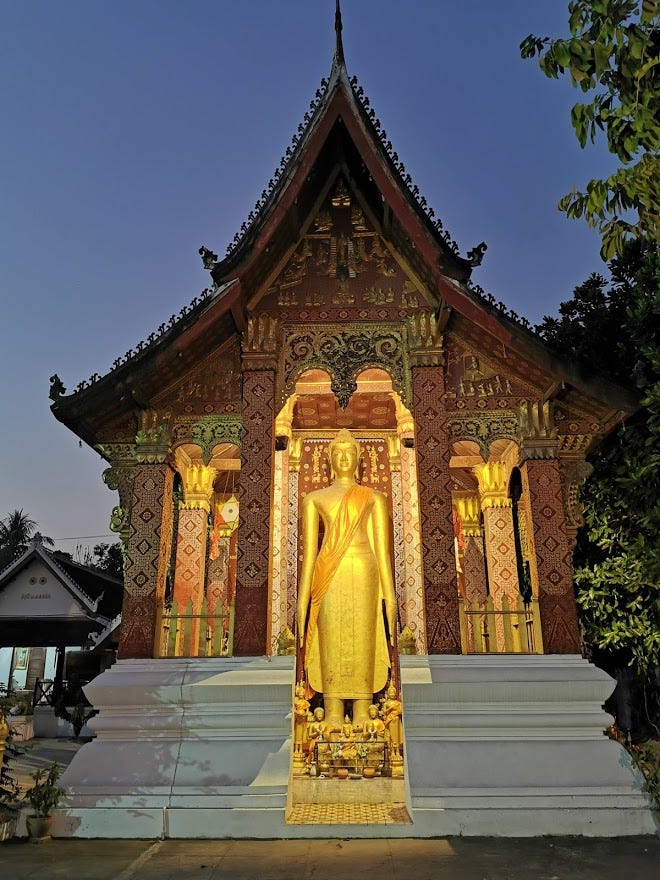
It’s impossible to talk to a Laotion for more than 10 minutes without discussing this particular legacy. Trust me, you will enjoy the conversation. Usually, those chats end up for a great Lao beer or an invitation to the nearest temple. In our case, we even met a German-speaking Laotian who studied for six years in Eastern Germany. He had many stories to share during a memorable evening.
But even without talking to the locals, you will find many places in the old city quarter where you can discover more about this remarkable period. Among them is the “Garavek Traditional Lao Storytelling and Music,” which hosts several times a week a small event in which locals share their gossips around this period.
Nevertheless, at the end of the 19th century, Luang Prabang became a French protectorate when the nation began to spread its imperial aims in Indochina to the Lao provinces.
Romance In The Mountains
Especially in the evening, when the beautiful ornaments and lanterns appear in warm light, the city spreads its charm around the French architecture and lets you dive straight into the past.
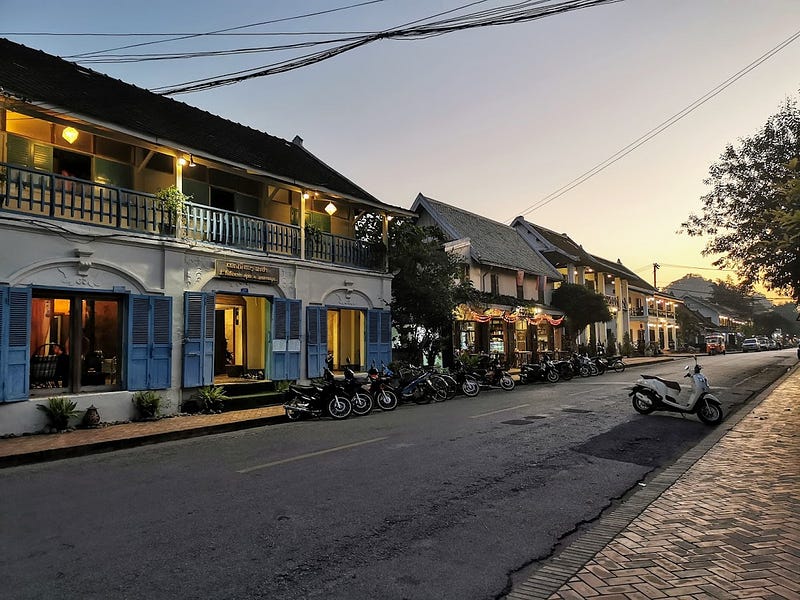
You feel like a time-traveler in the 19th century when you walk along wide tree-shaded boulevards stuffed with wonderfully conserved villas of brick and timber.
Those impressive properties line up just next to original Laotian houses, temples, monasteries, and numerous excellent restaurants for both locals and tourists.
We certainly enjoyed our time in this wonderful town, a town in transition and full of history.
The place developed from a small settlement to the capital city of various kingdoms at various periods in time, a French protectorate, a retreat for communists, and got eventually destroyed several times.
“Time is free, but it’s priceless. You can’t own it, but you can use it. You can’t keep it, but you can spend it. Once you’ve lost it you can never get it back.” - Harvey Mackay
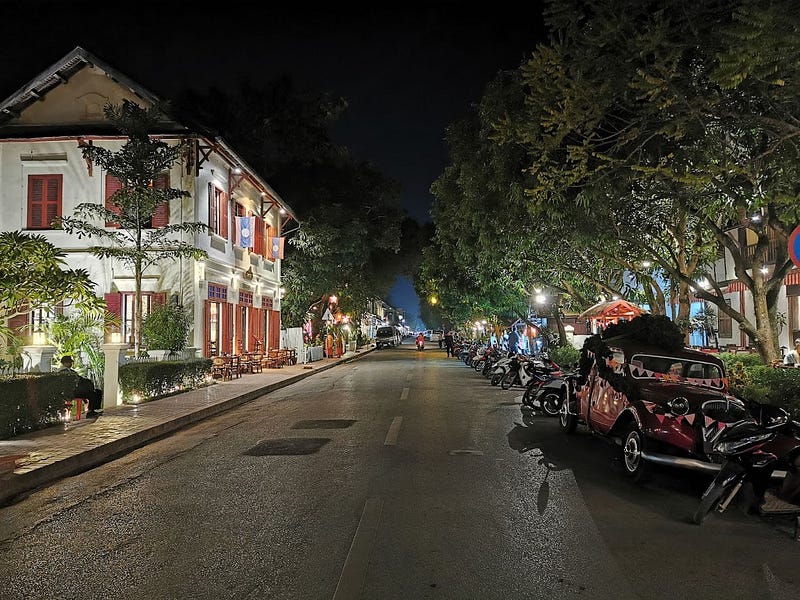
We spent 30 days in Laos, seven of them in this enchanting region. I wish we could be there right now, a third visit would absolutely within our imagination.
It’s a place to be, rather than to visit. We found peace, quietness, and friends in this fairytale romance atmosphere.
All photos in this story were taken by the author himself 📸🙋♂️

Sign up for our new newsletter to stay informed with up-to-date curations from our editors:👇