
Is Your Morning Cup of Coffee Hurting You?
Plenty of us hear about the harms and benefits of coffee every single day. What does the latest evidence tell us?

Caffeine is one of the most commonly consumed psychoactive stimulant in the world. Often we forget that many of us start our day with a cup of coffee, filled with this brain-arousing, mood-altering substance. Unsurprisingly, many can’t get through the morning without their piping-hot caffeinated elixir. Many t-shirts even espouse this fact:
Do not talk to me before I have my morning coffee.
They may be addicted to the caffeine or require an extra kick in the early-morning. Others, myself included, drink coffee for its complex aroma and flavour. There are more variations of coffee-based beverages than I can count. It’s evident that coffee is ubiquitous across many human cultures. Coffee, like the internet, is a necessity in most of our lives. Doctors, scientists and coffee-drinkers thus have vested interests in understanding how drinking coffee impacts our health.
There are three types of models to study the effects of coffee and caffeine. In vitro studies treat cells in a dish with caffeine, providing us with an in-depth look at its cellular mechanism. While these studies tell us about how caffeine works, the cells are too simple of a system for many coffee-related questions. In vivo studies administer coffee or caffeine to animal models. However, these systems are limited in their complexity. Human studies are the gold standard for understanding the big picture, whether or not coffee puts us at risk for additional health problems.
Since we all like our coffee differently, it further complicates experiments. We must consider the milk and sugar consumption associated with different types of coffee beverages.
Does current research support my coffee habit?
Human studies are expensive, while participants themselves aren’t always reliable. These studies must first recruit many participants and hope they complete questionnaires accurately. When conducting very large-scale studies, many clinical parameters must also be collected and analyzed.
The complexities inherent to coffee consumption confound research, making it very difficult to reach a conclusion or consensus. Nonetheless, brave scientists scour through the existing literature with intensive statistical frameworks to compare studies.
Does current research support my coffee habit?
Caffeine, Your Favorite Imposter
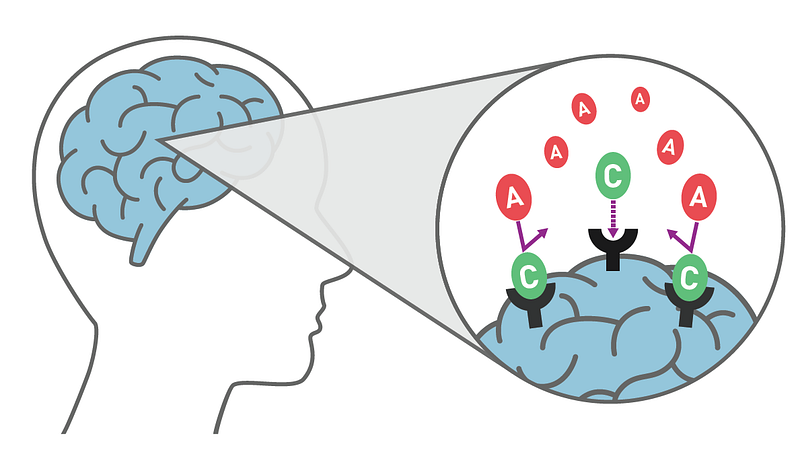
The caffeine molecule works in our body by impersonating an endogenous signalling molecule, adenosine. Adenosine is involved in cellular signalling and energy storage. The cells of the nervous system, called neurons, express many proteins called receptors, which specifically recognize this molecule. These receptors are located in a region of the brain called the basal ganglia. While this region of the brain is important for refining and fine-tuning our motor movement, it also plays crucial roles in regulating our sleep/wake cycle.
Think of receptors in our body like locks. Each specific receptor, like an individual lock, has a specific shape. When a molecule, like adenosine, binds with the receptor, it fits like a key. Consequently, the receptor changes shape, causing a cascade of signals in the cell. Adenosine signalling slows the activity of these neurons. These neurons normally fire to make sure we stay aroused and awake. Adenosine build up throughout the day tires us out, makes us less alert and more sleepy.
Basically, Adenosine tells the cell: “Hey, you’re getting tired. You should probably slow down.” When the network of these neuronal cells fires less and less, it tells our brain: “Maybe it’s time for a nap.”
Caffeine outcompetes adenosine for this receptor, blocking it from binding, like breaking off a part of a key inside of a lock. Even a spare key will not open the door, due to the jammed locking mechanism. Adenosine molecules are unable to bind.
Adenosine cannot slow down the nerve cells, helping us stay alert and awake. In the periphery, adenosine receptors also play a role in regulating blood flow and pressure. Caffeine also blocks this activity, increasing blood pressure. There is also evidence that it modulates the immune cells of the brain, conferring mild health benefits!
The caffeine molecule works in our body by impersonating an endogenous signalling molecule, adenosine.
Fight or flight?
The part of the brain that works to monitor our body and its functions and prepare it for the fight or flight responses, the pituitary gland, notices that the brain is more active than usual after a cup of coffee. Normally, this system responds to threats in the environment but unfortunately it can sometimes misinterpret the signals.
When we drink coffee, the brain can get confused because we experience some of the same increases in alertness and vigilance that we would in a dangerous situation. The pituitary gland in the brain may not recognize that this is a result of caffeine and may instead believe that the body is responding to a threat! The pituitary gland releases a chemical that travels down towards the adrenal gland that sits atop our kidney so that it can release adrenaline and noradrenaline.
These chemicals increase our blood pressure, our heart rate, keep our pupils dilates and stops our digestive function. This same system can be overactive in individuals with an anxiety-related disorder, where there is an intense tension towards an unknown or stressful situation. It is no surprise then, that caffeine can be powerful enough to induce anxiety in certain groups of people!
Withdrawal
Some of us experience a horrible feeling if they go without their caffeine! This is a common phenomenon that also occurs to individuals that stop taking other stimulants. If the body becomes used to caffeine, it will expect a bit of caffeine every morning and your physiology makes subtle adjustments to optimize itself. As a result, the nerve cells and other cells of your body increase the number of adenosine receptors!
This helps the body make the most of your caffeine, but in its absence, it can make you a lot more sensitive to the effects of adenosine. Caffeine withdrawal can give you headaches, make you irritable, dizzy and tired.

How Coffee Impacts Our Overall Health
A recent peer-reviewed paper published in the New England Journal of Medicine analyzed 95 human studies to understand the effects of coffee on our health. Surprisingly, many human studies uncovered beneficial effects stemming from coffee consumption.
Additionally, consuming less than 6 filtered cups of coffee per day did not negatively impact cardiovascular health. They found that consuming 3–5 filtered cups of coffee associated with a small reduction in heart disease and stroke. Coffee drinking was also associated in a reduction of cancer-risk, kidney-stones and even all-cause mortality.
However, this does not support the notion of coffee-consumption for disease prevention:
Current evidence does not warrant recommending caffeine or coffee intake for disease prevention but suggests that for adults who are not pregnant or lactating and do not have specific health conditions, moderate consumption of coffee or tea can be part of a healthy lifestyle.
While we cannot claim causation from this association, we can feel safe in knowing that our morning cup of coffee isn’t slowly killing us! Please take a moment now to brew yourself a warm cup. Take a deep breath to absorb the complex aroma. As you sip on the coffee, enjoy the flavors. Think of the caffeine molecules dancing through your brain and the rest of your body.


