
The More Religious You Are, The More Likely You Are To Be Passive-Aggressive
Here’s why
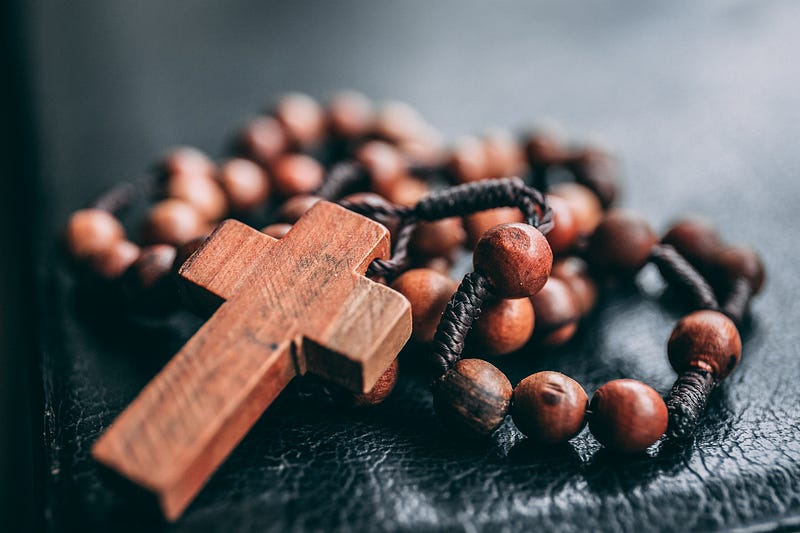
The most passive-aggressive people I’ve ever known are the ones who are the most religious. I used to live in the Bible belt and I encountered this time and again, without ever truly understanding why. It was as if it wasn’t considered polite to disagree with someone directly, so both men and women would smile and nod, and then go do something entirely different or complain behind the scenes. I never quite understood what was going on although it drove me crazy. Then I started to learn more about dominance hierarchies.
Patriarchy is the dominance hierarchy that is the foundation for our social system in the US. Because it’s a hierarchy it is pyramid-shaped, with the apex being inhabited by a small number of elites (primarily rich White males), and everyone below is continually jousting for a place on a higher rung. The dominance hierarchy infuses every aspect of our culture, from the governmental to the personal, and although there is an aspect in the patriarchy of men having some primacy over at least some women (usually at least those in their family), this social system is more fully about stratification society-wide. More powerful people control and dominate weaker people or those further down the pyramid.
Churches are some of the most hierarchical organizations still in existence; and the more fundamentalist, the more this is the case. Once I put 2 and 2 together, my time in the Bible belt began to make more sense. Ultra-hierarchical organizations don’t allow for much cooperative working out of things together.
You do what you are told by the people who have power over you, and if you aren’t entirely sure if the person you are dealing with has more or less power, be on the safe side, and don’t interact with them in a direct manner.
In “How the Catholic Church’s hierarchy makes it difficult to punish sexual abusers” Matthew Schmalz writes,
In all these cases, the hierarchical structure of the church made it difficult to bring high-ranking figures to justice. Superiors are given nearly absolute obedience, which makes the threshold for acting against them high. By the same token, superiors can often protect offending priests.
The other issue is that a presumption of integrity goes with a high position in the Catholic Church. It is often difficult to believe that a bishop could commit or cover up a terrible crime such as rape or sexual abuse. Also, if the Catholic Church is a divine institution necessary for salvation, then there are those who will protect its reputation at all costs.
The more hierarchy there is, the more difficult it is to maintain real integrity and prevent abuses of power. It’s not that religious people are inherently more dishonest or amoral; it’s just that they are more enmeshed in a hierarchy, and so there are more opportunities to exploit that. In my experience, they are also more likely to not deal with other people head-on, as equals, because they don’t have a lot of experience with being treated as an equal — you are either one up or one down from those around you. The 1926 novel by Sinclair Lewis, Elmer Gantry, is a story, in part, of religious hierarchy shielding someone from being held responsible for their misdeeds.
My experience with very religious people is that they have little muscle for dealing with others head-on. Because they are so used to everything being a part of a dominance dynamic (even more than the average US citizen), they are most comfortable kowtowing to or dominating others. If they don’t know where they stand in relation to someone else, they tend to obfuscate and hedge.
“When someone with less power speaks out against someone with more, they face many inherent obstacles — being believed, avoiding retaliation and isolation, and potentially losing their place in their community or vocation.” This is especially true in the patriarchal hierarchies of most churches, which is why the more closely you are aligned with religion, the more likely you are to be passive-aggressive.
© Copyright Elle Beau 2020 Elle Beau writes on Medium about sex, life, relationships, society, anthropology, spirituality, and love. If this story is appearing anywhere other than Medium.com, it appears without my consent and has been stolen.