
Legal Horror Stories
The Monster Walks Among Us
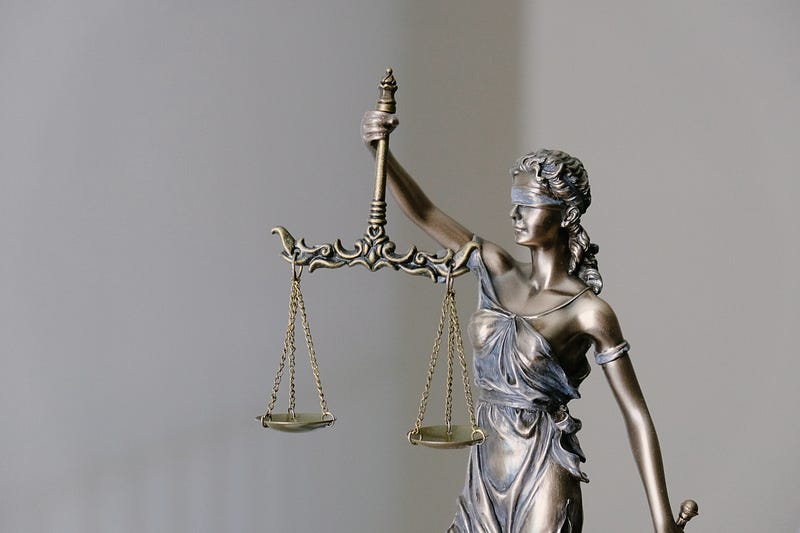
All his life, his father had promised him that there was nothing to worry about. No ghosts or goblins, no boogie man in the closet, no vampires or zombies. “The world is the province of Man, not monster, and it’s his duty to take his place in it.” Another of his father’s proverbs was “There is no problem so great that it cannot be solved by two men talking together reasonably. And if that doesn’t work, then money can probably fix it.” His father was funny and wise like that. “When you are polite and treat the right people with dignity, they will see you as their own.” All words to live by, words that he believed.
Except that one night. He had been grabbed from his dorm room by the police at 3am. He’d got back from a party half an hour before; he told them that he was still pretty drunk, but they didn’t care. They targeted him because of who he was: a scholar and an athlete. Taken roughly, treated like an animal, thrown into a jail cell in the station like he was dealing crack or something. He knew that he was being oppressed because of his identity as one of the most threatened minorities in the country.
The junkie in the adjoining cell taunted him all night, high on heroin or something. He threatened him. Said that he’d get assaulted in prison. Sexually. It didn’t matter how many times he told the junkie he was innocent; he was actually being threatening with rape. And other stuff. It was scary. This must be how it was for actual criminals, the ones committing violent crimes against normal people for fun. He never wanted to be near this kind of crazy babbling scum again.
That night felt like it would never end, right until he finally got bailed out. He was put into a police line-up. It was a set up — he looked like none of the other suspects. He said the damn line so often that he got pretty angry by the end of it: he knew he was innocent and it was a frame up. Turned out the supposed victim couldn’t remember either, according to her statement. A freshman but she was trying to get him in trouble: he brought glory to his school, and she was dragging it through the mud, because of her own mental problems.
He pleaded his innocence throughout the ordeal. He kept his calm almost the whole time and didn’t raise his voice. He ate the slop he was given, and he continued to be polite to all the officers: his father would have been proud. Some had bad attitudes — he could tell just by looking at them — but by morning time, a couple of good ones arrived, who could see his side and treated him a lot better, with more respect. He made a point of thanking them, and shaking their hands as he left on bail: he set the example of how the good people behaved, as his father taught him.
In the press, he was already being forced to answer for a crime that he knew didn’t happen. Fortunately, his reputation was enough to ensure that his coach, most of his teachers, and his important contacts all appreciated that he was innocent, that he was being used as a test case for those who feared his type to prove that any who were like him were bad. His father’s friends set up a fund to raise money for his defense. People all over the country contributed to it, businesses backed it — it moved him. He may be the exposed tip of the spearhead against this hatred, but he knew there was an army behind him.
Those weeks before the trial itself felt as long as that embarrassing night. Somehow it was national news. The usual bad actors from the media piled on him with their unwanted opinions, challenging him in the court of public opinion, mocking the idea that he might be innocent, holding the knife to his future. People saying they didn’t believe him was a gut punch. The advice he got was to stay quiet, say as little as possible, and not bring attention to himself. It felt like he was being restrained, choked.
All the same, he was glad of that advice by the start of the trial. And not all people were against him. Some brave heroes stepped out and protested for what was right against what amounted to a lynch mob out waiting outside the court every day. They came online and they found him. He had deleted Facebook because of the abuse, but those who supported him, who were like him, found him on other social media sites, and cheered him all the way. “You are taking a stand against the stripping of our rights.” “Win this one for us all.” “You’re fighting against racism and sexism and we back you all the way.” It cheered him to look to his supporters when he was being abused in the media.
After being tested by all those smears, he actually found the courtroom a very affirming experience. For every person they presented to give evidence to tarnish his name, to question his integrity and the integrity of his people, his attorney found three or more who could vouch for his good reputation, his excellent character as demonstrated over the years. Whatever about his accuser — who barely showed up, despite clearly using this as a platform to make a name for herself — the men in the court treated him as a man, with the dignity he deserved.
As the trial unfolded before him, he settled into the rhythm of it: examination and cross examination, evidence presented and refuted, points of order and objections. He enjoyed the structures and strictures of the courtroom: how ordered and organized it was, a logical efficient world. He looked on and felt that he could do this. He could thrive here. Had he realized, maybe he could have represented himself. Was this what his life was pointing towards? Standing for the oppressed minority he came from, bravely defending the innocent. As closing statements were offered, he wondered what law school was best, and whether it was a one or two year course. Then abruptly the trial ended and the judge sent the jury to deliberate.
How long they were gone he could not say. He talked to counsel, went to the bathroom, had a bite to eat, checked his apps, walked around a little bit. He wasn’t particularly nervous. His team had fought a great argument, and the opposition’s evidence was nothing when set alongside his great reputation. An innocent verdict was in the bag. He was told that a long wait was good, because there were a couple of people on the jury that his attorney did not trust. He had no idea what a long time would be, but when he saw that they were coming back after just a half hour, he feared that was not a good thing.
The jury walked out, and he saw tears in the eyes of two of the members. The great solemnity of the men in the procession hit him. Were those two women weeping for a life taken, contorted, changed forever? The foreman stood to read out the verdict and stared at him in a weird way. His heart stopped: a lifetime in a moment. This couldn’t be real. How could this happen to him? Did nobody believe him? He was on his own now, had no control over what was happening. It wasn’t like he had actually hurt anyone? Was what had he done so wrong? Was his life, his future, to be cancelled because of who he was? In the microseconds, silence prevailed. Why were they going so hard on him? He felt his good name being violated by the jury. All he had done was just have a little fun, it wasn’t like he was really harming anyone. Surely an apology would be punishment enough? And others had done as bad, or worse. He realized he was all alone now, nobody there to protect him —not his father, his granddaddy whose name he carried, the brothers in his dorm, his coach, the rest of the guys on his team, even the attorney beside him. Nobody could help him. He was alone. Had he made a mistake? Perhaps he… Maybe he –
“Not Guilty”.
He almost laughed out loud in relief when he heard it, but his attorney kindly grasped his hand, partly to celebrate, partly to remind him not to laugh. It was over. He was officially innocent. The men who helped him came to celebrate with him. By the time he finally got up, he had been offered a slew of internships and advanced placements. He stood for America’s most oppressed minority, practically unassisted and on his own. He had cracked the hateful people who wanted to drag America to its knees by punishing men like him, and now the rewards were becoming evident.
As he nodded back to the old judge, a former golf partner of his granddaddy, he glanced at the two women crying in the jury, and thought how much a shame it was, how maybe one of them might have been better looking if she dressed better, if she wasn’t so sulky. He saw the girl across from him. She looked wretched, worn, empty. Little more than a husk. Her mother and her younger sister shooting daggers at him. The other guys in his tennis team all agreed with him, it made sense that she probably made it all up. Why bother when he could do better. She was done. Her banshee scream won’t be heard again — witches like her aren’t going to keep the good men down anymore. This was his opportunity to become a voice, to be the one speaking his truth to power against these upstarts. This was his place in the world! Maybe he should sue her for defamation — there was plenty left in the fund for that. He watched her and her loser family walk out, jackets in one hand, tissues in the other. He had slain this weepy gorgon.
As he watched her go, his gaze lingered for a moment where the top of the sister’s legs met the hem of her skirt, and where her shirt didn’t quite reach the skirt, and he wondered.