
The Momentous Leap Transcends & Includes 3 Eras — Day 8 : The Rise & Rise of the Cultural Creatives
Preface- Our daily news streams are stuffed to the gills with bad news and the bizarre, designed to get the attention of the most primitive and also most powerful part of our brains: the amygdala. Fear, shock, astonishment, and (bad) surprises all trigger what cognitive scientists call the “amygdala hijack”. That is what headline writers are best at.
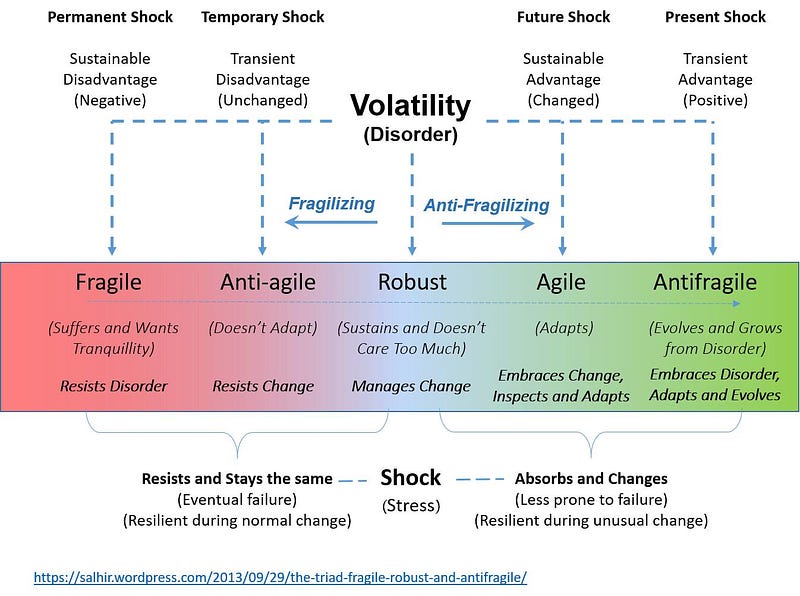
Boomers, Gen X, Y, and Z, are the most manipulated generations ever to have walked this planet, which is why it is so important to learn to become anti-fragile. Those who are fragile and anti-agile resist change, even when it is in their interest, as they have been conditioned to operate out of fear, pride, and a degree of wilful ignorance.
Shock the punters and hoi-polloi, cry the journalists. War, death (the more bizarre the better), political and celebrity scandals abound, along with a compensating diet of meaningless sports and celebrity news hog the limelight on the front pages.
And homo sapiens, for the most part, are hypnotized by this garbage, which not only has little relevance to our daily lives and well-being but in fact renders us powerless as our natural emotions of disgust, rage, and astonishment kick in.
We are simultaneously mesmerized and desensitized by the moving images and sounds on our ever-present array of devices so that we feel powerless to make a difference and become jaded, cynical over-consumers.
But it sells advertising, which sells the stuff we are conditioned to over-consume to the point where we’re destroying our biosphere one day at a time. Not a pretty picture. Welcome to the shadow side of modernism.

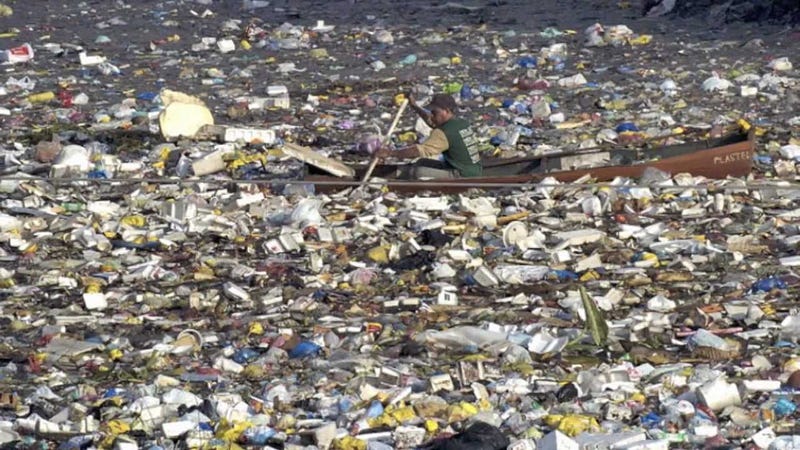
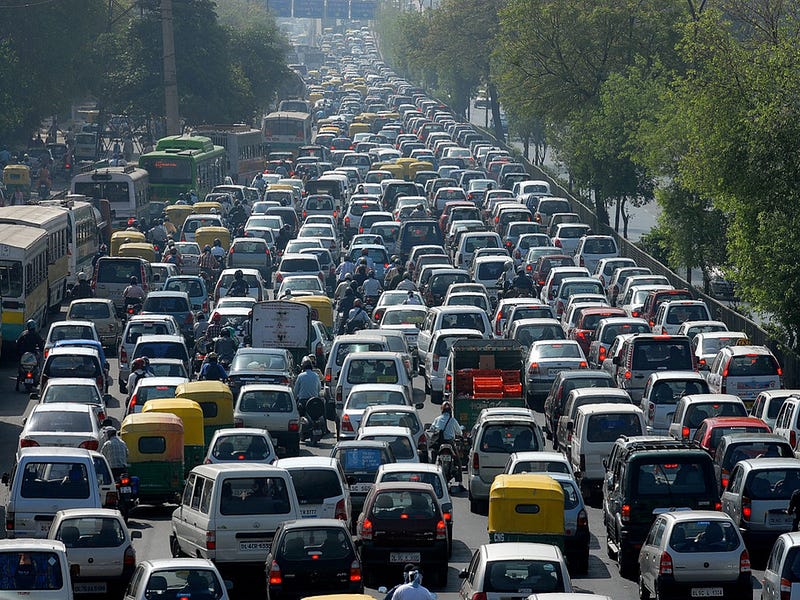
Yet….there is hope. This exit turbulence of Era 3, or “globalization minus” in an “only money matters economy” where hyper-financialization has enabled the top 1% and 10% to grow their wealth at a rate ten times that of the middle classes and essential workers, and flaunt it in our faces as they sip champagne on their gigantic yachts, is almost over. The cultural creatives are rising.
Are you looking for some hope and inspiration? Then read on. If you read Days 1 to 7 (and thousands of you did), thanks for your positive feedback, and enjoy this next short installment.
Day 8 forms part of a 48-part series on thriveable transformation in the 21st Century, excerpted from: “The Momentous Leap- Thriveable Transformation in the 21st Century: Healing Ourselves, Healing our Planet”. The book contains 9 Parts- Parts 1–7 have five “episodes” each, while Parts 8 and 9 have seven and six “episodes” respectively.
If you are in North America, you can get your book copy here.
The Cultural Creatives Have Gone Global
Since Paul Ray’s groundbreaking research into the cultural creative subculture that emerged in the USA between the 1960s and the 1990s, cultural creatives have gone global. By my own estimates, there are now roughly one billion cultural creatives in entering, peak, and exiting phases, or about 1 in 8 people on the planet, concentrated mainly in the wealthier urban areas.
My own research estimates that one-third of American adults are entering or in peak cultural creative mode in 2023 (roughly 100 million individuals), while in the rest of the world there are roughly another 900 million cultural creatives, made up of the 20 developed OECD economies (550 million individuals out of 4 billion) and the rapidly developing BRICS countries (350 million individuals out of 3.5 billion).
Here is what Ray had to say about his original research on American cultural creatives in the 1990s, published in 2000:
“Cultural Creatives have two wings: Core Cultural Creatives and Green Cultural Creatives. Core Cultural Creatives (10.6 percent, or 20 million) have both person-centered and green values: seriously concerned with psychology, spiritual life, self-actualization, self-expression; like the foreign and exotic (are xenophiles); enjoy mastering new ideas; are socially concerned; advocate “women’s issues”; and are strong advocates of ecological sustainability. They tend to be “leading edge” thinkers and creators. They tend to be upper-middle class, and their male-female ratio is 33:67, twice as many women as men.
Green Cultural Creatives (13 percent, or 24 million) have values centered on the environment and social concerns from a secular view, with average interest in spirituality, psychology, or person-centered values. They appear to take their cues from the Core CCs and tend to be middle class.
The Cultural Creatives subculture represents the appearance of new values and worldviews that were rare before World War II and were scarcely noticeable even a generation ago. That new subculture includes people who perceive all too clearly the systemic problems of today, all the way from the local level to the national and to the planetary. It also includes people who have higher standards for spirituality, personal development, authenticity, relationships, and toleration for the views of other people than the members of either Traditional or Modern cultures.
Faced with those other two cultural forms, the Cultural Creatives’ response is also a withdrawal of belief in the old forms. But unlike the alienated Moderns, the Cultural Creatives are well on their way to creating something new.”
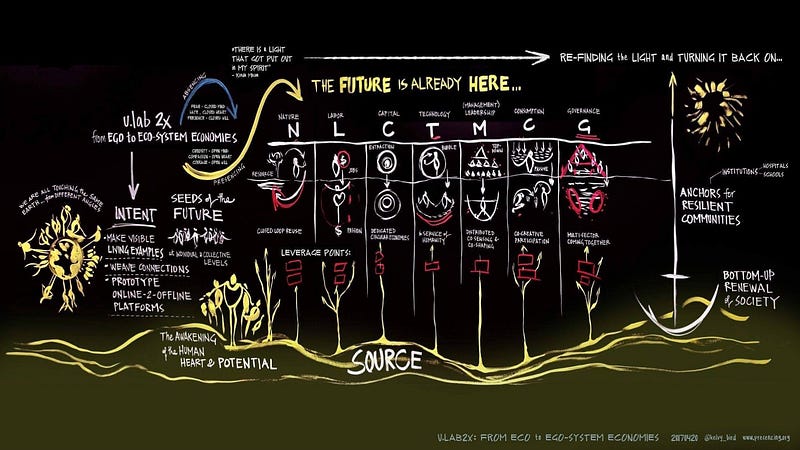
The cultural creatives are the key to the momentous leap, as they mature and gain wealth and power around the world.
One Billion Cultural Creatives and Rising
The momentous leap taking place right now across our globe is being driven by the rising tide of cultural creative values and liberal/socialist tendencies in the younger generations, comprising somewhere in the order of a billion people. Those in the mainstream with progressive modernist values are also shifting toward complex, integrative, realistic ways of thinking and doing, while there is a predictable backlash of traditional values segments of populations everywhere who feel left behind and ignored by both the cultural creatives and the progressive modernists.
The key feature of the momentous leap we are now in is the joined-up nature of complex, integrative, realistic ways of thinking and doing. This co-creative, networked way of generating distributed power amongst globally interconnected but autonomous projects and programs knits together the best of diverse eras and cultures to create beneficial outcomes.
What is often called an “integral approach” integrates the best of human capabilities that we have developed over the past 20 000 years of our evolution. We humans possess tremendous adaptive capacities, grounded in our having already transitioned through three major evolutionary eras:
Era 1 — Tribal/Traditional — We must build on our ability to forge strong bonds to ensure our local survival and thriving. These ethnocentric bonds and expressive talents are native to all of us, enabling us to take care of each other and the places we care for and hold sacred, while also exploring and connecting with nature and each other at a local level. This is what holds families, teams, and small groups together, as well as sports teams.
Era 2 — Modern/City-Nation States — We can build on our ability to manage cities, regions, and nation-states in more thriveable ways, respecting the rule of law and building intelligent infrastructures and systems fit for the future, based on enlightened entrepreneurship, conscious business sense, and innovation. These civic-centric and enterprise-centric talents are increasingly evident around the world, from developed nations to what were previously termed “developing countries”.
Era 3 — Post-Modern/Global — Finally, we can build on our ability to evolve our global systems embodied in our global treaties, international institutions, corporations, markets, and flows of people, goods, information, and goodwill, so that our global systems also become a driver of a thriveable future for us all. These world-centric talents are now evident in nearly one billion global citizens, who are sufficiently educated and traveled that they can appreciate the glorious diversity of our species and other species.
As we enter Era 4, we now have the capacity to rapidly accelerate the evolution of our species, based on thriveable cultures, mindsets, principles, and metrics. The forces and trends shaping our world and us are creating crises that demand a momentous leap from our previously lose-lose/win-lose “us versus them” mentality, to a co-creative, collaborative win/win/win approach.
This “triple win” is fundamental to aligning the interests and mindsets of all people on the planet, whatever kind of transition they are in and whatever their era: a win for each of us as individuals and for our communities, a win for the cities/towns/nations we live in, and a win for the planet as a whole. That is the whole point of the synergistic innovation driving integral approaches: co-creating triple wins that generate thriveable futures and ensure a viable biosphere and life conditions for us all by 2050. On the way to this co-creative triple-win Era 4, however, we must navigate the chaordic zone.
Stay tuned for Day 9 - “Transitioning the Chaordic Zone”. We’ll be talking about why a chaordic zone is a place where we can expend a great deal of energy and resources while remaining trapped in unproductive places and unpleasant situations. And that is why a deeper understanding of its dynamics is so key to our ability to survive and thrive.
You can grab a copy of the Momentous Leap book here in Kindle or paperback if you would prefer to read it all at once :-) If you are in North America, you can get your book copy here.
You’re also welcome to leave a tip below if you enjoy my writing, whether it’s the equivalent of a cappuccino at the coffee shop or whatever you’re drinking as you read this. It all adds up for us writers :-) Thanks!