
The Momentous Leap- Day 10: The Dynamics of the Chaordic Zone
Dee Hock, the founder of VISA, coined the term “chaordic”. Hock argues that traditional organizational forms can no longer work because organizations have become too complex, advocating a new organizational form that he calls “chaordic”, or simultaneously chaotic and orderly. He credits the worldwide success of VISA with its chaordic structure — it is owned by its member banks that both compete with each other for customers and must cooperate by honoring one another’s transactions across borders and currencies.
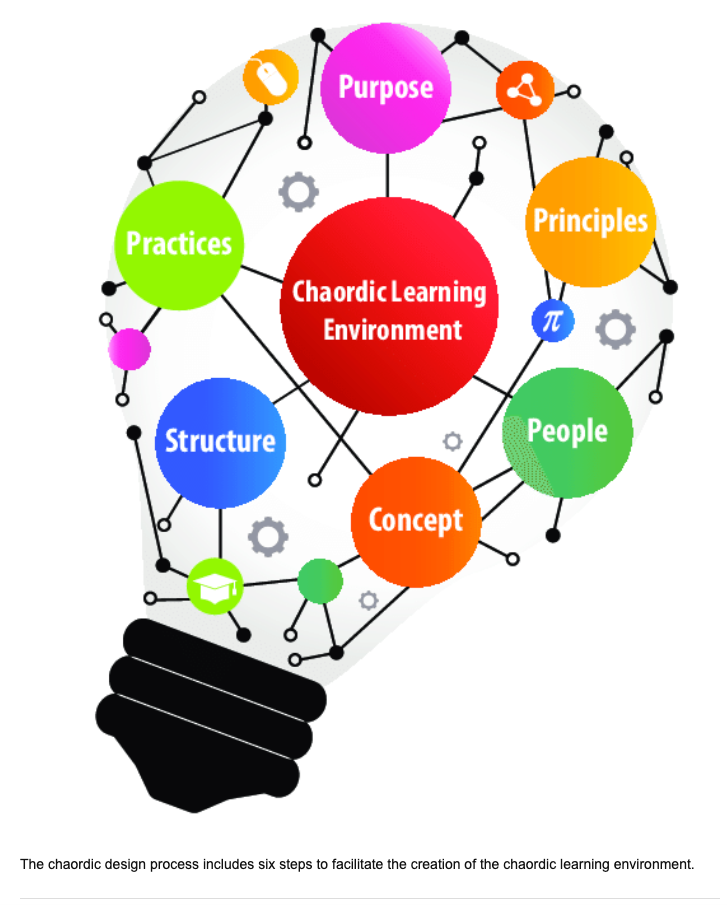
In the chaordic zone we can see the transition from order to chaos, and also the emergence of order out of chaos. This is the “edge of chaos” where new complex systems emerge, whether they are biological, cultural, or economic systems. This is also where disruptive and breakthrough innovations and transformations happen, as old institutions and organizations are no longer able to address the existential problems generated by the emerging levels of complexity in the dominant socio-economic design and its unintended side effects.
Each Era is driven by a dominant socio-economic design that defines the taken-for-granted assumptions about “the way things are” and “the way things are done around here”. For example, in traditional Era 1, it is assumed that one’s primary loyalty is to the extended family and local “tribe” in a community, and ways of making a living are closer to nature with farming, fishing, and forestry, or a dominant industry in the local community such as mining or raw material processing. Small to medium-sized towns and rural areas generally retain this dominant socio-economic design even if they are linked into a larger Era 2 or 3 system, through a mall, warehouses or a light industrial zone.
In modern city/nation-centric Era 2 the dominant socio-economic design is shaped by the organs of the city and the nation-state, with local and national small and medium-sized enterprises in the majority, while in Era 3 global corporations, digital platforms and regional/global governance and civil society shape the dominant design that makes this system viable.
The dominant design of Era 3 post-modern global capitalism peaked in the 1990s and is increasingly showing its age. The wealthiest 10% in the Era 3 system are now mainly focused on accumulating and conserving their capital, at the cost of decreasing the system’s resilience to disruptions. While the wealth of the top 10% may have enabled them to capture entire states and systems of governance even in “democratic systems”, it is evident that this is failing to prevent a period of creative destruction whereby previously accumulated capital is released for new purposes.
We are now in this “chaordic zone” in the final stages of Era 3, where a new order (Era 4) is slowly emerging out of the chaos of the collapse of the old. This is a time of innovation and reorganization, which loosens the rigidity of the dominant institutions such as giant financial institutions, corporations, and governance Empires and creates spaces for the new to emerge.
We are at a unique historical moment where globally interconnected collaborative and social media platforms are energizing the momentous leap, which is made possible by the new connections emerging from the interactions on such platforms. Such interactions are also driving accelerated learning and innovations so this will be the fastest leap in history.
Given the global and local challenges we face, including climate change, mass migrations, pandemics, and economic collapse, this is perhaps just as well. The question is: will Era 4 engage and scale fast enough to ensure we make it through into the 22nd century as a species?
Day 10 forms part of a 48-part series on thriveable transformation in the 21st Century, excerpted from: “The Momentous Leap- Thriveable Transformation in the 21st Century: Healing Ourselves, Healing our Planet”. The book contains 9 Parts- Parts 1–7 have five “episodes” each, while Parts 8 and 9 have seven and six “episodes” respectively. If you are in North America, you can get your book copy here.
You’re also welcome to leave a tip below if you enjoy my writing, whether it’s the equivalent of a cappuccino at the coffee shop or whatever you’re drinking as you read this. It all adds up for us writers :-) Thanks!