
The Mindset You Need to Be Able to Live Abroad
You can’t expect a great experience with the wrong mindset
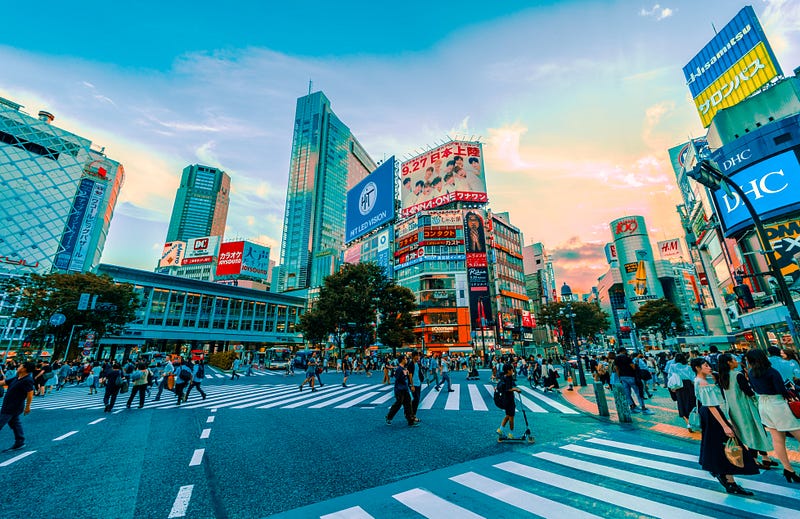
I’ve lived in Japan for the past 5 years and I can assure you, I am nowhere close to the person I was when I arrived. I arrived as a freshly graduated man. I had stars in my eyes because I was finally going to live in the country I had dreamt of.
This being said, I had already spent an exchange program here and already learned it wasn’t as perfect as I thought. This simple realization shaped my experience and allowed me to make the best of my time here.
If you’re considering living abroad or recently start doing so, you’ll need to develop a similar mindset not only to survive, but to thrive. No matter where you decide to live.
1. Life Will Be Different
For the better or worse, your life will change. Not by any standard you’ve ever experienced before. A new country means a new culture, a new rhythm, new rules, new friends, and probably a new job. Even if you are transferred to a subsidiary of your company, the work culture will be different.
If you expect to transfer the life you have right now to this new country, you’re in for a surprise.
I have never met a single person who moved abroad and didn’t change their lifestyle.
In France, everything closes down on Sundays. Apart from meeting friends or going to a park, there’s nothing to do. You can’t even do your groceries. What do most people do on Sundays then? They relax, catch up on tasks at home, do their laundry, and so on.
In Japan, Sunday is just another day. Everything is open. Trains run like any other day. Streets are as bustling as a Tuesday or a Saturday. What happens on Sunday? Events, parties, and overall opportunities outside. It is great, but only if you accept you’ll never get a day when the country considers you can rest and do nothing.
2. You Won’t Visit the Country
Now, I know you may be thinking that’s just because I’m not a big fan of travelling. But I am! I love travelling almost as much as I love learning languages.
What I mean by this is that you won’t travel as much as you plan on doing it. Maybe you’ll spend the first 6 months going around all the time but that’ll pass. You’ll become like everybody else and enjoy your daily life instead of going around.
Many Parisians haven’t gone up the Eiffel Tower once in their life. The first time I did was at 21. Why? Because I was showing around Paris to two Korean friends! Many Japanese people haven’t gone up the Tokyo Skytree Tower or been to the Golden Gai in Shinjuku.
The closer you are to a touristic place, the more you’ll push it away.
When I came back I was ready to visit all of Japan. When I was doing my exchange, I visited as much as someone on a 2-week trip. This time was going to be different. 5 years later, I have visited more places but nothing close to my goals. I haven’t gone to the jungle-like island of Yakushima, the desert of Tottori, the 4th largest island of Shikoku. Why? Because I could go “any other day”.
If you expect yourself to travel around the entire country, you’re bound to feel like a failure. You’ll tell yourself you came so far to lose all this opportunity. Instead, enjoy the places you do go to, and let go of this belief that you need to see it all.

3. You Will Experience Racism
Even if you go from Spain to France, you’ll live some sort of racism. Some of it might be because of your skin color, some might be because of the country you came from. Some might be unconscious racism, some might be very clear racism.
The dark side of going abroad is that it’s absolutely impossible to avoid racism.
Of course, as we all know, you don’t have to leave your country to experience racism, unfortunately. Black people, Asian people, Arab people are all too well aware of this. White people know of it but never truly understand it. I definitely won’t claim to.
As a white male who grew up in a cozy neighborhood in the suburbs of Paris, I never experienced racism myself. Some black friends would tell me stories of what they lived and I would be shocked. Yet, I could never understand their pain and worries. For me, life was easy.
It wasn’t until I came to Japan that I discovered racism. Sure it was a mild version of what we have in the West, but it was nevertheless painful.
From getting stopped in the street to be asked my “foreigner’s card” (and not even requesting my “ID card”), to being refused in certain bars because I was white, to being screamed at in the street “F$#@ing foreigner” by an old man, or have the seat next to mine be the only available one in a busy train. All those happened so many times I’ve lost track. And, again, I am a white man. My black friends here have had it much worse.
Sure, I’ve never been scared for my life, so I’ve got this going for me. But expecting no racism is blissful at best, dangerous at worst.
Depending on the country you go to, the racism you face might be more threatening.
I had a Vietnamese friend who lived for 7 years in France and got robbed countless times. She once spent a week buying new iPhones because, every 2 days, she’d be robbed on her way home. 4 iPhones in one week. At least she was lucky enough to have enough money to buy new ones.
Racism is everywhere. It shouldn’t but it is. Understand you’ll experience some and accept it. It’ll make the experience much more bearable. (Of course, there are limits to how much can or should be accepted.)
4. Learning the Language Isn’t an Option
If you’re moving to a country for work before learning the language, chances are that you won’t need it. Officially. In reality, learning the country’s language isn’t a choice, it’s a need if you’ll stay a few years.
Yes, you can live without speaking the language in many countries, but then why live there in the first place?
Speaking the language isn’t about being able to go around on your own. It’s about understanding the country and its people. When you learn a language, you assimilate a new culture.
You discover why people act the way they do. You can exchange with more people and get more varied opinions. You can open new doors and make life feel natural.
As long as you don’t speak the language, you’ll be stuck. You want to visit a place in the countryside but know you won’t understand anything so you refrain yourself. You’re invited to a gathering but cannot join because most people don’t speak English. You find an exciting new job opportunity but can’t take it because you’d need to speak the language.
Learning a country’s language will allow you to live your life to the fullest. Could you imagine living in your own country and not speak the language? No. Then, why would you expect to enjoy your life without restriction in a different country that way?
Learning languages is exciting because it opens doors. It’s thrilling because each experience shows you a new world. It’s enticing because each day makes you a better human being.
You’ll have understood it by now: nowhere is perfect. Living abroad means accepting this truth.
You may have left your country because you hated it, hoping this new one would be incredible. But soon enough, you’ll realize it’s also full of things you dislike. You’ll realize most of you had planned to accomplish after moving, didn’t get done.
Living abroad is a life-changing and humbling experience I wish to everybody around the world. It changes you and your future.
I am proud I moved to Japan and, even though I will leave this country in a few months, I could not be happier I spent a sixth of my existence here. Coming here ready to accept Japan’s downsides made each of the past 5 years worthwhile. I never came to hate Japan nor to miss France. I lived my life and evolved in a country that’ll have its place in my heart for the rest of my life.
What will you do of your experience abroad?
Still curious about languages and learning? Consider signing up for my newsletter!
Mathias Barra is a French polyglot, living in Japan, who speaks 6 languages and dabbled in numerous others.


