
The Mindset That Makes People Change The World
It’s the Opposite of What You Might Think
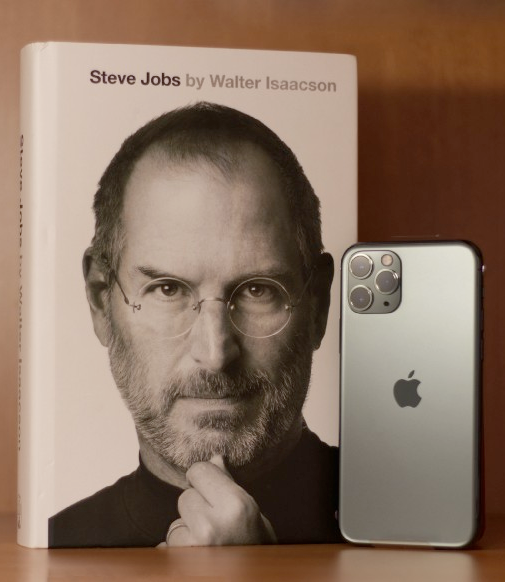
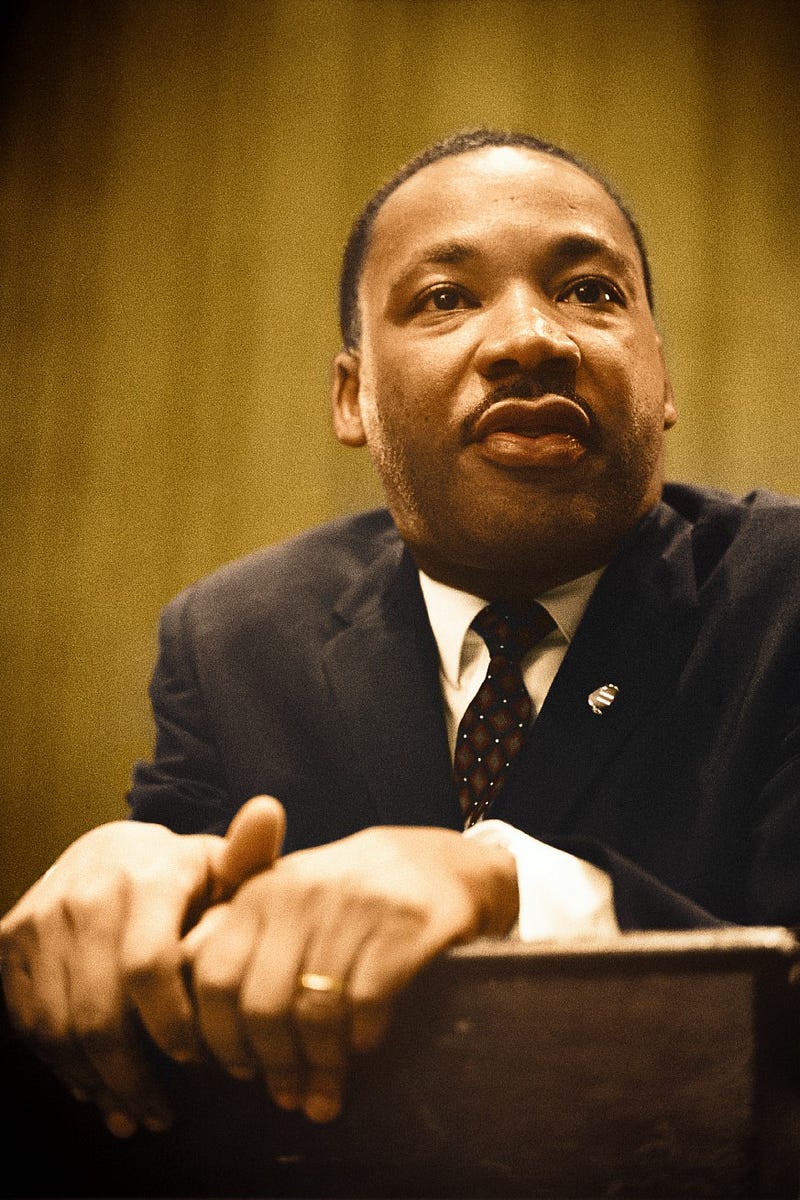
What Steve Jobs and Martin Luther King have in common
Steve Jobs and Martin Luther King, at first glance, might seem worlds apart. They had different ideals, goals, backgrounds and communities. But they both, in their own way, made huge changes to the world. What, if anything, do they and other world-changers have in common?
From a quick search on “the habits of highly successful people”, you might think that people like Jobs and King have an unusually high amount of grit or perseverance. Or perhaps they’re always able to focus on the positive and the future? Or think in terms of opportunities and abundance? These habits can certainly help people achieve their goals, but, as we’ll see, they can also be counterproductive in the long-run. If you want to change the world, you need something else entirely.
What Steve Jobs and Martin Luther King had in common was a mindset focused on processes and connection. This is the opposite kind of mindset encouraged by most business advisers and self-help gurus today. Most people are told that success comes from having a mindset focused on outcomes and control. Only pay attention to what you can control, not what’s out of your hands. Then set goals — specific and achievable ones where you can measure the outcome. This advice might work well for gaining short-term successes. But it’s the completely wrong kind of thinking for achieving major social change. If Steve Jobs and Martin Luther King only focused on what was under their control, Jobs wouldn’t have dreamed of putting a “ding in the universe” and King wouldn’t have put his faith in the universe’s “moral arc”. Dreaming big requires a completely different way of seeing the world. Outcomes and control become in service to processes and connection.
Processes over Outcomes
If you come from the world of software development, the idea of prioritizing processes over outcomes might seem obvious. A hallmark of the “Agile strategy” for software development is the motto: “Fail Fast, Fail Often.” The idea is not to wait too long developing a perfect product before inevitably finding out what’s wrong with it. Instead, start with a “minimum viable product”, test it, and go from there. Each iteration of the product will likely produce new improvements and new ways to fail. But, eventually, with enough iterations, you will hopefully stumble across something that really works. It’s only going through this process that can you possibly find out what works and what doesn’t — things are just too complicated and too uncertain to know in advance.
This way of thinking is not confined to writing code. Any successful entrepreneur will tell you that business plans are all very well, but things hardly ever go to plan. As Tim Harford summarises in his book, Adapt: Why Success Always Starts with Failure, “we must improvise rather than plan, work from the bottom up rather than the top-down, and take baby steps rather than great leaps forward.” Harford reports on the importance of adaptive, trial-and-error processes in tackling issues such as climate change, poverty, the financial crises, and conflict.
Both Steve Jobs and Martin Luther King prioritized processes over outcomes in everything they did. Steve Jobs emphasized that “the only way to do great work is to love what you do.” He also encouraged people to, “have the courage to follow your heart and intuition.” These are not the ideas of someone focused only on improving their bottom line.
Likewise, Martin Luther King famously spoke about the importance of faith when it comes to social justice. He believed that, although the arc of the moral universe is long, “it bends towards justice.” In the same speech, he says that “the road ahead will not always be smooth… Our dreams will sometimes be shattered and our ethereal hopes blasted… But difficult and painful as it is, we must walk on in the days ahead with an audacious faith in the future.”
These quotes are not intended to show that world-changers have a “never give up” attitude. My point is to show that Jobs and King were well aware of the stumbling blocks ahead of them, and knew the only way in which they could be overcome — by continuing to act on what they believed to be right, to keep on doing what they loved. There is almost no focus on controlling the outcomes here. The outcomes are seemingly too impossible and too unknowable to be controlled. Both of their dreams could only be achieved through a long, uncertain, messy and determined process. With a good deal of hope, faith and trust. And a whole lot of love.
Connection over Control
To some, this might seem inspirational. To others, it might seem hopelessly naive. I’m not saying Steve Jobs and Martin Luther King didn’t think about outcomes — they clearly did. But, if outcomes were what they cared about the most, they would not only have been considered crazy, they would also have been doomed to failure. Their dreams were too big and audacious to rationally work out how to reach them. They had to care more about processes than outcomes if they had any hope of achieving their eventual goal.
But, even still, we might not want to waste our lives chasing after a dream that may never be accomplished, or at least not accomplished in our lifetime. There were, after all, many people like Steve Jobs who never became Steve Jobs. And Martin Luther King was tragically shot dead before he could see his dreams become reality. The idea of changing the world might sound nice, but does it make sense for the not-so-saintly-or-single-minded amongst us?
This is where the connection part comes in. Neither Martin Luther King would’ve seen themselves as a self-sacrificial saint because they were doing what they loved. From the outside, it looks as if they sacrificed many of the things that make people happy — a comfortable family life, a healthy lifestyle, safety, relaxation, etc. But, from the inside, they couldn’t think of anything else they’d be doing instead. They were called into action by what they loved. For King, it was the idea of the beloved brotherhood. For Jobs, it was a technological vision of the future. Their happiness wasn’t dictated by how many life goals they’d achieved. It was founded on a sense of connection — an ongoing process of bringing into life the things they most cared about.
We don’t need to find our “calling” or “purpose” before acting out of connection. We all have things we love and care about, even if they’re not as lofty or profound as those of Jobs or King. The audaciousness of changing the world might require a mindset focused on connection and processes. But that doesn’t mean we can’t apply the same mindset to our own lives and somewhat less ambitious dreams.
It’s a truism that what matters at the end of life is not all the things we’ve achieved, but the connections we’ve forged. What ultimately matters is how we live our lives, not what our lives end up looking like. And yet, these lessons get lost within the constant chatter of how to be more successful and productive. We could all do with admiring not just the audacity but also the mindset of world changers such as Steve Jobs and Martin Luther King. They saw reality differently from the rest of us. Just imagine what life would be like if we were all to do the same.


