Summary
The webpage presents a photo essay by Mark Tulin that uses water reflections to explore the fluidity and complexity of the human mind.
Abstract
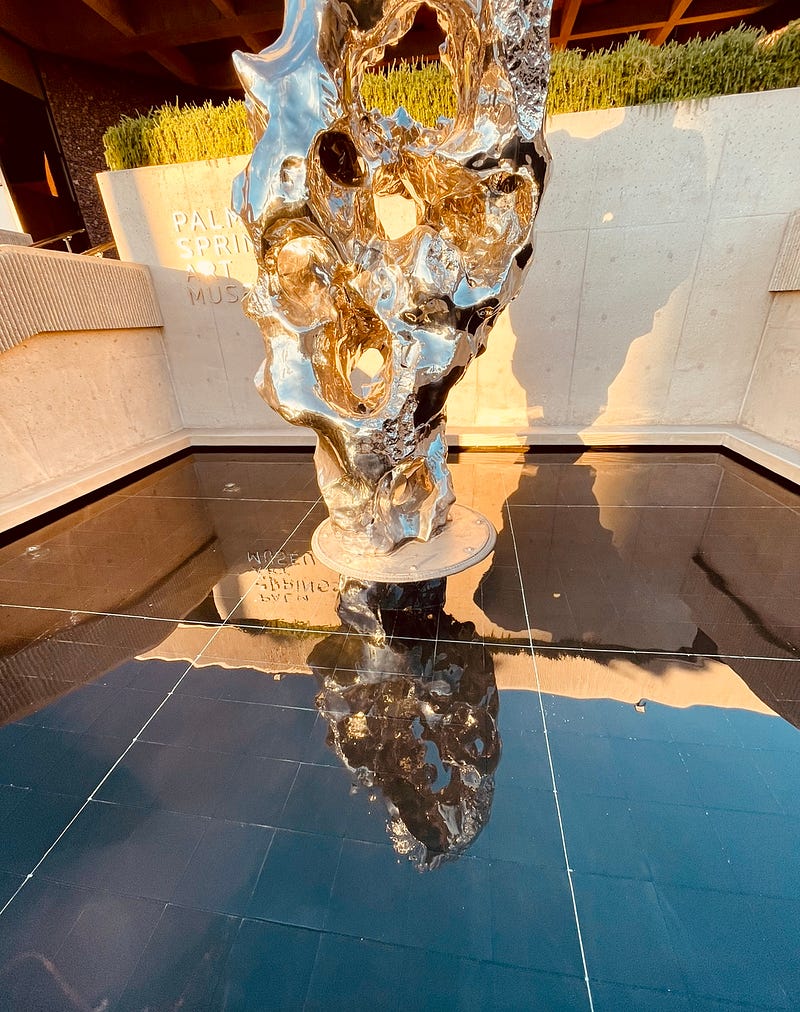
The essay titled "The Mind, Like Water" by Mark Tulin employs a series of photographs featuring water reflections to draw parallels between the properties of water and the human mind. It portrays the mind as dynamic, peaceful, and sometimes tumultuous, much like the varying states of water. Through captivating images of natural scenes, street art, and sculptures, Tulin illustrates the mind's capacity to reflect, organize, and seek equilibrium, emphasizing its dual nature and ability to mirror reality. The essay is a visual and conceptual meditation on the mind's intrinsic connection to the natural world, inviting readers to contemplate the deeper significance of water as a metaphor for human consciousness.
Opinions
- The author, Mark Tulin, views the mind as having a fluid nature, capable of both tranquility and dynamism.
- Tulin suggests that the mind, like water, can be an "ocean of thoughts" that is both wavy and gripping, indicating its depth and the power of its currents.
- The essay conveys the idea that the mind mirrors and organizes experiences, much like the stillness of water reflects its surroundings with clarity and precision.
- Tulin uses the concept of Yin and Yang to express the mind's ability to balance opposing forces and perspectives.
- The author implies that the mind clings to and craves certain experiences while also being capable of letting go and receiving new ones.
- The photo essay reflects the author's appreciation for the beauty and equilibrium that can be found in the mind's reflections, akin to the serene reflections of palm trees in brackish water.
- Tulin acknowledges Dennett for the beautiful prompt that inspired the essay, showing respect for the influence of others in his creative process.