constellation Orion
The Mighty Hunter Is An Awesome Sight In the Sky
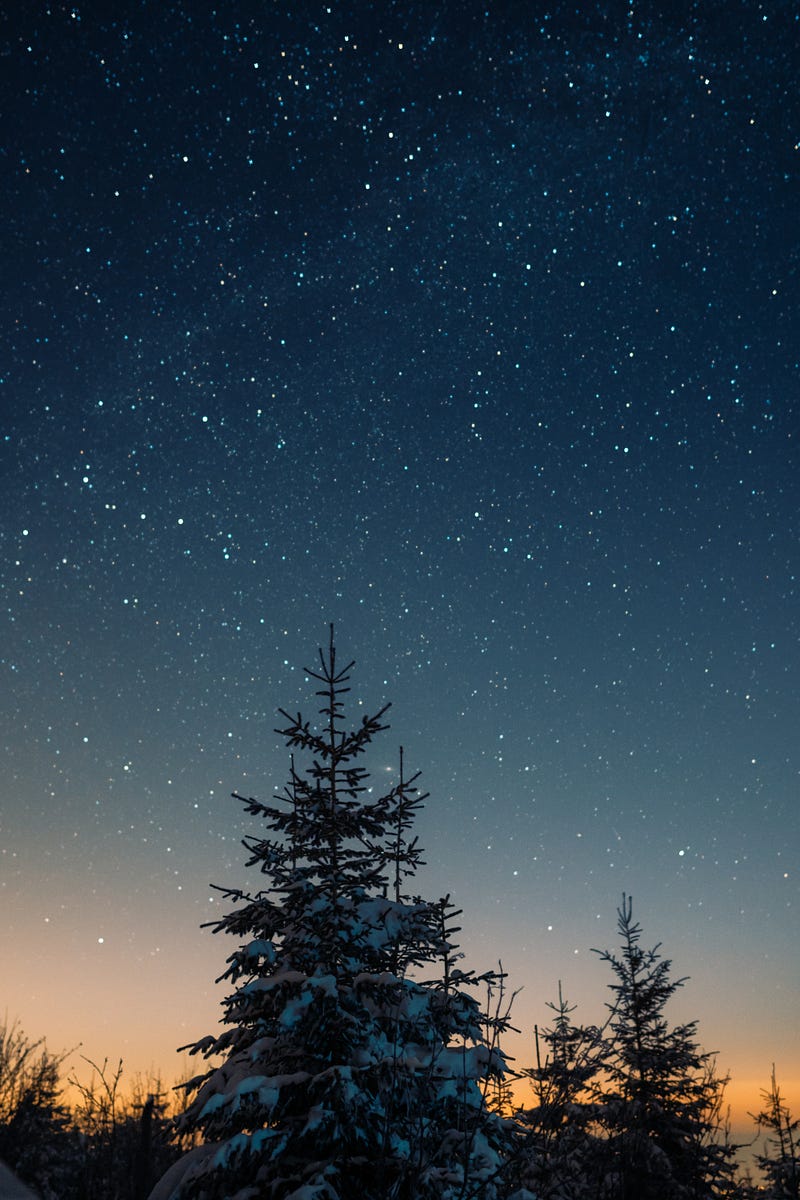
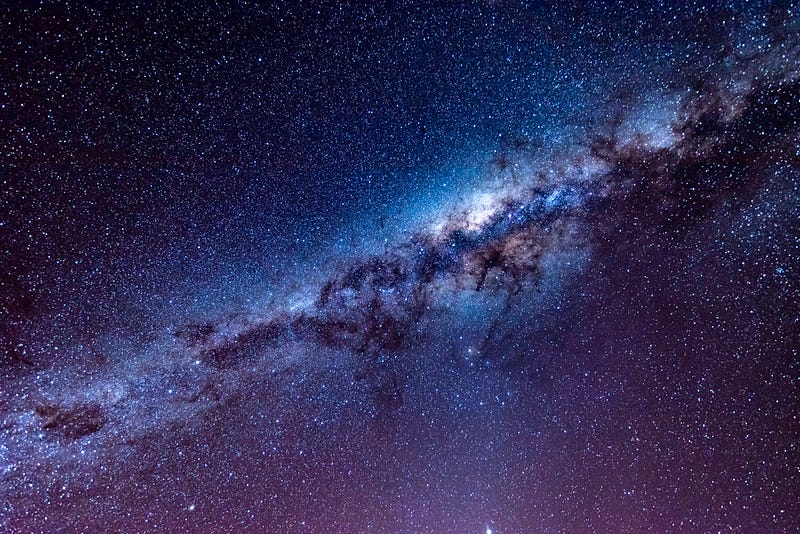
I look to the heavens on a starry night. I am reminded that man is small compared to the magnificence of the entire universe. This especially hits home when I glimpse the entire Milky Way overhead. So many galaxies exist there. I wonder if there are beings like us in any of those galaxies.
America is so populated that cities diffuse the sky with lights from street poles and homes at night. It is very difficult to see the constellations overhead because of this. The best place I have found to view the heavens in all their glory is to go to a vast prairie or the top of a mountain.
I remember a night spent in a basecamp at 10,000’ on Mt. Rainier. The Milky Way’s millions of stars and dust particles presented a dazzling show. We climbers could see the city lights of Seattle far below us. Such a contrast, artificial light against the natural spectacle above our tents. As one, we preferred the backdrop of the heavens above. I felt close to God.
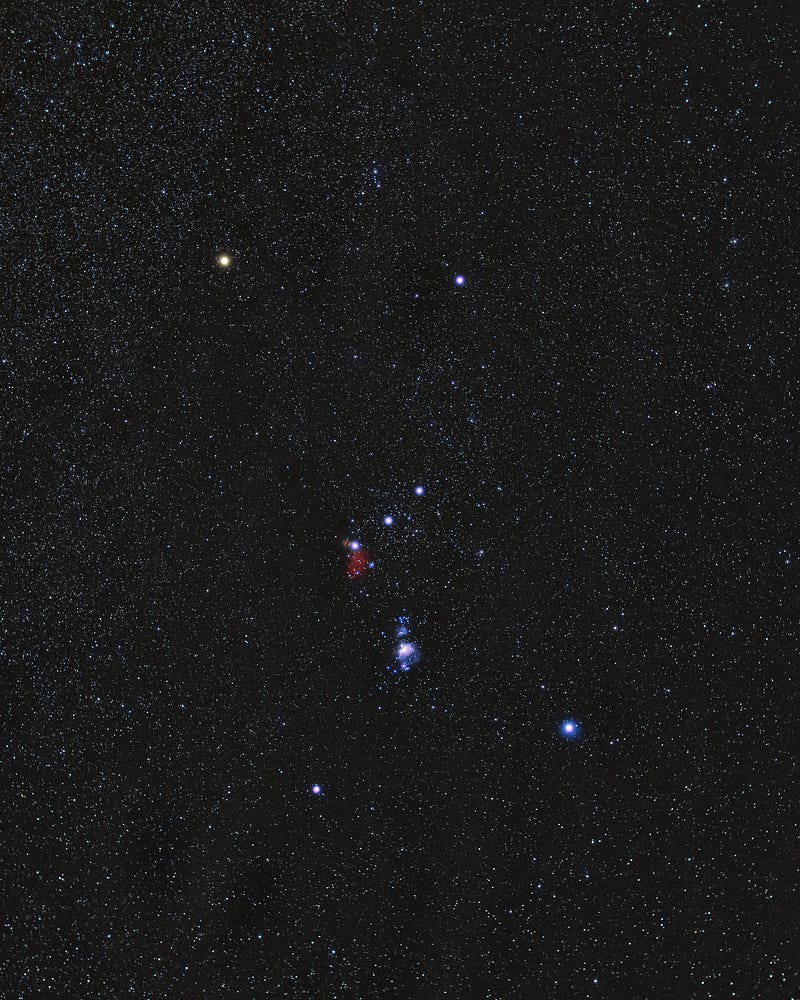
The nights are getting longer and the weather colder where I live. I can go outside at night now and find Orion, my favorite constellation. Even though reflected city lights make it difficult to see the stars, I can still pick out Orion. It is one of the easiest and brightest constellations to recognize.
Orion is a hunter in Greek mythology. Its seven brightest stars form an hourglass shape. Three stars form a belt at his center. There is a smaller line of three stars hanging from his belt known as the hunter’s sword.
The middle of that grouping is not a star at all but the Orion Nebula. Studies on this are extensive because it is so visible. It reveals how stars and planetary systems form out of dust and gas clouds.
All the stars in the Orion constellation live in our own galaxy, the Milky Way.
Orion is a familiar friend from my childhood. I can rely on his presence in the heavens during the winter months. It is as if I know that constellation intimately. I even talk to him as I would a friend. I wonder if that was my original home.
Man used to use Orion as a navigational tool. I’m thrilled to see the hunter every night despite man’s debris that circles in orbit around our planet. The first shiny orb seen when the sun sets is the planet Venus. It doesn’t twinkle.
You know you’re looking at a star if it twinkles. When you live in a city you cannot see the multitude of stars that make up the universe. Count yourself lucky if you happen to be in a place that is free of manmade lights. You will see an immense spectacle of God’s glory. It is a gift you’ll never forget.
Science facts:
Stars twinkle. They’re so far from Earth that even through telescopes, they appear as pinpoints. Our atmosphere disturbs that pinpoint light to create that twinkle effect.
Satellites shine by reflecting the sun’s light. They’re visible at sunset and as morning approaches, when the sun’s rays can still reach them.
Many satellites do not have a constant brightness, they give off flashes at regular times. This flashing behavior results from the rotation of the satellite around its axis. The satellite’s metallic surfaces act as mirrors for the sun reflection.
Venus is the first celestial body to become visible in the evening. She is the last one to disappear from the sky at sunrise. This is why her other names are the Morning Star and the Evening star.
I hope you have enjoyed learning about my friend, Orion, and other night sky facts. I encourage you to read the following stories about changing seasons in nature.
William J Spirdione wrote an intriguing sonnet about September and its effect on frogs and temperature changes. He included some beautiful pictures to go with the prose.
https://readmedium.com/a-windy-and-sunny-september-day-fc291e493ea?source
Ilis Trudie Palmer writes about zen experiences. This poem speaks meaningfully about vibrations being sent from the core of earth to the furthest stars and nebulae. Trusting that all is happening the way it should.
https://readmedium.com/zen-again-and-again-a65e72d55706?source
Katie Michaelson has written about a woodland fairy obtaining reports on man’s behavior from the trees. Are we taking care of planet earth? It is a delightful story that will cause you to ponder your own relationship to trees.
https://readmedium.com/the-woodland-fairy-has-cast-her-spell-years-ago-7fe3aa8d9bec?source


