
The Messy Majesty of Dune
Denis Villeneuve’s new adaptation papers over the messy elements of Herbert’s novel with a great cast, stunning visuals, even if he only tells half a story
Frank Herbert’s Dune is a classic film development trap. On the one hand, it’s an enormously popular book with a series of (increasingly bizarre) sequels, with incredible visuals (Gigantic sandworms! Dragonfly helicopters!). Sounds like a surefire box-office hit! On the other hand, it’s an incredibly dense tome with lots of invented vocabulary (not usually a good sign), that was already adapted into an incomprehensible, unprofitable cult favorite from auteur David Lynch.
The gist of the story is standard Joseph Cambell stuff: chosen hero Paul Atreides discovers his destiny on a desert planet after his family is killed, finding a new family and eventually taking down a corrupt empire (sound familiar?). Of course, things are messier: Paul (who reads as white given his surname, Atreides links his family back to the Homeric hero Agamemnon) is accepted as a religious messiah figure to the Fremen — and oppressed local group with clear Islamic influences (Frank Herbert uses the word jihad a lot). Beyond that, the whole messiah prophecy might be a cultural backdoor implanted by a group of space witches who also view Paul as the endpoint of their thousand-long aristocratic eugenics project (did I mention a lot of those made-up words sound German?). And people thought The Force Awakens was heavy on the Nazi imagery (though, notably, for the bad guys).
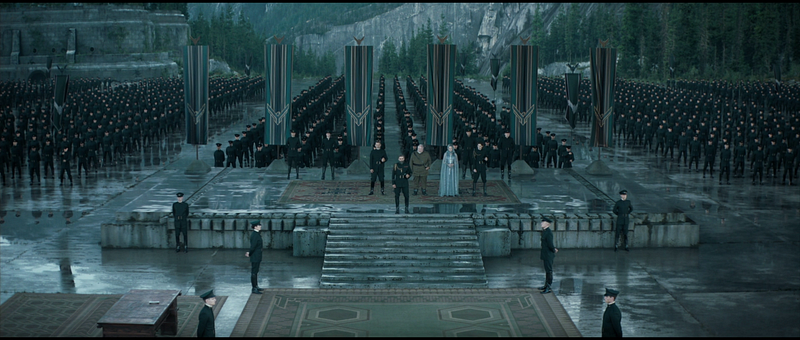
Given these complications, it’s not surprising that accomplished sci-fi director Denis Villeneuve (Arrival, Blade Runner 2049) opts to lead instead with sumptuous visuals and an extremely charismatic cast. Villeneuve makes the scope of the story apparent from the outset: sweeping picturesque deserts, massive industrial machines, and sleek, monolithic starships. The imagery is epic.
But it would mean nothing without the cast. Indie darling Timothée Chalamet anchors the film as Paul Atreides, his princely hair and large eyes selling Paul’s uncertainty. Through him, we meet his parents: stately, honorable Duke Leto (Oscar Isaac) and the mysterious Lady Jessica (Rebecca Ferguson). Isaac — aged a bit so it looks like he could have fathered Chalamet — plays the part with an air of paternal honor; it’s easy to understand why he inspires such loyalty (he also has an excellent beard). Gifted the most complex part in the movie, Ferguson dazzles, playing a concerned mother, a dutiful wife, or a murderous space witch as needed.
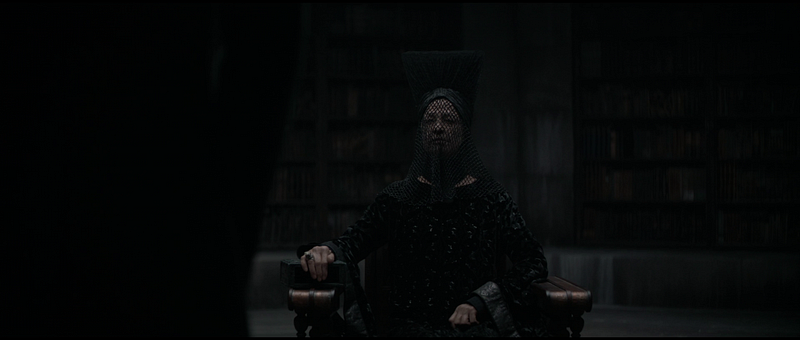
While we spend the most time with the Atreides family, the rest of the cast is stacked. Charlotte Rampling shows up at the beginning of the film as a terrifying space nun. Jason Momoa is a warm presence as Duncan Idaho, acting as both confidant and protector to Paul. There are so many actors that even though Dune runs over two-and-a-half hours, fun characters actors like Stephen McKinley Henderson and David Dastmalchian are probably not given enough to do.
The most notable member of that group is Zendaya, playing a Dune native and future love interest to Paul, Channi. Zendaya appears throughout the film — she provides the opening voiceover and the last line of the film — but mostly appears in fragments of Paul’s dreams, almost like she was doing a very avant-garde beauty campaign.
For those wondering why Zendaya would take a role that requires more time on the press tour than on-set, the answer is in the movie we have yet to see, Dune Part Two (this film is notably subtitled “Part One”). The biggest weakness in Dune is how it ends: very much in media res. Thankfully, a sequel seems likely, but the film has yet to shoot, so it’ll likely be some time before we spend time with this cast of characters again.
Wanna Be A Writer? Click Here


