

The Mental Health Movement has failed itself — Here’s Why
The most honest finding I’ve had about the sky overhead is that it is, among many things, vastly indifferent.
And solemnly blue.
And within that neutral and unending indifference to every person walking the earth, lies a self evident metaphor: that virtually none of us are free from the bounds of human suffering. But next to this dreaded realization one finds a silently breathing rose showing how besides that suffering, we’re still walking. Walking the same earth.
Always known and never spoken
The acceptance of the human condition, both of its terrifying fragility as well as its undying quest for redemption, is something that can be equated with “wisdom”.
And wisdom, contrary to the new world’s popular opinion, DOES take time. It can be argued — whether it’s the journey of a person through countless years or the quick passing of phases through a person’s life — that leads the mind to a coming of age.
But the truth remains, that wisdom is not a thing of the novice.
And unfortunately, it is that popular opinion — which claims the opposite — that has placed young enthusiasts, amateurs, to be real, at the frontlines of major movements… one of which is the critical mental health awareness movement.
The Movement and its “Advocates”
Putting that in quotations is not an attempt to mock or ridicule. It is, however, to point at the huge room of error born alongside our youth’s noble intentions. Many people besides me, and more experienced than me, who are older than these activist kids, have begun to hint at this issue lately. It doesn’t matter whether this criticism is taken in fair light or is labelled as another “judgemental opinion of boomers”. It won’t make the criticism any less important.
The reason is simple — The mental health awareness movement, like most other movements run by technically unqualified folks — is spiraling into unintended territories. Here are some major mistakes that are occuring in its course:
1. Self Diagnosis
Since most of the advocates and activists are not from a field concerned with mental health in the first place (clinical psychology or psychiatry), they have only a vague or sometimes an outright incorrect understanding of the psyche and its anomalies. And since a ton of them are between 10 and 20 years old (shocking yes), they don’t hesitate to paint broad strokes all over the place.
The result? You get a community of well meaning youngsters influencing chunks and chunks of the population with not so helpful ideas, the gravest of which is diagnosing oneself.
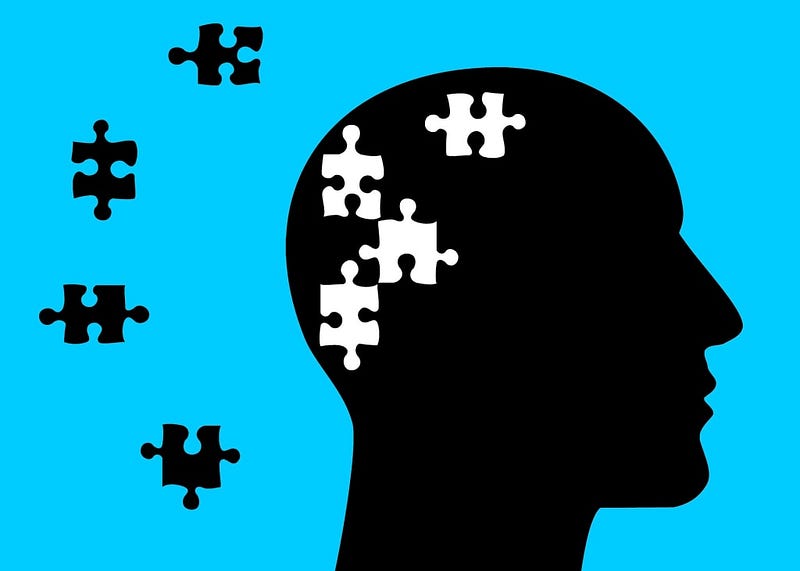
Nowadays it isn’t a rare sight to see a 12 yo boy saying he is depressed after a trivial scolding in school. Or a 17 yo girl telling her story of getting PTSD after a bad exam. The point isn’t that 12 or 17yo’s CAN’T have either disorder, but that it’s nearly impossible to get them after the events so mentioned.
This isn’t the core problem actually. The problem is that today’s kids and youth rely on their own subjective assessments for reaching concrete medical conclusions… assessments so much dependent on their feelings, that they’re barely assessments at all.
2. Small Talks
It is important to accept that something is wrong when it is. More important even is to talk about it. But who exactly should you be talking to?
A professional. Period. And, well, yourself.
While it’s one of the best feelings to let a friend, a parent or a comrade in on your struggles, more often than not things do not go very well. The meaning here is that mere talking, or as they say “opening up”, is only useful if there is some direction attached to it… a direction towards further/ better diagnosis, or towards cure.
I’m not going to water down what I’m about to say —
The layplace normalization and rebranding of clinical disorders as daily teatime chat is the sickest thing running in the veins of the mental health movement. It further encourages self diagnosis while shifting the attention away from actual patients.
3. Segregation and Group identity
Finding out about this is a horrifying discovery for anyone, even more disturbing is to see it in action and to experience it first-hand.
(But for the reason of maintaining objectivity I’ve left out the latter from this article. About my own experiences, you’ll find other articles soon.)
You might expect, by default, that the humanitarian perspectives at the center of such a righteous movement must be unbiased, that just like the indifferent sky of unremitting suffering present above all of us, the well-meaning movement addressing it too would have advocates who’re advocating for everyone. Lately, that has not been the case.
While it IS true that some age and sex groups are classified as Vulnerable groups, it’s not justified at all to assume that the rest have it better. What’s even more unjustifiable is that they’re creating groups of “at-risk” individuals and putting them in a zone of ideological confinement. Hard to imagine, I know, but that doesn’t mean it’s not happening.
What we get out of this is, rash teenagers using their age as an excuse for inexcusable behavior, transsexuals going out and about the society thinking that the whole world is against them, people of all kinds using situation-appropriate victim cards whenever asked for an explanation. Again, and it’s sad I have to clarify but I know I do, this doesn’t go to say at all that the vulnerable groups AREN’T vulnerable, but that them prejudicing about it 24×7 doesn’t do any good… even to themselves.
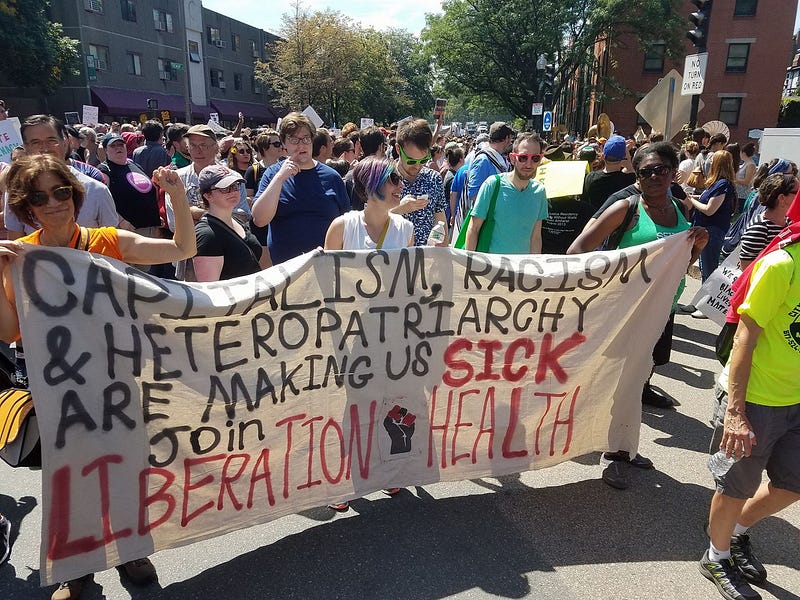
This — self-made prejudice and a resultant divisive outlook towards all of society — is the true outcome of Intersectionality, and the fact that it has managed to infect the Mental Health Movement too is all the more unsettling.
4. Self-esteem tactics, and other nonsense
If it wasn’t clear from Point-1 how profoundly unequipped the self proclaimed activists are, their almost exclusive preference towards Pseudo-psychology proves the point. The grand stage of most such activities is social media due to the reach… and hopping onto it, even as an onlooker, will give you an insight on people’s naive ways to cope with stuff.
One of the popular mechanisms is “Self-esteem boost” to cure “depression”. If you haven’t burst into laughter already, it must be because you’re worried, or because you’ve experienced depression and know it doesn’t work that way. Self esteem, as agreed upon by most clinical psychologists, is nothing more than a hoax. But even if you stand with the opposite school of thought and believe in the power of standing on some pedestal, it doesn’t matter. Because these coping mechanisms act via positive emotion circuits and at best, they can only mask negative emotion firing, not cure it.
And again, anyone with any knowledge regarding psychology, or even having a moderate observation of the world around them, would know that it’s NOT how you feel about yourself but how you act out in the actual world, that explain your relationship with your own mind.
The same goes, without saying, for “being kind to yourself” and “self-love”. Such superficial tactics work only for individuals who have long tormented themselves, but then again in such cases, finding out why they’ve been getting in their own way would be a better aim instead of acquiring comfortable habits for false relief.
What’s worse though, is that honest remarks such as this and many more, are bound to be heavily misunderstood, comprehend out of context and labelled as “victim-blaming”, even if both the intention underlying them and the possible actions springing from them are solely for the benefit of a patient.
Really makes you think — Is the mental health movement, by NOT starting the conversation on WILL and STRENGTH, promoting snowflakery instead of responsibility?
5. Avoiding the pills, or relishing in them
The former part of the concern in question is related to the conspiracies of “BigPharma” and “BigMedicine”, and yes this time it IS mockery conveyed by the quotation marks. While suspicion towards many moves of multinational drug companies and hospitals and now even the WHO, does bear some legitimacy, it is far beyond any logic to have a notion that your medical psychiatrist is giving you pills to make you dependant on him. When doctors give medicines early in selected cases, it’s often to make sure that the drugs inside do the job before it’s too late. But let’s just leave that one to doctors.
The latter part consists of the opposite outlook and is a bit more urgent to address. There is an unhealthy trend running riots today in minds of the young — that THE FASTEST WAY IS : AROUND. Safe to say this is visible in healthcare too, where not just in my circles but in my clinical postings as a student too, I’ve seen an increasing number of people coming in, having well googled about the disease they have (or they think they have), ready to guide the doctor through preferable meds.

If they’re given lifestyle advices in general or therapy sessions in psych clinics, they try going AROUND that too.
Needless to say it doesn’t work, given that most cases have a trigger, an event, a cause that has to be tracked down and willingly explored in order to reach a victory point.
Maybe THROUGH isn’t the fastest way, but it is the way that’ll ensure you don’t have to face the same walls again.
All things considered, it isn’t wrong to say that the mental health awareness activism is losing some course, if it hasn’t completely been estranged already. Many other movements come to mind, and each one of them has a similar brand of error —
Taking what’s supposed to be an undertaking of individual change, and turning it into mass activism, susceptible to corruption by anti-scientific and political forces.
A good way, the only way perhaps, to fix it is to have better and qualified leaders at the forefront… and not armchair advocates with unrelated liberal arts degrees or little kids who should rather be in school.